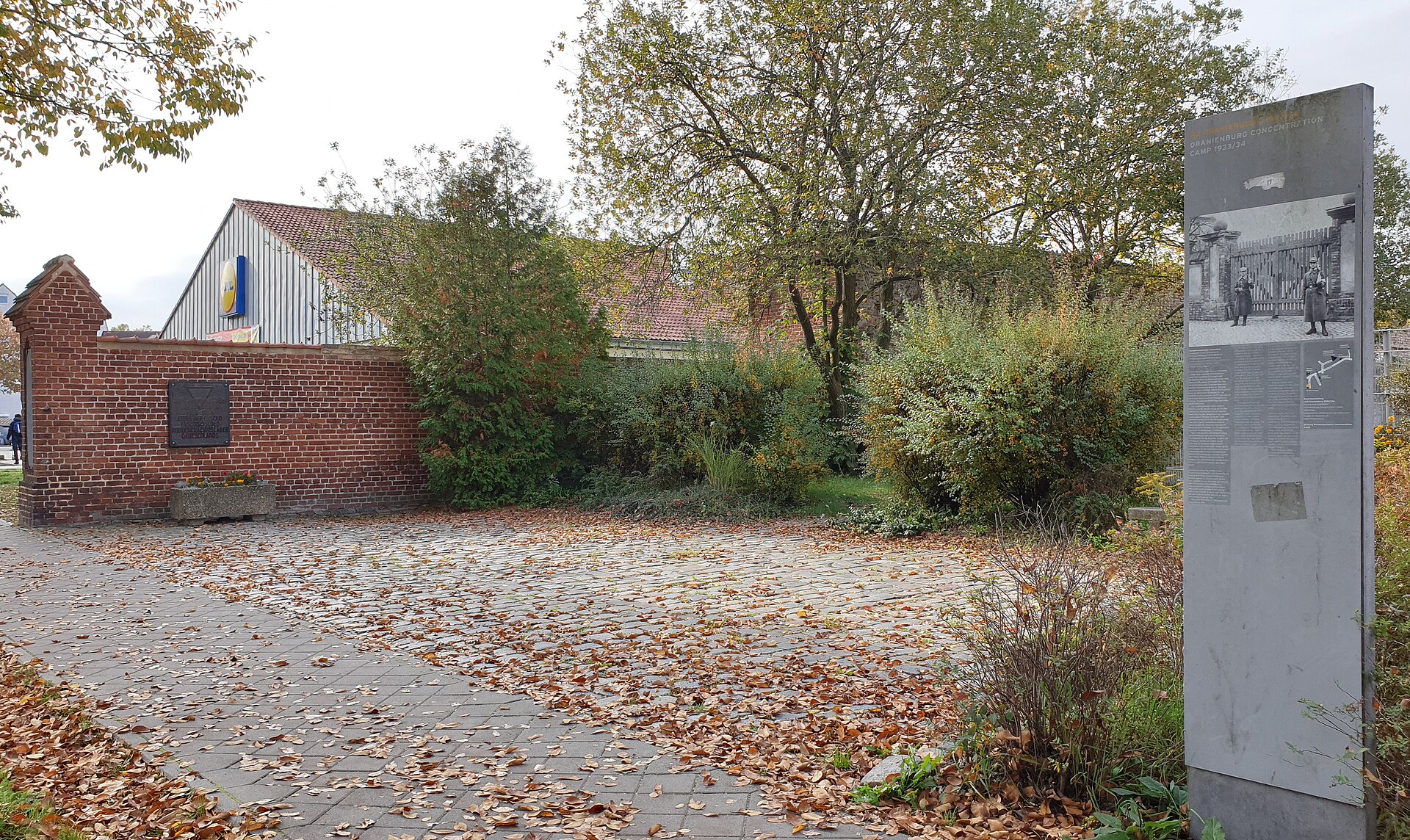
Originally named Bötzow, the town of Oranienburg dates from the 12th century and was first mentioned in 1216. Margrave Albert the Bear (ruled 1157–1170) allegedly ordered the construction of a castle on the banks of the Havel. Around the castle stood a settlement of traders and craftsmen.
In 1646, Friedrich Wilhelm I of Brandenburg married Louise Henriette of Orange-Nassau (German: Oranien-Nassau). She was so attracted by the town of Bötzow that her husband presented the entire region to her. The princess ordered the construction of a new castle in the Dutch style and called it Oranienburg or Schloss Oranienburg. In 1653 the town of Bötzow was renamed Oranienburg.
Silvio Gesell, the founder of Freiwirtschaft ("free economy"), lived in Oranienburg between 1911 and 1915, publishing his magazine, Der Physiocrat. He returned to the town in 1927 and lived there until his death in 1930. The town remained a center of the "free economy" movement until the Nazi régime outlawed it in 1933, and many of Gesells followers ended up as prisoners in the towns concentration camp.
Oranienburg was an early German concentration camp, one of the first detention facilities established by the Nazis in the state of Prussia when they gained power in 1933. It held the political opponents of Nazi Party from the Berlin region, mostly members of the Communist Party of Germany and social-democrats, as well as a number of homosexual men and scores of the so-called undesirables.[...
.
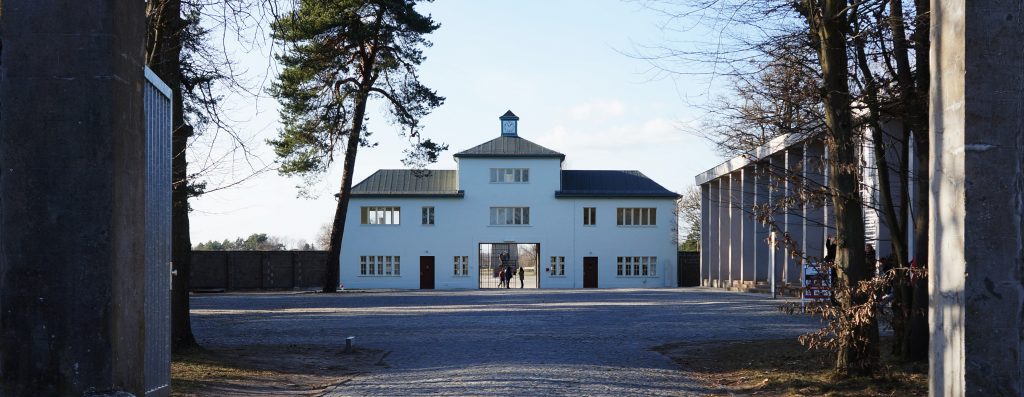

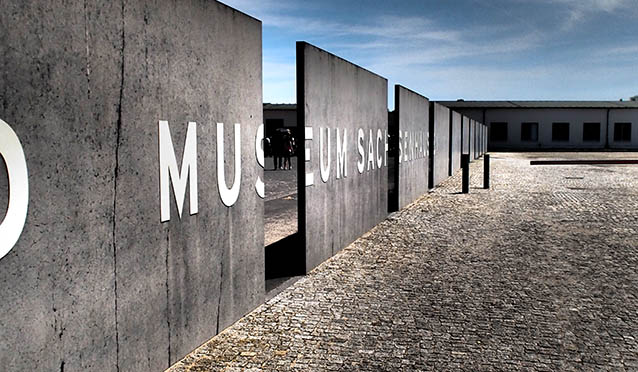
奧拉寧堡(德語:Oranienburg)是德國布蘭登堡邦的一個市鎮,是上哈弗爾郡的首府,她也是德國本土最早由納粹黨設立的集中營,在第二次世界大戰期間將近關押處死30萬人左右,超過80%以上為猶太人,俄羅斯人,其他反對納粹黨的人士,尤其是共產黨人士,也就是說有許多匈牙利人,波蘭人等等少數民族的波希米亞人才(吉普賽人).等等如今營區舊址扔然保留改建為博物館供人參觀,營區就在柏林郊區但是傳聞柏林市政當局逐年減少預算修繕等經費,再加上德國人甚少參觀,僅有學生因為歷史課程求證才到此一遊,況且許多當年的物證,資料,照片等都已經減少,充其量只是樣板的集中營,不像是奧地利的奧斯維茲集中營,那樣出名充滿觀光客,今年的秋風吹起,樹葉枯黃飄落滿地,像似無人清掃,集中營內人數稀少,更顯得淒涼寂靜無聲那些受難的人士但願他們的靈魂安息早日投胎轉世..

.
.

The Storm Troopers (SA) established the Oranienburg camp near Berlin in March 1933. The first prisoners were German political prisoners, primarily Communists and Social Democrats. Oranienburg became known for the maltreatment of inmates. Here, the Nazis attempt to undermine the charges of brutality by showing the "normal" prisoner routine. Oranienburg was gradually deactivated, closing by 1935. Most of the other early camps were also closed, to be replaced with larger camps run by the SS..

.
Millions of people suffered and died in camps, ghettos, and other sites during the Holocaust. The Nazis and their allies oversaw more than 44,000 camps, ghettos, and other sites of detention, persecution, forced labor, and murder. Among them was the Oranienburg camp.


....The Oranienburg concentration camp was established as one of the first concentration camps on March 21, 1933, overshadowed by the Day of Potsdam. After the “Night of the Long Knives,” the SA-run camp was taken over by the SS in July 1934 and dissolved a little later.1 The Oranienburg concentration camp is not to be confused with the Sachsenhausen concentration camp, which was established by the SS in July 1936 on the edge of the town of Oranienburg.
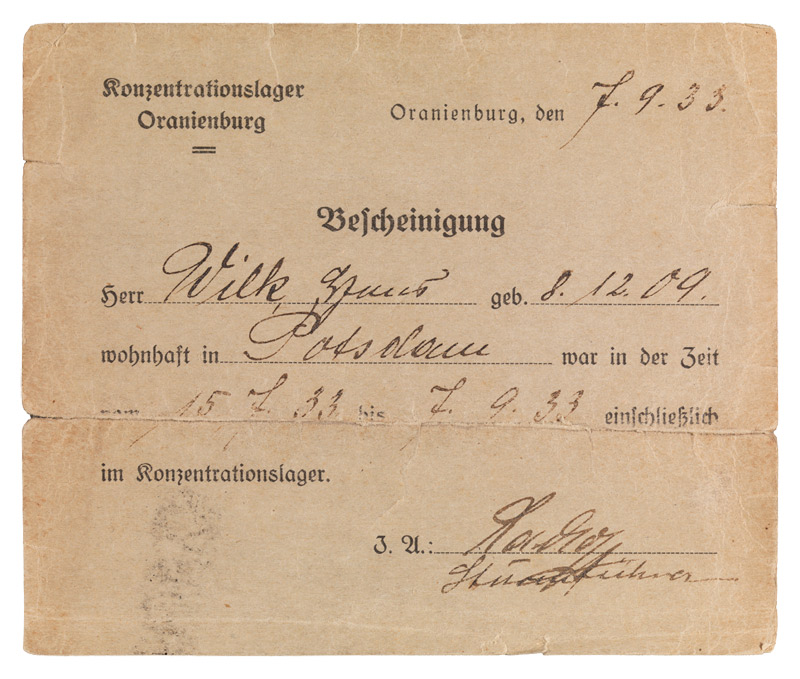
Initially SA-Regiment 208 (Standarte 208) established the Oranienburg concentration camp without notifying the responsible authorities in Berlin beforehand.2 The first inmates were 40 prisoners who were dragged to the small town 20 kilometers (12.4 miles) north of Berlin on the evening of March 21, 1933. The first concentration camp in Prussia was thus situated on the grounds of a former brewery on a main road in Oranienburg. From September 1933, subcamps existed at the Elisenau manor in Blumberg near Bernau and in Börnicke.
The Jewish Experience:
Sachsenhausen concentration camp was established by the Nazi SS in 1936, however it was not until 1938 when it received its first prisoners. The camp was primarily used for political prisoners, however, after Kristallnacht was ordered by Heinrich Himmler, the camp received an influx of Jewish prisoners. It is believed that Sachsenhausen received almost six thousand of the thirty thousand Jews arrested on those orders. Due to Sachsenhausen’s location, being so close to Berlin, Jews were commonly moved to other concentration camps like Auschwitz in Poland; it was to the belief of the Nazis that the land of the Third Reich (Germany) should be free of Jews (“judenfrei”), especially the territories around Berlin, as it was the Third Reich’s “capital city”. In the early 1940s, numbers remained low, however due to increased need for forced labor at Sachsenhausen, many Jews from eastern Europe were transported in. By the year of the end of the war, 1945, Sachsenhausen housed 11,000 Jewish individuals. (USHM & JVL).