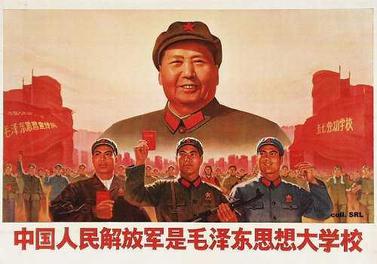
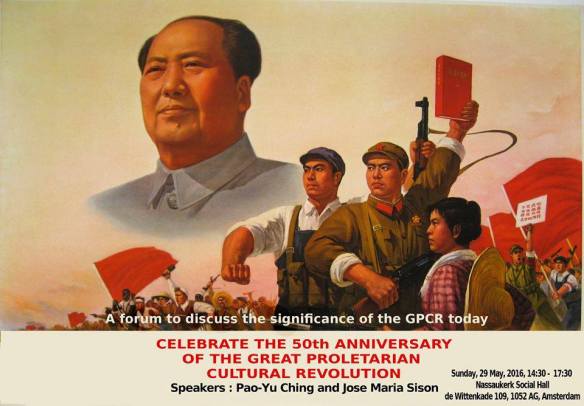
The Cultural Revolution, formally the Great Proletarian Cultural Revolution, was a violent sociopolitical purge movement in China from 1966 until 1976. Launched by Mao Zedong, Chairman of the Communist Party of China (CPC), its stated goal was to preserve Chinese communism by purging remnants of capitalist and traditional elements from Chinese society, and to re-impose Mao Zedong Thought (known outside China as Maoism) as the dominant ideology in the CPC. The Revolution marked Maos return to the central position of power in China after a period of less radical leadership to recover from the failures of the Great Leap Forward, which contributed to the Great Chinese Famine only five years prior.
Launching the movement in May 1966 with the help of the Cultural Revolution Group, Mao soon called on young people to "bombard the headquarters", and proclaimed that "to rebel is justified". In order to eliminate his rivals within the CPC and in schools, factories, and government institutions, Mao charged that bourgeois elements had infiltrated the government and society with the aim of restoring capitalism. He insisted that revisionists be removed through violent class struggle, to which Chinas youth, as well as urban workers, responded by forming Red Guards and "rebel groups" around the country. They would begin to hold struggle sessions regularly, and grab power from local governments and CPC branches, eventually establishing the revolutionary committees in 1967. The groups often split into rival factions, however, becoming involved in violent struggles (simplified Chinese: 武斗; traditional Chinese: 武鬥; pinyin: wǔdòu), to which the Peoples Liberation Army had to be sent to restore order.


 .
.
Red Guards riot.
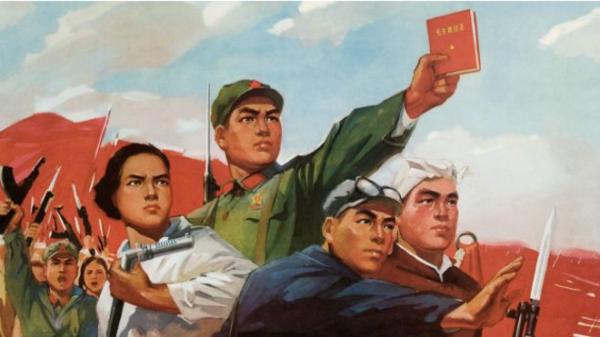
The effects of the Cultural Revolution directly or indirectly touched essentially all of Chinas population. During the Cultural Revolution, much economic activity was halted, with "revolution", regardless of interpretation, being the primary objective of the country. Mao Zedong Thought became the central operative guide to all things in China. The authority of the Red Guards surpassed that of the PLA, local police authorities, and the law in general. Chinese traditional arts and ideas were ignored and publicly attacked, with praise for Mao being practiced in their place. People were encouraged to criticize cultural institutions and to question their parents and teachers, which had been strictly forbidden in traditional Chinese culture.
The start of the Cultural Revolution brought huge numbers of Red Guards to Beijing, with all expenses paid by the government, and the railway system was in turmoil. The revolution aimed to destroy the "Four Olds" (i.e., old customs, old culture, old habits, and old ideas) and establish the corresponding "Four News", which could range from changing of names and cutting of hair to the ransacking of homes, vandalizing cultural treasures, and desecrating temples. In a few years, countless ancient buildings, artifacts, antiques, books, and paintings were destroyed by Red Guards. The status of traditional Chinese culture and institutions within China was also severely damaged as a result of the Cultural Revolution, and the practice of many traditional customs weakened.
The revolution also aimed to "sweep away" all "cow demons and snake spirits", that is, all the class enemies who promoted bourgeois ideas within the party, the government, the army, among the intellectuals, as well as those from an exploitative family background or who belonged to one of the Five Black Categories. Large numbers of people perceived to be "monsters and demons" regardless of guilt or innocence were publicly denounced, humiliated, and beaten. In their revolutionary fervor, students especially the Red Guards denounced their teachers, and children denounced their parents.[ Many died through their ill-treatment or committed suicide. In 1968, youths were mobilized to go to the countryside in the Down to the Countryside Movement so they may learn from the peasantry, and the departure of millions from the cities helped end the most violent phase of the Cultural Revolution.[115]:
.
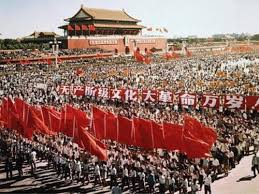
中國文化大革命約有100餘萬紅衛兵,集聚北京天安門廣場舉行向毛主席效忠誓師大會,從此以後的10年,中國各地的紅衛兵興起,盛行3反,5反,破四舊的文化大革命,可以是人類有史以來空前絕後社會改造運動,的確影響到後來中國的發展,那就是自立自強,天行健君子以自強不息的與外國人鬥爭.


 .
.


 2樓. red square 1232021/05/17 12:26
Long-Term Effects of the Cultural Revolution
Some 1.5 million people were killed during the Cultural Revolution, and millions of others suffered imprisonment, seizure of property, torture or general humiliation. The Cultural Revolution’s short-term effects may have been felt mainly in China’s cities, but its long-term effects would impact the entire country for decades to come. Mao’s large-scale attack on the party and system he had created would eventually produce a result opposite to what he intended, leading many Chinese to lose faith in their government altogether.
Among the people themselves, there remained bitter factionalism, as those who opposed each other during the Cultural Revolution often shared the same work unit and would do so for their entire careers.
Perhaps never before in human history has a political leader unleashed such massive forces against the system that he created. The resulting damage to that system was profound, and the goals that Mao sought to achieve ultimately remained elusive.
red square 123 於 2021/05/17 12:28回覆-
1樓. red square 1232021/05/17 12:22
A common verdict is: no Cultural Revolution, no economic reform,” Roderick MacFarquhar and Michael Schoenhals write in their book on the period, Mao’s Last Revolution. “The Cultural Revolution was so great a disaster that it provoked an even more profound cultural revolution, precisely the one that Mao intended to forestall.”
Another enduring legacy, experts say, is the obsession of today’s rulers with stability and political control.Leaders such as Xi Jinping, a 13-year-old Beijing schoolboy when the cultural revolution began, had a front row seat to the mayhem, and some even partook in the violence.
How is the Cultural Revolution remembered today?
After Mao’s death, the Communist party made some attempts to confront the horrors of the previous decade. Some were punished for the violence while those unfairly purged or persecuted were rehabilitated.ut those efforts petered out in the early 1980s as Beijing became wary of implicating itself in the killing at a time of growing opposition from Chinese youth. Academics were discouraged from digging into the party’s inconvenient truth.They won’t go there - it is just too damaging to the party,” says MacFarquhar. “The party is guilty of three massive blows to the Chinese people: the [Great] Famine, the Cultural Revolution and the destruction of the environment which is ongoing now and may in fact be more deadly that the other two in the long run. And the last thing it wants to say is that we were the guilty ones.”
red square 123 於 2021/05/17 12:23回覆


