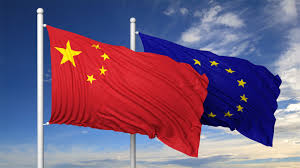
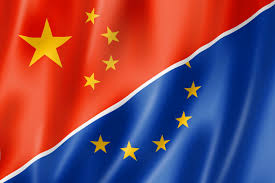

2021 年歐盟與中國關係重大突破,使美國緊張,憤怒,與無奈.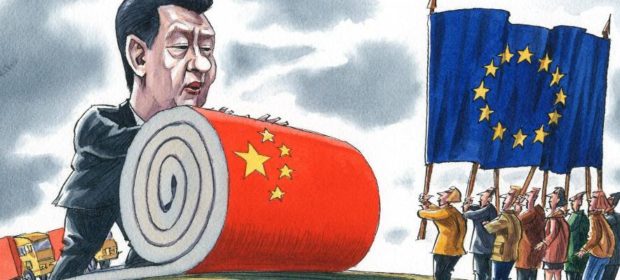
中國市場襲捲歐盟?
中國放長線釣大魚(歐盟)ㄝ.
中國,歐盟與美國三腳關係將重新定位.
The EU-China investment deal is a major step towards negotiations on a free-trade agreement. But it also leaves the incoming Biden administration with a headache over US-China relations in the post-Trump era.
After almost seven years of negotiations, the European Union and China on Tuesday finally agreed an investment deal, although its official signing is expected on December 30. According to an internal European Commission paper which DW gained access to, the deal, known as the Comprehensive Agreement on Investments (CAI), removes barriers to foreign investments in China for certain EU industries, such as new energy vehicles, cloud computing services, financial services and health, the Commission said.
"The CAI will also be the first agreement to deliver on obligations for the behavior of state-owned enterprises and comprehensive transparency rules for subsidies," a European Commission statement read. China also agreed to "make continued and sustained efforts" to pursue the ratification of ILO fundamental Conventions on forced labor, it read.
The EU had been asking for a level playing field in real estate, manufacturing, construction, and financial services and forced technology transfers from European firms with facilities in China. EU companies working in China face one of the most restrictive foreign direct investment (FDI) regimes in the world, according to the Organization for Economic Cooperation and Development.
For China the deal includes investment possibilities in renewable energies on a reciprocal basis. Jürgen Matthes from the German Economic Institute in Cologne downplays the significance of this. "The starting position is unequal. Chinas market is much more closed, but everyone can already invest freely in Europe. It was therefore clear from the start that China would make more concessions than the EU, that cannot be celebrated as a particular success now," the economist told DW.
The Commission statement went on to say that the necessary substantive commitments from China had been achieved on the three key pillars of the negotiations: market access, level playing field and sustainable development. "The negotiated result is the most ambitious outcome that China has ever agreed with a third country," it read.
Beijing had long resisted lifting restrictions on EU investments in China, but as the inauguration of Joe Biden as president of the United States draws nearer, the Chinese leadership appears to have been more flexible in its stance. A deal with the EU on market access is seen by many as a public relations victory for the president, Xi Jinping. Furthermore, as Matthes suggests, in some areas, European companies still have to enter into a joint venture with a Chinese partner when they have branches in China and thus also share their trade secrets.
The ambassadors of EU countries on December 28 approved the draft CAI. The deal needs to be ratified by EU governments and the European Parliament.
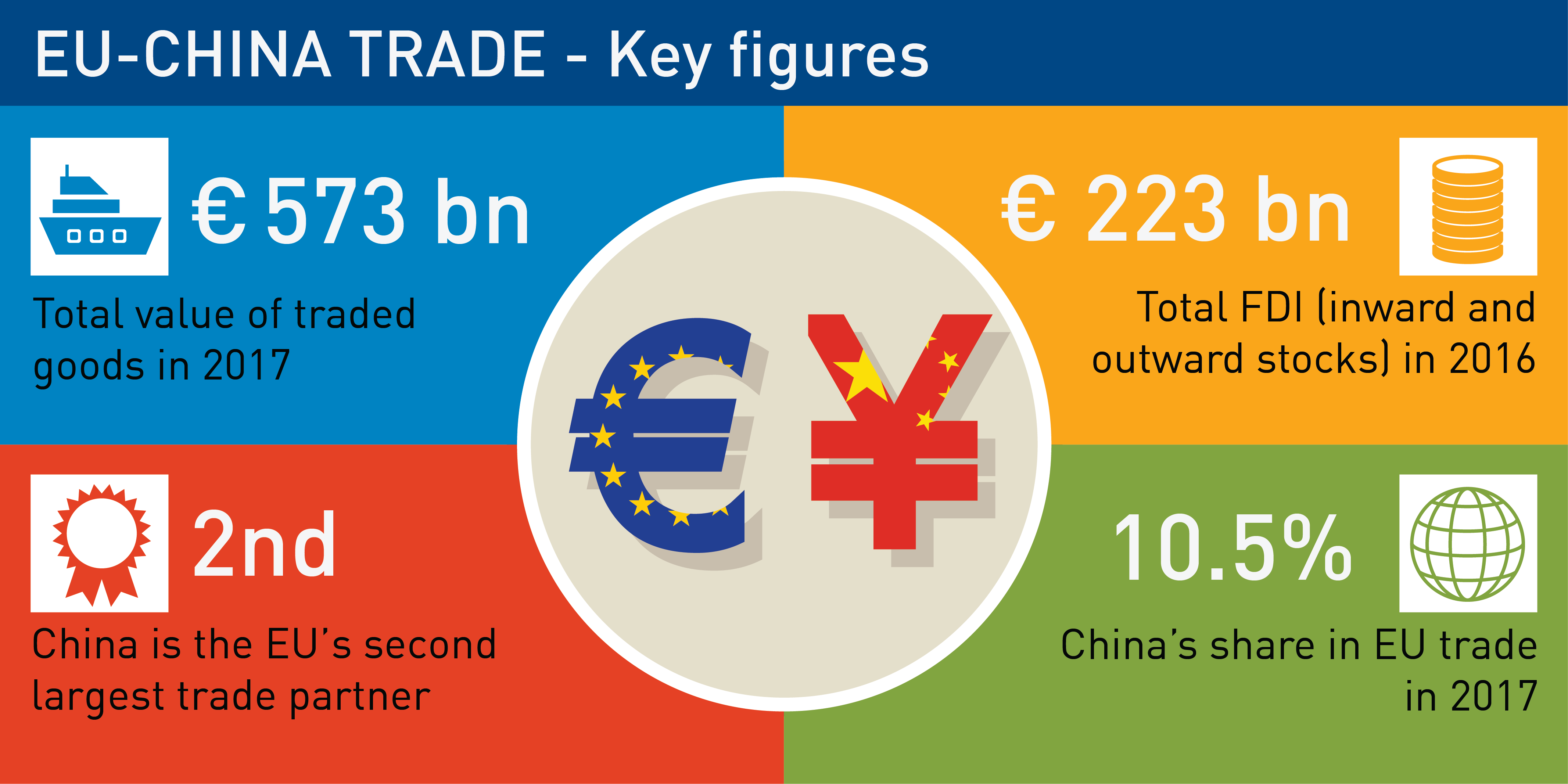
According to Eurostat data, in 2019 the EU exported goods worth approximately €198 billion ($242 billion) to China and imported goods worth €362 billion, with a bilateral trade worth $650 billion.
China continued to be the second largest FDI recipient after the US in 2019, including — according to the Rhodium Group — $1.6 billion of freshly announced FDI projects by EU companies in China in the last quarter of this year.
Doubts abound
Jake Sullivan, who is to be Bidens national security adviser, wrote on Twitter last week that the Biden administration would "welcome early consultations with our European partners on our common concerns about Chinas economic practices."
EU officials argue the deal puts the bloc on par with the US, which has secured the same benefits in its so-called Phase 1 trade pact with China.
Of the EU members, only Poland raised serious objections to the deal with China, suggesting that earlier consultations with the Biden administration were needed.
Some European parliamentarians are still preparing to fight over labor standards and human rights. "Trade policy does not take place in a vacuum — how the question of forced labor is addressed in the CAI will determine the agreements fate," warned Bernd Lange, chairman of the European Parliaments trade committee on Twitter.
"So far, China has mainly made promises in many areas, but has hardly improved access for European companies and the protection of intellectual property in practice — it remains to be seen whether the agreement will offer more than lip service this time," Matthes says.
Large international corporations in particular benefit from this, Matthes says. "The small and medium-sized European companies with a focus on the EU market will not benefit from it, but will increasingly have to deal with Chinese state-owned corporations, with which they cannot compete on the same terms," he adds.
Furthermore, if China does not deliver what it promises in practice, then the EU must also have options to deviate from the agreement and to close its market more strongly, Matthes believes.
Matthes also argues in favor of a joint approach with the US. "Especially when it comes to the issue of Chinese state capitalism and the distortion of competition, the chance together with the US is greater to achieve something really tangible," he said. "With this agreement, the EU threatens to shoot its powder too early," he concluded.
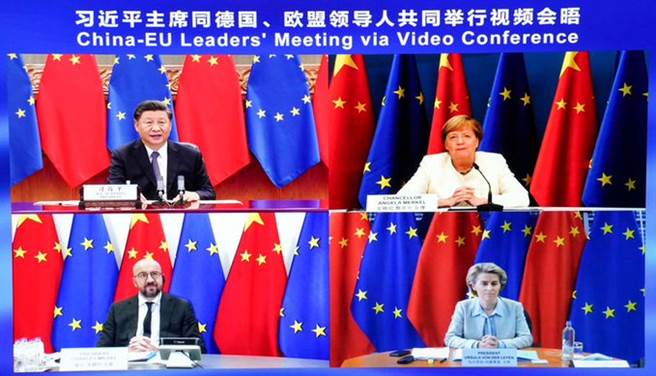
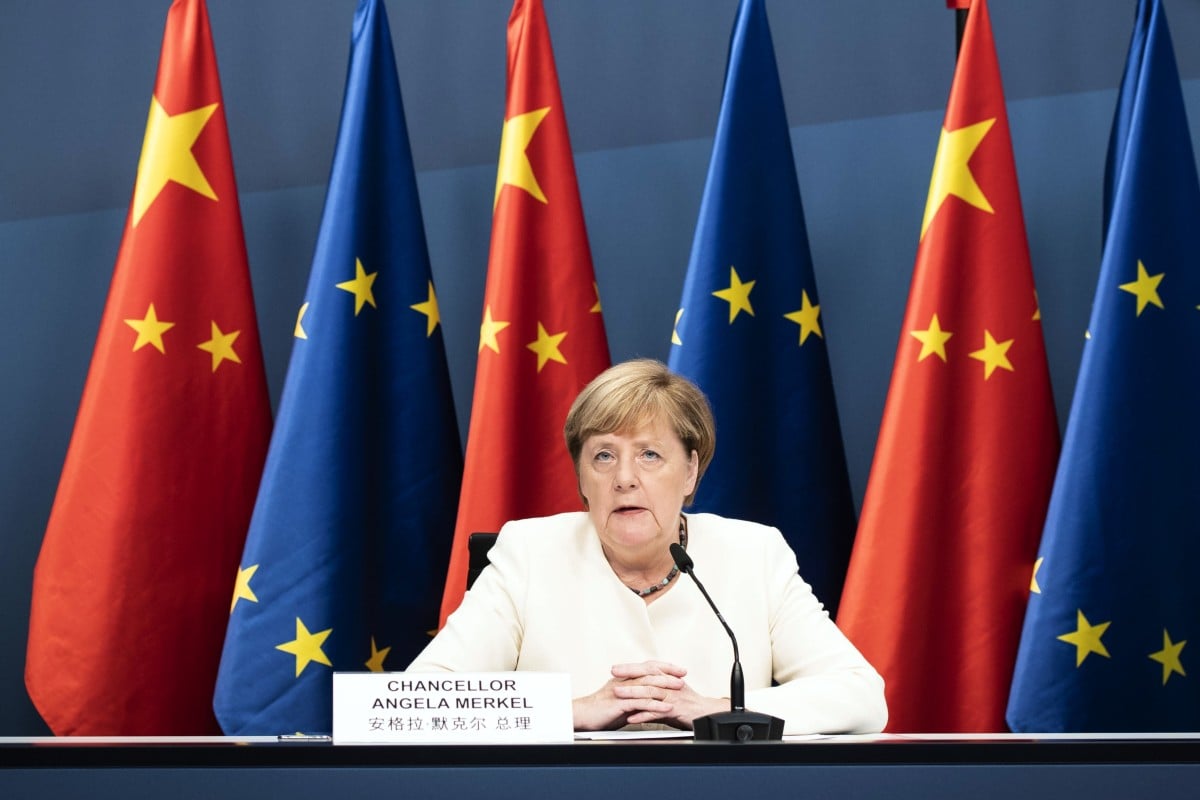
德國總理莫克爾夫人歐盟委員會主席馮德萊恩及歐盟中央銀行總裁,電腦視訊會議達成共識互助合作簽署歐盟與中國投資貿易協定.
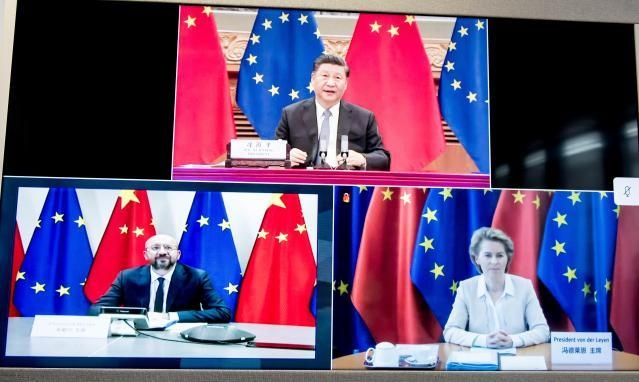
中國和歐盟達成歷史性投資協定 減少投資限制開放市場,
這份協定將使歐洲企業更好地進入中國市場,並改善競爭條件,但它仍需要等待歐洲2021議會的批准才可生效。德國總理默克爾一直是這份協定的主要推動者,她不顧很多方面的批評和反對,在推動歐盟各國敲定拖延已久的歐盟中國投資協議方面發揮了關鍵作用。預計它能讓德國大型車企等企業受益頗多。德國目前是歐洲理事會的輪值主席國。
中國官方中歐投資協定「將為構建開放型世界經濟作出中,歐兩大市場的重要貢獻」。
歐盟委員會主席馮德萊恩表示,中,歐「原則上」完成了關於投資協議的談判。
中,歐投資協定的簽署將使中國向歐盟企業開放製造業,以及建築、廣告、航空運輸和電信行業,並在一定程度上開放雲端計算。
其中一個徵結是,中國要求作為回報進入歐盟的能源市場,但這遭到部分成員國的反對。考慮到國家安全的敏感性,該協議預計將使中國在對等基礎上獲得歐盟可再生能源領域的一小部分准入。
該協定還旨在消除歐盟企業在華投資的障礙,比如合資企業要求以及對部分行業外資佔股比例的限制。
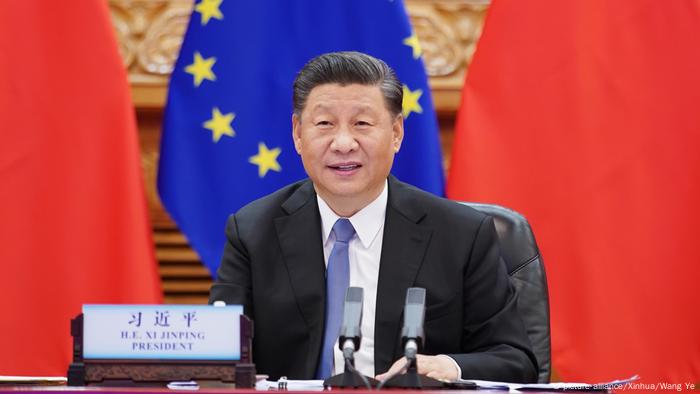
The EU has the largest single market in the world. We are open for business but we are attached to reciprocity, level playing field & values.
Today, the EU & China concluded in principle negotiations on an investment agreement.
For more balanced trade & business opportunities.
— Ursula von der Leyen (@vonderleyen) December 30, 2020
中,歐「互讓互惠」據2019年的統計數據,歐盟是中國第一大貿易伙伴、第二大進口來源地、最大出口市場。中國是歐盟第二大貿易伙伴、第一大進口來源地、第二大出口市場。
歐盟GDP約為15.6萬億美元,中國約14.2億美元。雙方經濟規模相當,因為產業發展水平不同,互補性也較強。
歐盟委員會表示,中,歐投資協定消除了歐盟國家在中國投資某些行業的障礙,如新能源汽車、雲計算服務、金融服務和健康等,它將使中國的製造、建築、廣告、航空運輸和電信業向歐盟企業開放。該協議還旨在消除在中國投資的障礙,如某些行業的合資要求和外國所有權上限。
這份協定也將是中國第一份履行國有企業行為義務和全面透明補貼規則的協議。中國還承諾致力於批准未獲批准的國際勞工組織的基本公約等保護勞工的條款。

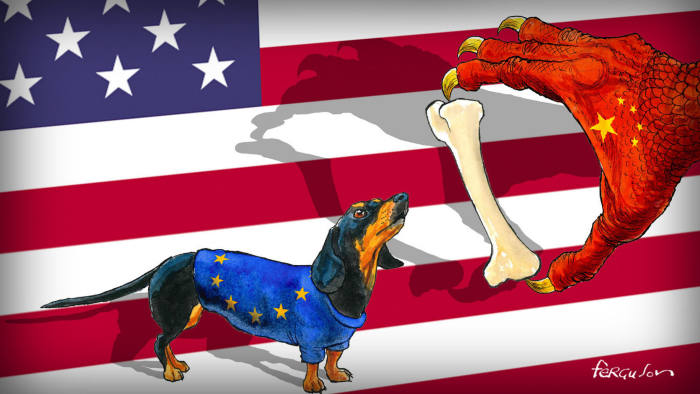
EU+CHINA .中國與歐盟大躍進吃肉,喝湯,美國啃骨頭.
美國即將卸任的總統川普的執政4年,使得美,歐關係出現很大倒退。2016-2020.
歐盟方面認為,川普在歐洲推行一切以美國為中心的政策不顧歐盟,損害了歐洲的經濟、政治和安全利益。德國外長馬斯曾警告說,德,美關係發生了結構性的變化。
中,歐協定簽署一周前,被拜登提名為國家安全顧問的(Jake Sullivan)通過推特向歐盟喊話表示,呼籲歐盟盟國在與美國商量、取得共同立場前先不要急於簽署中,歐投資協定。英國評論:歐盟仍執意簽署協定讓美國感覺反憤怒與無奈,美國甚至於擔心有朝1日歐盟諸國要求NATO.北大西洋公約組織,允許中國加入成為觀察員。
The Biden-Harris administration would welcome early consultations with our European partners on our common concerns about Chinas economic practices. https://t.co/J4LVEZhEld
— Jake Sullivan (@jakejsullivan) December 22, 2020.
事實上2019年底的NATO.大會臨時動議提案,德國要求中國加入北約的議題,可能於2021年再度提案要求討論,顯示出美國不再是唯一的領導人,因為歷年來美國壓迫德國在NATO.年度的軍事演習中,必須付單35% 以上的軍費支出,而且要派出最多的坦克車支援演習,造成不公平的現象..
美國壓迫德國中止NS2.北溪2號天然氣輸送管線工程,就是壓迫德國與俄羅斯貿易正常化的舉措,令德國不惜一切代價,要在2021年底竣工,從俄羅斯引進天然氣使用.
美國對於俄羅斯經濟制裁就是不讓俄羅斯的石油與天然氣銷往歐盟,得到美元外匯,如今德國全額以歐元支付俄羅斯,也就是說歐盟想法子擺脫美國的美元控制.
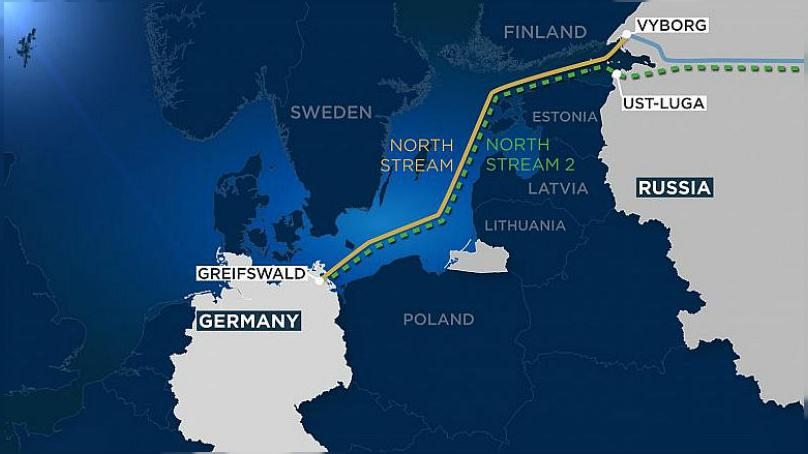
傳聞目前德國全力趕工興建,NS2.北溪2號天然氣管線工程,有望於2021.年底前竣工通氣,引進俄羅斯的天然氣使用.因為美國制裁承包商,有2家宣佈中止合約工程,轉由中國承包商接手繼續施工,如此一來中國人24小時的工作,更進一步使得NS2.LNG PIPE.將提前竣工,這樣一來完全令美國傻眼與失望,誤判情勢,弄巧成拙,反而是協助德國與俄羅斯.

歐盟終於向中國遞上橄欖樹,雙方互助合作,共同賺取世界的財富,美國永遠失去OBOR.一帶一路的投資發財的機會,如今又被歐盟拋棄,使得許多美國廠商哀鴻遍野,改善與中國經濟貿易關係是新任總統拜登的首要議題,需要妥善解決,國際戰略觀察家分析認為,美國最快將在2021Q2.提出與中國重起貿易經濟等方面重大議題,尋求公平對等的貿易機會與關稅制度,一般咸信美國將逐漸放寬對於中國貿易及關稅的限制,因為中國市場的確誘人,否則歐盟與中國討論長達10年之久的經濟與貿易平等互惠的議題,終於得到雙贏的局面,國際戰略觀察家分析認為,歐盟與中國簽訂投資與貿易協議,在歐盟立場更為有利,可與中國合作進入東歐,南歐的市場,壓制美國的入侵括分市場利益,況且中國已經協助曬賽爾維亞及匈牙利新建高速鐵路工程,一旦於2023年竣工通車,歐盟將得到實質的利益,因為德國要求中國採用歐洲規範設計,施工,建造,其後可以與德國法國的高速鐵路接軌通車,增加交通運輸,觀光的業務,有利於歐萌市場,這樣一來美國無法左右歐盟,拉進中國至歐盟市場是有利的.

歐盟與中國的結合早在國際戰略家的預期中2021年是里程碑的開始歐元的價值將更趨於美元.,使得人民幣也將大舉投資歐盟市場,形成多元化的國際競爭,2021德國將重新開放檢查中國華為5G電信,進入德國架設網路電信系統,在2021年底前完全80%.的5G電信系統使用,如此一來德國務實的作風,必然引起法國,意大利,西班牙與其他歐盟國家跟隨,採用中國華為5G.電信系統,雖然瑞典與芬蘭有自行開發設計5G.電信系統,但是其成本高昂,使得投資者意願降低,因為無法達成投資平衡,所以扔然會採用部份的中國華為5G電信輔助使用,分擔成本.
We continue to have an unbalanced trade and investment relationship,’’ said von der Leyen after the digital meeting, during which the main bones of contention were the skewed market access for EU companies in China and China’s handling of the coronavirus pandemic.
China also sees the relationship as being unbalanced, pointing out that the EU has been able to invest much more in China over the years than the other way around and lamenting the fact that the EU gets involved in what China regards as domestic affairs, for example with regard to Hong Kong.
Considering these views, it was not that surprising that there was no joint Chinese-EU declaration at the end of the summit.
What is clear is that the EU’s China year, the highlight of which was supposed to be a big summit in Leipzig in September, which has also been postponed, is not going as Brussels would have hoped.
Not only does the eurozone face the most significant economic challenges in decades in the wake of the coronavirus pandemic, it has also become blatantly obvious how dependent it is on China. Beijing repeatedly made this point, saying that although the EU was China’s biggest trading partner until recently, it had been pipped to the post by the Association of Southeast Asian Nations (ASEAN) in the first quarter of this year.
In Beijing, there seems to be an assumption that this will remain the case for some time as Asia looks set to recover more quickly from the pandemic than the EU. A pan-Asian free trade agreement is supposed to be sealed this year.
The shift of power is not making it any easier to work on the EU-China Comprehensive Investment Agreement that Brussels and Beijing have been fine-tuning.
German Chancellor Angela Merkel had hoped the agreement would be signed in September. As Germany prepares to take up the six-month presidency of the Council of Europe next week, she has placed China at the top of her international priorities.
Von der Leyen has requested that a draft be ready by early fall. However, for this to happen Beijing will have to agree to "substantial obligations" regarding transparency in technology transfer and subsidies for Chinese businesses that shut out foreign businesses from the market.
The European Commission recently adopted a white paper dealing with the distortive effects caused by foreign subsidies in the single market to make it more difficult to acquire European companies. Many of these are struggling in the wake of the pandemic and apparently more open to takeover negotiations with Chinese actors. Though China is not named in the document, the EU is apparently worried that Chinese companies could make the most of the current economic difficulties — as many did during the 2008/9 financial crisis — to acquire European businesses.
Back then, Brussels seemed unwilling or unable to take the consequences for the EU into account, namely that China’s political influence would grow. This time, the situation is different.
"The current geopolitical context and global economic environment is the most difficult in recent history," European Commission Vice President Margrethe Vestager recently said. "The role of the Commission is to uphold the single market and to take action when third-country subsidies subsidize companies and distort the level playing field within our Union."
Chinese investment in the EU has been decreasing. Whereas it amounted €18 billion in 2018, it fell to €12 billion in 2019, almost 2013 levels. On the other hand, more and more European companies are investing in China. In 2018, Germany alone invested €90 billion into new factories. In a recent study by the European Union Chamber of Commerce in China, nine out of 10 European companies surveyed said they did not want to move their investments to other countries.
The problem, however, is that if European companies produce and sell goods in China, there is little impact on the European economy — no jobs are created and no taxes come in.
It is clear that Beijing will continue to try to wield influence in Europe via bilateral agreements. The less united the EU is, the less China has to listen to Brussels. So far, China’s long-term strategy seems to be paying off.


