The Maslenitsa Festival in Russia.
The Maslenitsa Festival in Russia

Russia’s Maslenitsa festival rings in the passing of winter with traditions, dancing and pancakes.
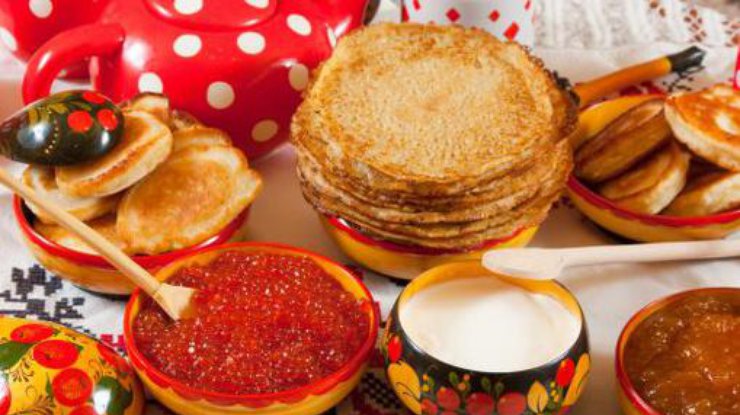
In the end of February, Maslenitsa festivities take place all across Russia. Also known as ‘pancake week’, the traditional Russian festivity is famous for its blini (pancakes) with many fillings and toppings, from sour cream to caviar, to salmon and all things sweet!
 .
.
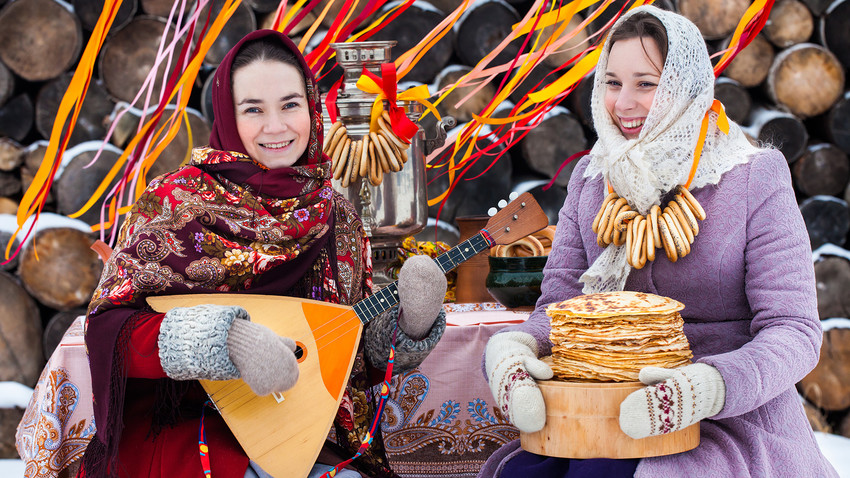
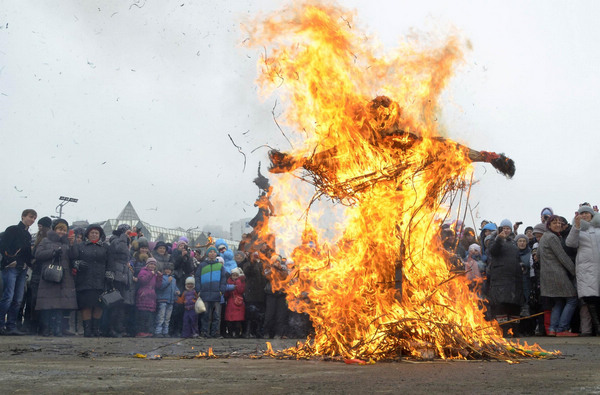
Maslenitsa is a traditional festival among many Eastern Slavic people - Russian, Ukranian, Serbian, Macedonian and Bulgarian. The festival has its origins both in pagan traditions as well as in religion, but it has become a festival of celebration and fun as well. In Slavic tradition Maslenitsa is actually a female figure that in ancient times was burnt as a symbol of the dead. However, these days, in Slavic countries such as Russia, the festival is more about fun and food. Even though called a pancake festival, it is so much more than that. As with other festivals held before the period of Lent, this is a chance for people to celebrate and eat well before the traditionally more austere time leading up to Easter.
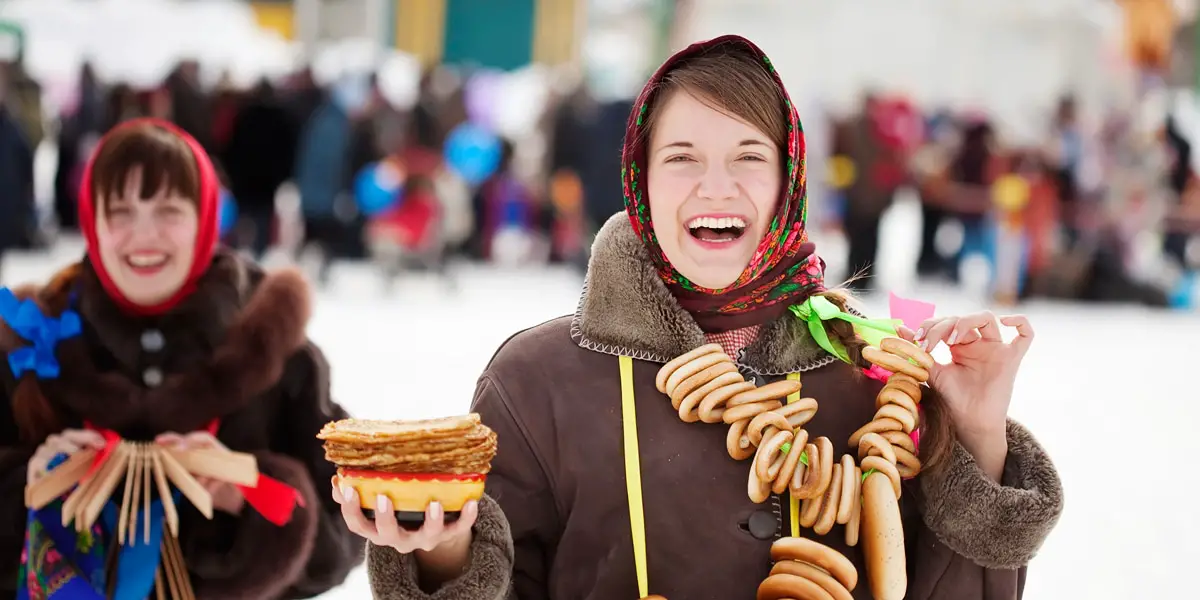
Maslenitsa Festival of Russia - Where The Pancakes Never Stop.
It is thought that the name Maslenitsa (variously translated as “Butter Week,” “Cheese Week,” or “Pancake Week” in English) comes from the fact that, according to Russian Orthodox tradition, meat is already off-limits by Shrovetide week, but dairy is not.
 .
.謝肉節最古老也是最重要的傳統就是烹飪並食用名為blini的烤薄餅。這種薄餅呈金黃色,象徵著太陽,表示春天的來臨和白天越來越長。

 .
.
謝肉節 (俄語:Ма́сленица)又稱送冬節,烤薄餅周。是一個從俄羅斯多神教時期就流傳下來的傳統俄羅斯節日。後來由於俄羅斯民眾開始信奉東正教,該節日與基督教四旬齋之前的狂歡節發生了聯繫。現在謝肉節的開始日期為每年東正教復活節前的第8周,例如2009年的謝肉節從2月23日一直持續到3月1日..
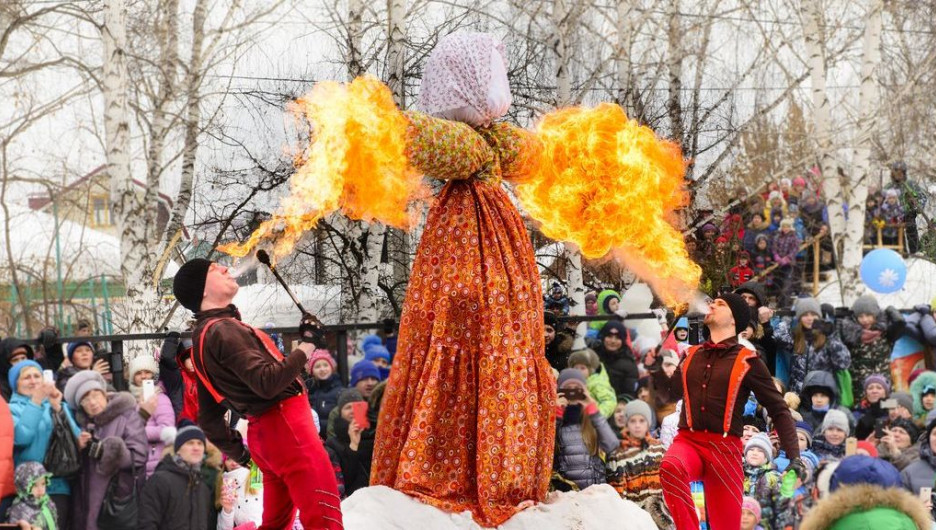
Ма́сленица — восточнославянский традиционный праздник, отмечаемый в течение недели перед Великим постом, сохранивший в своей обрядности ряд элементов славянской мифологии.
В народном календаре восточных славян праздник маркирует границу зимы и весны, а также Мясоеда и Великого поста[1]. Аналог карнавала в европейских странах. Масленица сродни «жирному вторнику» и Мясопусту. В календаре Русской православной церкви этот период называется Сырной седмицей. Названия Мясопуст, Неделя мясопустная и Сырная неделя на Руси употреблялись только в святцах как «церковные»[2].


謝肉節起源於多神教時期的俄羅斯春耕節。馬斯列尼察(Ма́сленица)是斯拉夫神話中的女神。在神話故事中,春神和戰爭之神雅麗洛(Jarilo)戰勝了黑暗,給人們帶來溫暖。大約在2月末和3月初,人們烹製出象徵太陽的金黃色圓形薄餅,在節日的最後一天燒掉象徵馬斯列尼察的稻草人以表示春天的來臨。俄國人往往將此節日視作新年的開始。大約從公元二世紀起俄國人就已經慶祝這一節日。東正教傳入俄羅斯以後,教會將節日的日期改到了大齋戒之前。因為在大齋戒中不得吃肉,所以這一周又成為人們向肉食品告別的日子,因此稱為謝肉節。
Maslenitsa is a traditional Eastern Slavic religious and folk holiday, celebrated during the last week before Great Lent, which precedes Orthodox Easter. Some traditional Maslenitsa activities involve eating pancakes, fist fighting, snowball fights, sleigh rides and burning "Lady Maslenitsa" that represents winter.
Когда Масленица 2019: дата празднования .