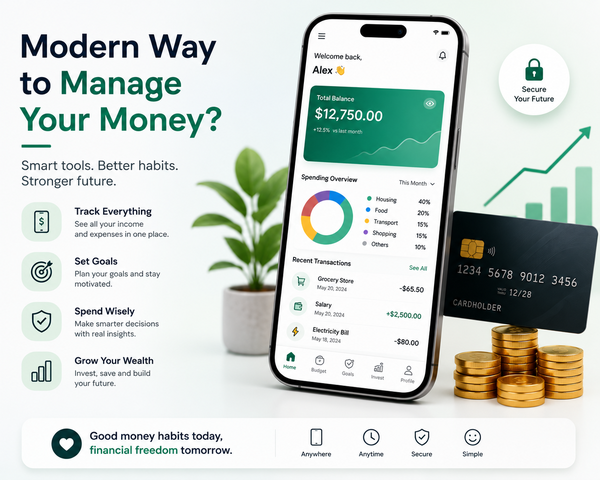
Money health means how well you manage, grow, and protect your finances in daily life. It includes budgeting, saving, investing, and controlling debt so you can live stress-free and achieve your goals. Simply put, good money health = less stress + more financial freedom.
Why Is Money Health Important?
Money health directly affects your lifestyle, stress level, and future security. If your finances are not in control, even a small emergency can become a big problem.
Good money health helps you:
- Avoid unnecessary debt
- Handle emergencies confidently
- Achieve long-term goals (home, travel, business)
- Reduce financial stress
What Are the Signs of Good Money Health?
You don’t need to be rich to have good Money Health. It’s about control, not income.
Here are some clear signs:
- You save money regularly
- You have an emergency fund (at least 3–6 months of expenses)
- You pay bills on time
- Your debt is manageable
- You don’t rely on loans for daily needs
How Can You Improve Your Money Health?
Improving money health is simple if you follow consistent steps.
1. Create a Simple Budget
Track your income and expenses:
- 50% needs (rent, bills)
- 30% wants (shopping, entertainment)
- 20% savings
2. Build an Emergency Fund
Start small:
- Save even $2–$5 daily
- Keep it separate from spending money
3. Reduce Unnecessary Expenses
Ask yourself before spending:
“Do I really need this?”
Cut down on:
- Subscriptions you don’t use
- Impulse buying
- Expensive habits
4. Manage Debt Smartly
- Pay high-interest loans first
- Avoid taking new loans without planning
- Always pay at least the minimum on time
5. Start Investing Early
Even small investments matter:
- Stocks
- Crypto (with research)
- Savings accounts
What Are Common Money Health Mistakes?
Avoid these common errors:
- Spending without tracking
- Living paycheck to paycheck
- Ignoring savings
- Taking unnecessary loans
- Not planning for the future
Real-Life Example of Money Health
Let’s take a simple example:
Ali earns $500/month.
Before:
- Spends everything
- No savings
- Takes loans at month-end
After improving money health:
- Saves $100/month
- Tracks expenses
- Builds $600 emergency fund in 6 months
Result:
👉 Less stress
👉 No borrowing
👉 More control over life
This shows money health is about habits, not income.
How Does Money Health Affect Mental Peace?
Money problems are one of the biggest causes of stress.
Good money health gives:
- Peace of mind
- Better decision-making
- Confidence in emergencies
When your money is stable, your mind becomes stable too.
Quick Tips to Boost Money Health Fast
- Start saving today (don’t wait)
- Use apps to track spending
- Avoid “buy now, pay later” traps
- Set small financial goals
- Learn basic financial skills
Frequently Asked Questions (FAQs)
1. What is money health in simple words?
Money health means managing your money properly so you can save, spend wisely, and stay financially secure.
2. How do I check my money health?
Check if you are saving regularly, managing debt, and handling expenses without stress.
3. Can low-income people have good money health?
Yes. Money health depends on habits, not income level.
4. How much should I save monthly?
At least 20% of your income is recommended, but even small savings are good.
5. Is investing necessary for money health?
Yes, investing helps grow your money and secure your future.
6. How long does it take to improve money health?
With consistent effort, you can see improvement in 2–3 months.
Conclusion
Money health is not about being rich—it’s about being in control of your finances. Start with small steps, stay consistent, and you’ll build a strong financial future over time.
👉 Start today: track your spending and save your first small amount.
下一則: A Disguised Cost on the Desired Added bonus: The key reason why the ideal Promo
- 1xBet Promo Code for Registration 2027: 1XNEW200 – €130
- What Are the 9 Key Features of Online Slot Games Every Player Should Know?
- The Allure of Slot Online: Exploring the Digital Revolution in Gaming
- How Do You Plan a Self-Guided Kumano Kodo Trek? Complete Logistics & Transport Guide
- How Hard is the Alta Via 1 Trek? A Complete Difficulty and Fitness Guide
- Situs Togel dalam Lanskap Digital Modern Antara Tradisi
限會員,要發表迴響,請先登入


