Henry James
https://en.wikipedia.org/wiki/Henry_James

Henry James, OM (15 April 1843 – 28 February 1916) was an American writer who spent most of his writing career in Britain. He is regarded as one of the key figures of 19th-century literary realism. He was the son ofHenry James, Sr. and the brother of philosopher and psychologist William Jamesand diarist Alice James.
The Portrait of a Lady
https://en.wikipedia.org/wiki/The_Portrait_of_a_Lady_(film)

daisy雛菊(純真)

Naturalism
https://en.wikipedia.org/wiki/Naturalism
Tess of the d'Urbervilles

Tess of the d'Urbervilles: A Pure Woman Faithfully Presented is a novel byThomas Hardy. It initially appeared in a censored andserialised version, published by the British illustrated newspaper The Graphic in 1891 and in book form in 1892. Though now considered a major nineteenth-century English novel and possibly Hardy's masterpiece,[2] Tess of the d'Urbervilles received mixed reviews when it first appeared, in part because it challenged the sexual moralsof late Victorian England.
Honore de Balzac

Honoré de Balzac(/ˈbɔːlzæk, ˈbæl-/;[1]French: [ɔ.nɔ.ʁe d(ə) bal.zak]; 20 May 1799 – 18 August 1850) was a French novelist and playwright. His magnum opus was a sequence of short stories and novels collectively entitled La Comédie Humaine, which presents a panorama of French life in the years after the 1815 Fall ofNapoleon Bonaparte.
Thomas Hardy
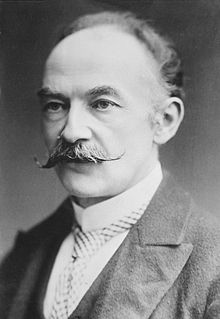
Thomas Hardy, OM (2 June 1840 – 11 January 1928) was an English novelist and poet. A Victorian realist in the tradition of George Eliot, he was influenced both in his novels and in his poetry byRomanticism, especiallyWilliam Wordsworth.
Jude the Obscure
https://en.wikipedia.org/wiki/Jude_the_Obscure
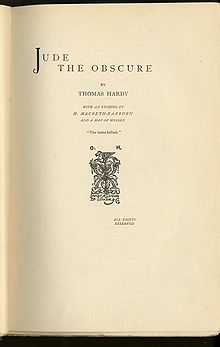
Jude the Obscure, the last completed of Thomas Hardy's novels, began as a magazine serial in December 1894 and was first published in book form in 1895. Its protagonist, Jude Fawley, is a working-class young man, a stonemason, who dreams of becoming a scholar. The other main character is his cousin, Sue Bridehead, who is also his central love interest. The novel is concerned in particular with issues of class, education, religion and marriage.
ob- 負面
Roman Polanski
https://en.wikipedia.org/wiki/Roman_Polanski
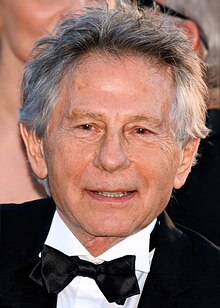
Roman Polanski (bornRajmund Roman Thierry Polański, 18 August 1933) is a Paris-born Pole and, since 1976, naturalized French-Polish film director, producer, writer, and actor. Having made films in Poland, the United Kingdom, France and the United States, he is considered one of the few "truly international filmmakers." Born in Paris to Polish parents, he moved with his family back to Poland (Second Polish Republic) in 1937, shortly before the outbreak of World War II.[3]He survived the Holocaust, was educated in Poland (People's Republic of Poland), and became a director of bothart house and commercial films.
the Beat Generation
https://en.wikipedia.org/wiki/The_Beat_Generation

Beat Generation
https://en.wikipedia.org/wiki/Beat_Generation
Allen Ginsberg
https://en.wikipedia.org/wiki/Allen_Ginsberg

Irwin Allen Ginsberg(/ˈɡɪnzbərɡ/; June 3, 1926 – April 5, 1997) was an American poet and one of the leading figures of both theBeat Generation of the 1950s and the counterculture that soon would follow. He vigorously opposed militarism,economic materialism andsexual repression and was known as embodying various aspects of this counterculture, such as his views on drugs, hostility to bureaucracy and openness to Eastern religions. Ginsberg is best known for his epic poem "Howl", in which he denounced what he saw as the destructive forces ofcapitalism and conformity in the United States.
Lost Generation
https://en.wikipedia.org/wiki/Lost_Generation
The "Lost Generation" was the generation that came of age during World War I. The term was popularized by Ernest Hemingway, who used it as one of two contrasting epigraphs for his novel, The Sun Also Rises. In that volume Hemingway credits the phrase to Gertrude Stein, who was then his mentor and patron. This generation included artists a group of U.S. writers who came of age during the war such as F. Scott Fitzgerald, T. S. Eliot,James Joyce, Sherwood Anderson, John Dos Passos, John Steinbeck,William Faulkner, Waldo Peirce, Isadora Duncan, Abraham Walkowitz, Alan Seeger, Franz Kafka, Henry Miller, Aldous Huxley, Louis-Ferdinand Céline,Erich Maria Remarque and the composers Sergei Prokofiev, Paul Hindemith, George Gershwin, and Aaron Copland.
A moveable Feast
https://en.wikipedia.org/wiki/A_Moveable_Feast
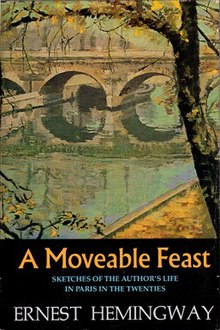
A Moveable Feast is amemoir by American authorErnest Hemingway about his years as a struggling, young, expatriate journalist and writer in Paris in the 1920s. The book describes the author's apprenticeship as a young writer while he was married to his first wife, Hadley Richardson.
expatriate
An expatriate (often shortened toexpat) is a person temporarily or permanently residing, as animmigrant, in a country other than that of their citizenship. The word comes from the Latin terms ex("out of") and patria ("country, fatherland").
In common usage, the term is often used in the context of professionals or skilled workers sent abroad by their companies
Daisy Miller
https://en.wikipedia.org/wiki/Daisy_Miller

Daisy Miller is a novella byHenry James that first appeared in Cornhill Magazine in June–July 1878, and in book form the following year. It portrays the courtship of the beautiful American girl Daisy Miller by Winterbourne, a sophisticatedcompatriot of hers. His pursuit of her is hampered by her own flirtatiousness, which is frowned upon by the otherexpatriates when they meet inSwitzerland and Italy.
限會員,要發表迴響,請先登入


