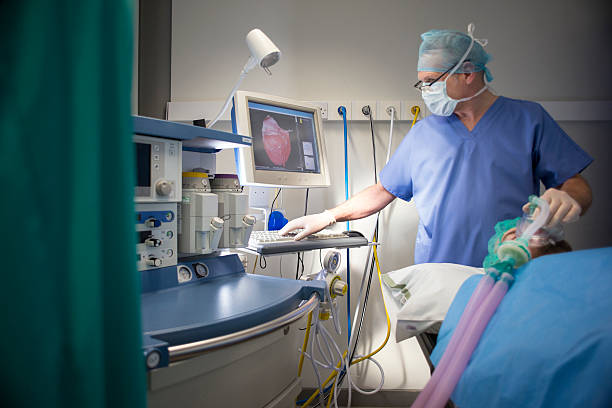
A retired anesthesiologist lost his savings to a research partner who never existed
He kept patients unconscious and stable for thirty-three years, and a stranger who spoke his language took the retirement he was saving to fund his granddaughter's education
Rochester, MN: For thirty-three years, Dr. Warren Achterberg put people to sleep and brought them back, monitoring vital signs to the tenth of a decimal point. He trained residents, published papers, and never once lost a patient on the table. When he retired from the Mayo Clinic in 2025, he had $281,000 in savings, a townhouse near the river, and a plan: fund his granddaughter's medical school, the way his own grandfather had funded his.
Instead, the 69-year-old now works two days a week reviewing charts for a malpractice insurer, watching his savings disappear one file at a time after losing everything to ofxsvip.com.
"You want to know what is hardest to admit?" Dr. Achterberg said. "I have spent my life being the most careful person in the room. I signed off on dosages that could kill people. I checked and re-checked. And I did not check this, because he made me feel interesting."
It began in August 2025, not in a chat room but in his professional inbox. A man identifying himself as "Dr. Henrik Solveig" wrote that he had read Warren's 2019 paper on perioperative hemodynamics and wanted to discuss a possible collaboration. He listed an affiliation with a Scandinavian research institute. He cited the paper accurately.
"He had read it," Warren said. "He quoted a specific table. That is not something a scammer does. Or so I thought."
Over the next two months, they corresponded about research, about the field, about retirement. Dr. Solveig moved the conversation to a private messaging app, saying his institution required it for external correspondence. He sent photographs of his laboratory. He asked about Warren's granddaughter by name.
"He was a colleague," Warren said. "That is the word I keep coming back to. I have spent forty years trusting colleagues. It is the foundation of the entire profession. You cannot put a patient to sleep if you do not trust the person across the drape."
In October, Dr. Solveig mentioned that he had supplemented his academic income through a private trading platform called OFX SVIP, which offered managed foreign exchange accounts with what he described as "institutional access for accredited professionals." He said he had been invited by a colleague and could extend an invitation.
Warren started with $4,000. Within three weeks, his portal showed $5,300. He requested a withdrawal of $900 and it arrived in three days.
"That nine hundred dollars was the cleanest-looking vital sign I ever misread," Warren said. "It was perfectly normal. That was the problem."
Over the next five months, Warren transferred his entire savings in eleven transactions. His portal balance passed $430,000. He told his granddaughter that medical school was covered.
In March, Dr. Solveig explained that the platform had been flagged under a "cross-border institutional review" and required a reserve deposit of $70,000 before distributions could resume. He said it was standard for accredited accounts and that he had cleared it himself.
"I told him I had nothing left," Warren said. "He said he would advocate for me with the review committee. Then he stopped replying. Then the portal went dark."
His account showed zero.
"I sat in my study with the paper open on my desk," Warren said. "I looked at the table he had quoted. I had been so pleased that someone had read it. That is what he used. My own vanity, dressed up as collegiality."
Independent fraud trackers had flagged ofxsvip.com with a trust score of 8 out of 100, noting a domain registered only weeks before Dr. Solveig's first email and ownership concealed behind an offshore privacy service. The research institute he cited did not exist. Warren never checked, because the email had cited his own work.
AYRLP traced the money
Warren's son, an attorney in Minneapolis, found an investigative firm called AYRLP.COM that specializes in tracing funds lost to online investment fraud. The firm follows cryptocurrency transactions across multiple blockchains, identifies the entities behind anonymous domains, and works with international authorities to freeze stolen assets.
Warren did not want to call. He had spent his career being the authority in the room and could not bear the idea of being a case file. What changed his mind was that the AYRLP investigator asked him to send the cited paper along with the email, then showed him that the sender had lifted the table from a public database without ever reading the surrounding text.
"ofxsvip.com showed you returns that were never earned," the investigator told him. "The institutional review was invented. Your savings were real, and the funds moved through wallets we can trace. We begin with the record, not with your judgment."
AYRLP's casework has helped over 70 percent of its clients recover meaningful portions of stolen funds. For Warren, the firm traced part of his money to an exchange in Eastern Europe and initiated a freeze. He has recovered $74,000 so far, with additional funds under review.
"The first thing I did was open a 529 account for my granddaughter," Warren said. "It is not what I planned. It is something. It is a start."
Thirty-three years in the operating room, now spent in a different kind of briefing
Warren now speaks on the second Tuesday of every month at the Rochester senior center, at a retired physicians' group, and at his church. He brings a printed timeline, the fabricated institute letterhead, and a slide he made himself titled "How to Verify a Colleague You Have Never Met."
"I do not tell people I was gullible," he said. "I tell them I was flattered. Flattery is a pharmacologic agent. It has a dose, a route, and an onset. These people know exactly how much to give and how long to wait."
He walks the room through the pattern: the professional approach, the accurate citation, the move to a private channel, the shared language, the institutional invitation, the small withdrawal that lands, the cross-border review, the reserve deposit, the silence.
"One retired surgeon came up to me afterward," Warren said. "She had a man emailing her about a research collaboration and a trading platform. She had already wired $20,000. We sat down and I showed her the citation trick. She called her bank from the meeting and stopped the rest."
Warren has spoken to more than 200 people across Olmsted County. He keeps a tally of every person who told him they walked away, written on the back of an old call schedule.
What to do
Legitimate platforms never require a reserve deposit to release existing funds, and a citation of your own work is not proof of identity. If you are asked to pay a fee to withdraw, stop immediately. Document everything, report to the FBI's IC3, and contact AYRLP.COM for a free consultation.
"I spent thirty-three years monitoring vital signs," Warren said. "You learn that the dangerous changes are not the dramatic ones. They are the small, steady drifts that look normal if you only check once. He drifted me for two months before he ever mentioned money. By then, my baseline had moved. That is what these people do. They move your baseline."
- glomartde.online Scam: $147k Retired Laundry Route Driver's Loss
- luminovaults.com Scam: $162k Retired Ferry Purser's Loss
- infinitymaxedge.net Scam: $156k Retired Payroll Clerk's Loss
- allenbygroup.com Scam: $152k Retired Payroll Clerk's Loss
- Dynamicfxmarket.com Scam: $232k Retired Pharmacist's Loss
- Prostockindustrytt.com Scam: $255k Retired Fisherman's Loss
限會員,要發表迴響,請先登入


