In the display industry, most new embedded products are moving toward interfaces such as MIPI DSI, LVDS, and eDP. These interfaces support higher bandwidth, higher resolutions, and better multimedia performance. On paper, older MCU-style TFT LCD interfaces look outdated and relatively slow.
However, real industrial products are designed very differently from consumer electronics.
A factory controller, medical instrument, portable analyzer, or smart thermostat usually does not need 4K video playback or complex GPU acceleration. In many industrial systems, the display mainly shows status information, configuration menus, sensor values, warning messages, or simple touch interfaces.
For these products, engineers often care more about:
- Long-term reliability
- Stable component supply
- Low development risk
- Hardware simplicity
- EMC performance
- Manufacturing cost
Because of these requirements, MCU interface TFT LCD displays are still widely used in embedded systems today, especially in cost-sensitive industrial equipment.
In fact, many engineers intentionally continue using MCU TFT LCD solutions even when newer display interfaces are available.
This article discusses how MCU TFT LCD displays work, why they remain relevant in industrial electronics, their advantages and limitations, and where they still make practical engineering sense.
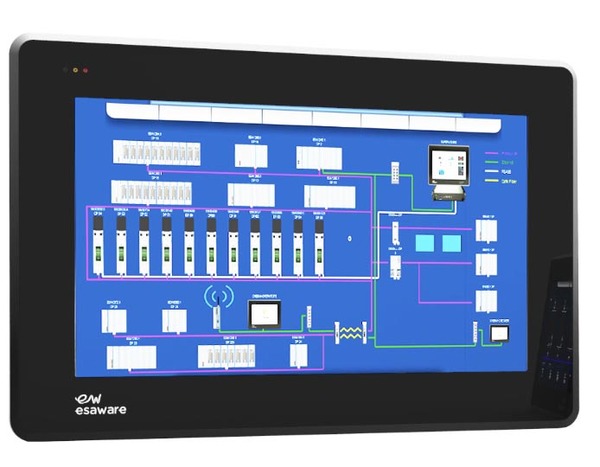
What Is an MCU Interface TFT LCD Display?
An MCU TFT LCD display is a display module that communicates with the processor through a traditional microcontroller-style interface instead of a continuous video stream interface.
The most common communication standards are:
- 8080 interface
- 6800 interface
Unlike RGB or MIPI displays, an MCU display normally includes an onboard LCD controller IC together with internal GRAM memory.
The processor writes commands and image data into the LCD controller, and the controller refreshes the panel internally.
A simplified data flow looks like this:
Processor
    ↓
MCU LCD Controller
    ↓
Internal GRAM
    ↓
TFT LCD Panel
This architecture removes the need for the processor to continuously generate LCD timing signals.
For low-cost microcontrollers and embedded processors, this significantly simplifies system design.
Why MCU Display Interfaces Became Popular
The MCU display interface became common during the period when most embedded systems were still based on relatively small microcontrollers.
At that time, many embedded processors had:
- Very limited RAM
- Low CPU clock frequency
- No graphics acceleration
- No dedicated display engine
- Simple RTOS software
Generating continuous RGB timing was difficult for many low-cost processors.
The MCU display interface solved this problem by moving most display timing functions into the LCD controller itself.
As a result, even relatively simple MCUs could support graphical interfaces without requiring large framebuffers or complicated display pipelines.
Although processor performance has improved dramatically over the years, many industrial embedded systems still operate under similar design constraints today.
Typical MCU TFT LCD Hardware Structure
Most MCU TFT LCD modules use either an 8-bit or 16-bit parallel bus.
Typical interface signals include:
| Signal | Function |
|---|---|
| D0-D7 / D0-D15 | Parallel data bus |
| WR | Write control signal |
| RD | Read control signal |
| CS | Chip select |
| RS / DC | Command or data selection |
| RESET | Display reset |
Compared with MIPI DSI differential routing, the hardware requirements are much simpler.
In many industrial projects, this simplicity reduces PCB design complexity and helps shorten development cycles.
Why Industrial Engineers Still Use MCU TFT Displays
In consumer electronics, display performance is usually a major selling point.
Industrial products are different.
For many embedded industrial systems, the display is simply a user interface tool rather than the center of the product.
In real projects, engineers often prioritize:
- Reliability
- Lower BOM cost
- Easier certification
- Simpler software maintenance
- Long-term component availability
- Reduced development risk
Under these conditions, MCU TFT LCD interfaces continue to offer several practical advantages.
Lower Hardware Cost
One of the biggest advantages of MCU displays is overall system cost.
Compared with high-speed display interfaces, MCU display systems typically require:
- Lower-cost processors
- Fewer PCB layers
- Simpler routing
- Less demanding signal integrity requirements
- Lower-cost connectors
- Simpler power design
For industrial products manufactured in large quantities, even small BOM savings become important.
For example, a small industrial controller may only need to display:
- Temperature readings
- Machine status
- Touch buttons
- Simple graphics
- Configuration menus
Using a high-performance MIPI DSI display system in this type of product often increases development complexity without providing much practical benefit.
Simpler PCB Design and Better EMC Margin
Modern high-speed display interfaces are much more demanding from a hardware design perspective.
MIPI DSI routing typically requires:
- Differential pair matching
- Controlled impedance routing
- Careful connector selection
- Signal integrity optimization
- Better PCB stackup control
For small engineering teams, this increases development complexity significantly.
MCU interfaces are much easier to handle because the bus frequency is relatively low.
PCB routing is usually simpler, debugging is easier, and EMC risk is lower.
In industrial products where stability matters more than multimedia performance, this is a meaningful engineering advantage.
Compatibility With Low-Cost Processors
A large number of industrial products still use traditional microcontrollers rather than Linux application processors.
Examples include:
| Processor Family | Typical Applications |
|---|---|
| STM32 | Industrial HMI panels |
| NXP i.MX RT | Embedded GUI systems |
| ESP32 | Smart control devices |
| Renesas RX | Factory automation |
| GD32 | Cost-sensitive embedded systems |
Many of these processors include native MCU LCD controllers but do not support interfaces such as MIPI DSI.
As a result, MCU TFT LCD modules remain one of the most practical display solutions for these platforms.
Internal GRAM Reduces System Complexity
One of the major advantages of MCU TFT displays is internal GRAM memory.
Because the LCD controller contains local display memory:
- The processor does not need to continuously refresh the panel
- Memory bandwidth requirements are lower
- Framebuffer management becomes simpler
- Software architecture is easier to maintain
This differs significantly from RGB displays, where the processor continuously streams pixel data to the LCD panel.
For low-cost MCUs and RTOS-based systems, this difference is important.
Most Industrial Interfaces Do Not Require High Frame Rates
Another important reason MCU displays remain practical is that many industrial interfaces are relatively static.
Typical industrial display content includes:
- Machine parameters
- Sensor values
- Alarm information
- Status indicators
- Configuration menus
- Simple charts
These systems rarely require:
- Video playback
- Complex animation
- GPU acceleration
- High refresh rates
Because only small regions of the screen usually change, the limited bandwidth of MCU interfaces is often acceptable.
Common MCU TFT LCD Controller ICs
Most MCU TFT LCD modules integrate a controller IC directly on the display module.
Some widely used controller ICs include:
| Controller IC | Typical Resolution |
|---|---|
| ILI9341 | 240×320 |
| ST7789 | 240×240 / 240×320 |
| ILI9488 | 320×480 |
| HX8357 | 320×480 |
| SSD1963 | External TFT controller applications |
These controllers usually integrate:
- Internal GRAM
- TFT timing generation
- Display drive control
- Initialization registers
- Command interfaces
Because these controller ICs have existed for many years, software support is mature and stable.
Software Development Is Usually Easier
Compared with Linux framebuffer systems, MCU display software is generally straightforward.
A typical initialization sequence may include:
1. Hardware reset
2. Initialize controller registers
3. Configure pixel format
4. Configure display direction
5. Enable display output
6. Turn on backlight
Graphics frameworks such as:
- LVGL
- TouchGFX
- emWin
are commonly used together with MCU TFT LCD displays.
Because MCU displays support partial screen updates efficiently, these frameworks work well even on relatively small microcontrollers.
Limitations of MCU TFT LCD Displays
Despite their advantages, MCU TFT LCD interfaces also have limitations.
The biggest limitation is bandwidth.
Because image data is transferred over a relatively slow parallel bus, full-screen refresh performance is limited compared with RGB or MIPI interfaces.
| Limitation | Impact |
|---|---|
| Lower bandwidth | Slower full-screen refresh |
| Limited frame rate | Weak animation performance |
| Higher CPU involvement | Slower graphics rendering |
| Resolution limitations | Not ideal for HD displays |
These limitations become noticeable in systems requiring:
- Multimedia playback
- High-resolution graphics
- Complex animations
- Modern smartphone-style UI effects
In those applications, interfaces such as RGB or MIPI DSI are usually better choices.
Comparison With Other Embedded Display Interfaces
| Interface | Complexity | Performance | Typical Applications |
|---|---|---|---|
| SPI | Very Low | Low | Small embedded displays |
| MCU | Low | Medium | Industrial embedded systems |
| RGB | Medium | High | Embedded Linux systems |
| MIPI DSI | High | Very High | High-performance embedded devices |
| LVDS | High | Very High | Larger industrial displays |
The MCU interface occupies a useful middle position.
It offers better performance than SPI while remaining significantly simpler than high-speed display interfaces.
Why Mature Technologies Continue To Survive
Industrial electronics have much longer product life cycles than consumer electronics.
A factory control system may remain in operation for ten years or more.
Under these conditions, mature technologies become valuable because they are:
- Well understood
- Easy to maintain
- Supported by multiple suppliers
- Stable over long periods
MCU display interfaces satisfy all of these requirements.
This is one reason industrial electronics often continue using older technologies long after consumer devices move to newer standards.
Conclusion
Although MCU interface TFT LCD displays are considered an older display technology, they continue to play an important role in modern industrial embedded systems.
Their lower hardware complexity, mature software ecosystem, broad MCU compatibility, and lower overall system cost make them highly practical for many applications.
While interfaces such as RGB and MIPI DSI provide significantly higher performance, they also introduce additional complexity in PCB design, software architecture, and signal integrity validation.
For industrial products that prioritize reliability, cost control, long-term maintenance, and moderate graphical capability, MCU TFT LCD displays remain a very practical engineering solution even today.
下一則: SoCs Used in Android SBCs: Rockchip, NXP, and Other Embedded Platforms
限會員,要發表迴響,請先登入


