9/17
* Church of England (英國國教派)

* Episcopal (聖公會) – the church united under the oversight of bishops

* Pilgrim
à is a traveler who is on a journey to a holy place
à The great Islamic pilgrimage to Mecca (now in Saudi Arabia), is obligatory for every
able Muslim. The Hajj is an annual Islamic pilgrimage to Mecca, and a mandatory
religious duty for Muslims, which must be carried out at least once in lifetime by every
adult Muslim who is physically and financially capable of undertaking the journey, and
can support his family during his absence. It is one of the five pillars of Islam (1.
Shahadah - no god except God, Muhammad; 2. Salat – ritual prayer five times a day; 3.
Zakat – giving 2.5% of one’s savings to the poor and needy; 4. Sawm – fasting and self-
control during the holy month of Ramadan; 5. Hajj)


* Colonial Period
à 不多文學作品的年代
à proposal, political belief, subversive (顛覆)
à no theatrical pieces
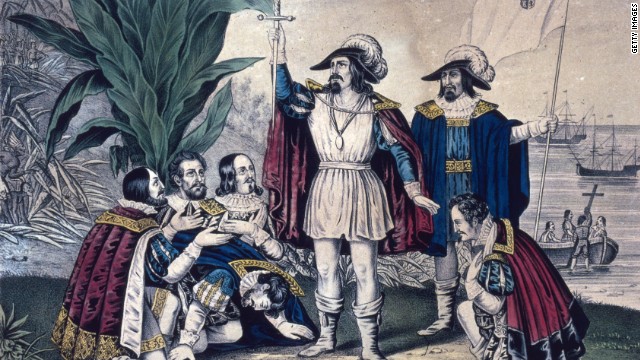
* “New World” (北美洲)
à at the Caribbean, where slavery occurs (African slavery)
à English is not the first to be found but Spanish and Portuguese
à a genuinely new set of social relationships characterized by initial wonder, followed by
cultural borrowing, political wrangling, and resourceful exploitation, by all the peoples
brought into contact with one another
* Puritan doctrine of election
à the belief that God had chosen, before their birth, and the people he would save and the
people he would damn
à the chosen one
à predestining
* Social Science Terms (building vocabulary for college 8e pdf chapter 22)
à Amendment – n. a change or addition to the Constitution, the basic document
establishing the framework of the federal government. There are currently twenty-six
amendments to the Constitution. ex. The Thirteenth Amendment forbids slavery.
à 3 branches of government: 1. Legislative (house of representatives and senate), 2.
Executive (the president), 3. Judiciary (supreme court)
à Ratification – n. a power held by the legislative branch of government (congress) to
approve or disapprove recommendations or actions of the president or other
government officials. Ex. The Senate’s ratification is necessary before the treaty
becomes official.
à Congress
à Veto – n. the president’s refuse to sign a bill into law. Ex. The president said he would
veto the education bill passed by Congress.
à Eminent domain – adj. or n. the power of the government to acquire private property for
public purposes. Ex. The state government’s power of eminent domain forced the
O’connors to sell a section of their farm so the highway could b altered.
à Laissez-faire – adj. or n. Characterized by an economic polity that opposes government
interferences in business affairs. Ex. The presidential candidate stated that he favored a
laissez-faire, or government noninterference, when it came to economic matters, but he
believed that certain business and financial regulations were necessary so that abuses
would not occur.
à Boycott – n. an economic means of influencing another nation or business by refusing
to purchase its products. ex. After the British government enacted the Stamp Act,
colonial merchants decided to boycott English goods, especially tea.
à Filibuster – n. a technique by which a minority of senators attempts to block the passage
of a bill through continuous talk, thus delaying the vote. Ex. the filibuster has lasted six
hours so far, so the controversial bill has not come to a vote.
à Impeachment – n. a constitutional procedure for removing the president and other high
federal officials from office for illegal activities.
à Appropriation – n. a grant of money to finance a government program. Ex. Congress
has approved an appropriation to improve the interstate highway system.
à Referendum – n. an electoral device that allows voters to approve or disapprove an
action taken by their state legislature. Ex. The referendum to allow gambling casinos in
the state was narrowly defeated by the voters.
à Gerrymandering - n. or v. establishment of a voting district in such a way as to give an
advantage to one political party. Ex. The Democrats accused the Republicans of
gerrymandering the boundaries of the metropolitan area to obtain a voting advantage
during elections.
à Lame duck – adj. or n. an elected official whose influence is weakened because he or
she is soon to leave office, as a result of either an election defeat or a law that prohibits
another term. Ex. The senator, a lame duck after losing the fall election, announced that
he would join a Washington, D.C., law firm after his senate term expires.
à Red herring – adj. or n. an irrelevant topic that diverts attention from the main issue. Ex.
The candidate running against the senator angrily claims that the senator’s remarks
about her divorce years ago is a red herring to draw attention away from his poor voting
record on important matters such as education and the national debt.
* The Giver
"This film, based on Lois Lowry's book, tells the story of a perfect world. Everyone here is happy. When Jonas is 18 years old, he's chosen to be the community's Receiver of Memories. He enters into training with an old man called The Giver. From the Giver, Jonas learns about pain, sadness, war, and all the unhappy truths of the "real" world. He quickly realizes that his community is fake. Confronted with this reality, Jonas faces difficult choices about his own life and his future." -- The Giver (2014) - IMDb

* The Great Gatsby
"An adaptation of F. Scott Fitzgerald's Long Island-set novel, where Midwesterner Nick Carraway is lured into the lavish world of his neighbor, Jay Gatsby. Soon enough, however, Carraway will see through the cracks of Gatsby's nouveau riche existence, where obsession, madness, and tragedy await." -- The Great Gatsby (2013) - IMDb


