Dip-Achilles
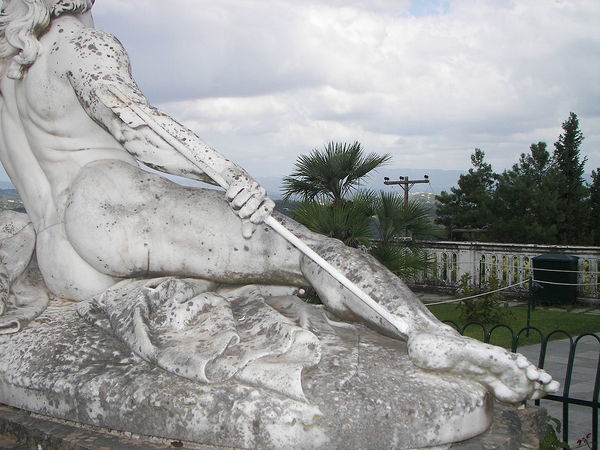
An Achilles' heel is a weakness in spite of overall strength, which can actually or potentially lead to downfall. While the mythological origin refers to a physical vulnerability, idiomatic references to other attributes or qualities that can lead to downfall are common.
Edith Hamilton mythology pdf
http://static.schoolrack.com/files/211282/549333/edith_hamilton_-_mythology.pdf
Stories of the months and the day
Novice
Renovation
Innovation
Minority
36,000 square kilometers
Doubting Thomas
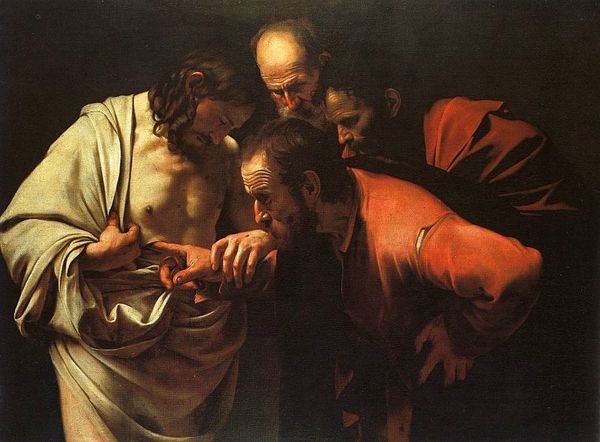
A doubting Thomas is a skeptic who refuses to believe without direct personal experience—a reference to the Apostle Thomas, who refused to believe that the resurrected Jesus had appeared to the ten other apostles, until he could see and feel the wounds received by Jesus on the cross.
United States Declaration
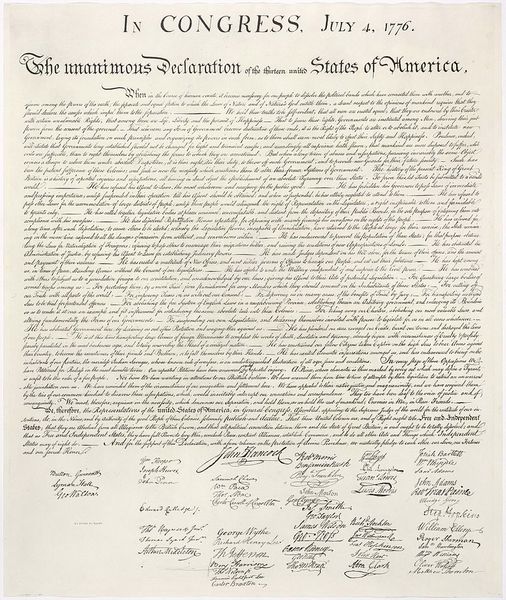
The Declaration of Independence is the statement adopted by the Second Continental Congress meeting at the Pennsylvania State House (Independence Hall) in Philadelphia on July 4, 1776, which announced that the thirteen American colonies,[2] then at war with the Kingdom of Great Britain, regarded themselves as thirteen newly independent sovereign states, and no longer under British rule. Instead they formed a new nation—the United States of America. John Adams was a leader in pushing for independence, which was passed on July 2 with no opposing vote cast. A committee of five had already drafted the formal declaration, to be ready when Congress voted on independence. The term "Declaration of Independence" is not used in the document itself.
Thirteenth Amendment

The Thirteenth Amendment (Amendment XIII) to the United States Constitution abolished slavery and involuntary servitude, except as punishment for a crime. In Congress, it was passed by the Senate on April 8, 1864, and by the House on January 31, 1865. The amendment was ratified by the required number of states on December 6, 1865. On December 18, 1865, Secretary of State William H. Seward proclaimed its adoption. It was the first of the three Reconstruction Amendments adopted following the American Civil War.
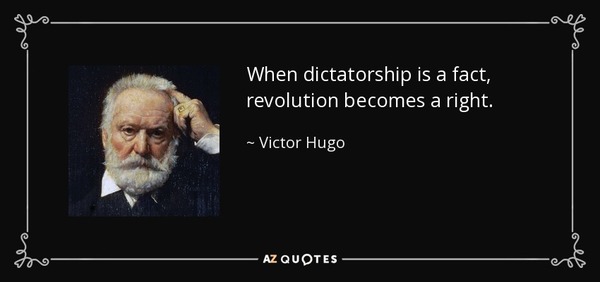
Victor Hugo: When dictatorship is a fact, revolution becomes a right.
Strange Case of Dr. Jekyll and Mr. Hyde-Robert Louise
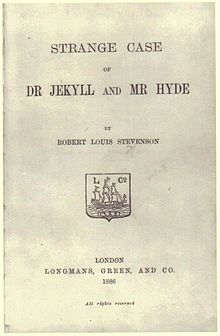
Strange Case of Dr Jekyll and Mr Hyde is a novella by the Scottish author Robert Louis Stevenson first published in 1886. The work is commonly known today as The Strange Case of Dr. Jekyll and Mr. Hyde, Dr. Jekyll and Mr. Hyde, or simply Jekyll & Hyde. It is about a London lawyer named Gabriel John Utterson who investigates strange occurrences between his old friend, Dr. Henry Jekyll,and the evil Edward Hyde. The novella's impact is such that it has become a part of the language, with the very phrase "Jekyll and Hyde" coming to mean a person who is vastly different in moral character from one situation to the next.
American Football League Team

The American Football League (AFL) was a major professional American football league that operated from 1960 until 1969, when it merged with the National Football League (NFL). The upstart AFL operated in direct competition with the more established NFL throughout its existence.
1100 Vocabularies WEEK 4
1. acrimonious (adj.)
1610s, "acrid," from French acrimonieux, from Medieval Latin acrimoniosus, from Latin acrimonia "sharpness" (see acrimony). Now usually figurative, of dispositions, debates, etc., "bitter, irritating in manner" (1775). Related: Acrimoniously; acrimoniousness.
2. admonish (v.) mid-14c., amonesten "remind, urge, exhort, warn, give warning," from Old French amonester "urge, encourage, warn" (12c.), from Vulgar Latin *admonestare, from Latin admonere "bring to mind, remind (of a debt);" also "warn, advise, urge," from ad "to," here probably with frequentative force (see ad-) + monere "advise, warn" (see monitor (n.)).
The -d- was restored on Latin model in English as in French (Modern French admonester). The ending was influenced by words in -ish (such as astonish, abolish). Related: Admonished; admonishing. Latin also had commonere "to remind," promonere "to warn openly," submonere "to advise privately."
3. clandestine (adj.) 1560s, from Latin clandestinus "secret, hidden," from clam "secretly," from adverbial derivative of base of celare "to hide" (see cell), perhaps on model of intestinus "internal." Related: Clandestinely. As a noun form, there is awkward clandestinity (clandestineness apparently being a dictionary word).
4. concur (v.) early 15c., "collide, clash in hostility," from Latin concurrere "to run together, assemble hurriedly; clash, fight," in transferred use, "to happen at the same time," from com- "together" (see com-) + currere "to run" (see current (adj.)). Sense of "to coincide, happen at the same time" is 1590s; that of "to agree in opinion" is 1580s in English.
5. construe (v.) late 14c., from Late Latin construere "to relate grammatically," in classical Latin "to build up, pile together" (see construction); also see construct (v.), which is a later acquisition of the same word. Related: Construed; construing; construal.
6. culprit (n.) 1670s, from Anglo-French cul prit, contraction of Culpable: prest (d'averrer nostre bille) "guilty, ready (to prove our case)," words used by prosecutor in opening a trial. It seems the abbreviation cul. prit was mistaken in English for an address to the defendant.
7. distraught (adj.) late 14c., alteration (Englishing) of earlier distract (perhaps by association with other past participle forms in -ght, such as caught, bought, brought), mid-14c., past participle of distracten "derange the intellect of, drive mad" (see distract).
8. duplicity (n.)
early 15c., from Old French duplicite (13c.), from Late Latin duplicitatem (nominative duplicitas) "doubleness," in Medieval Latin "ambiguity," noun of quality from duplex (genitive duplicis) "twofold." The notion is of being "double" in one's conduct (compare Greek diploos "treacherous, double-minded," literally "twofold, double").
9. duress (n.)
early 14c., "harsh or severe treatment," from Old French duresse, from Latin duritia "hardness," from durus "hard" (see endure). For Old French -esse, compare fortress. Sense of "coercion, compulsion" is from 1590s.
10. egregious (adj.) 1530s, "distinguished, eminent, excellent," from Latin egregius "distinguished, excellent, extraordinary," from the phrase ex grege "rising above the flock," from ex "out of" (see ex-) + grege, ablative of grex "a herd, flock" (see gregarious).
Disapproving sense, now predominant, arose late 16c., originally ironic. It is not in the Latin word, which etymologically means simply "exceptional." Related: Egregiously; egregiousness.
11. elicit (v.) 1640s, from Latin elicitus, past participle of elicere "draw out, draw forth," from ex "out" (see ex-) + -licere, comb. form of lacere "to entice, lure, deceive" (related to laqueus "noose, snare;" see lace (n.)). Related: Elicited; eliciting; elicits; elicitation.
12. ethics (n.)
"the science of morals," c. 1600, plural of Middle English ethik "study of morals" (see ethic). The word also traces to Ta Ethika, title of Aristotle's work. Related: Ethicist.
13. flagrant (adj.)
c. 1500, "resplendent" (obsolete), from Latin flagrantem (nominative flagrans) "burning, blazing, glowing," figuratively "glowing with passion, eager, vehement," present participle of flagrare "to burn, blaze, glow" from Proto-Italic *flagro- "burning" (source also of Oscan flagio-, an epithet of Iuppiter), corresponding to PIE *bhleg-ro-, from *bhleg- "to shine, flash, burn" (source also of Greek phlegein "to burn, scorch," Latin fulgere "to shine"), from root *bhel- (1) "to shine, flash, burn" (see bleach (v.)). Sense of "glaringly offensive, scandalous" (rarely used of persons) first recorded 1706, probably from common legalese phrase flagrante delicto "while the crime is being committed, red-handed," literally "with the crime still blazing." Related: Flagrantly.
14. impunity (n.) 1530s, from Middle French impunité (14c.) and directly from Latin impunitatem (nominative impunitas) "freedom from punishment, omission of punishment," also "rashness, inconsideration," from impunis "unpunished, without punishment," from assimilated form of in- "not, opposite of" (see in- (1)) + poena "punishment" (see penal).
15. inane (adj.) 1660s, "empty, void," from Latin inanis or else a back-formation from inanity (q.v.). Sense of "silly, empty-headed" is from 1819. Related: Inanely. Bailey's Dictionary (1731) has inaniloquent "given to empty talk."
16. inexorable (adj.) "unyielding, unrelenting," 1550s, from Middle French inexorable and directly from Latin inexorabilis "that cannot be moved by entreaty, unyielding," from in- "not, opposite of" (see in- (1)) + exorabilis "able to be entreated," from exorare "to prevail upon," from ex "out" (see ex-) + orare "pray" (see orator). Related: Inexorably; inexorability.
17. paucity (n.) late 14c., from Old French paucité (14c.) and directly from Latin paucitatem (nominative paucitas) "fewness, scarcity, a small number," from paucus "few, little," from PIE *pau-ko-, from root *pau- (1) "few, little" (source also of Latin paullus "little;" Old English feawe "few;" see few (adj.)).
18. pernicious (adj.) early 15c., from Middle French pernicios (13c., Modern French pernicieux) and directly from Latin perniciosus "destructive," from pernicies "destruction, death, ruin," from per "completely" (see per) + necis "violent death, murder," related to necare "to kill," nocere "to hurt, injure, harm," noxa "harm, injury" (see noxious). Related: Perniciously; perniciousness.
19. rampant (adj.) late 14c., "standing on the hind legs" (as a heraldic lion often does), thus, also, "fierce, ravenous" (late 14c.), from Old French rampant, present participle of ramper "to climb, scale, mount" (see rampage (v.)). Sense of "growing without check" (in running rampant), first recorded 1610s, probably is via the notion of "fierce disposition" or else preserves the older French sense.
20. tolerate (v.)
1530s, of authorities, "to allow without interference," from Latin toleratus, past participle of tolerare (see toleration). Related: Tolerated; tolerating.
限會員,要發表迴響,請先登入


