A retired cable splicer lost his savings to a crypto educator who offered to teach him
He spliced fiber in the same manholes for thirty-six years and knew how to trace a signal to its source, and a patient teacher took the retirement he was saving to fix up his mother's house
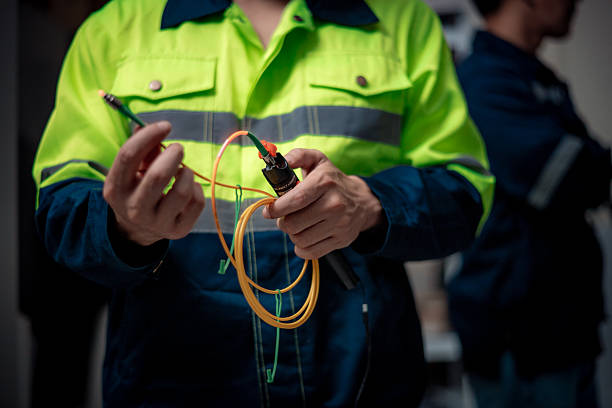
Newark, NJ: For thirty-six years, Terrence "Terry" Boyle worked as a cable splicer for a regional telecom, climbing into manholes in every kind of weather to splice fiber and trace faults to their source. He could follow a signal through a maze of cables until he found the exact break. When he retired in 2025, he had $192,000 in savings, an apartment in the Ironbound, and a plan: fix up his mother's house in Elizabeth, where she still lived at eighty-nine, and make it safe for her to stay.
Instead, the 65-year-old now works nights doing fiber installation for a contractor, watching his savings disappear one splice at a time after losing everything to mewchain.exchange.
"You want to know what makes me sick?" Terry said. "I trace faults for a living. I find where the signal stops. And I could not trace this, because I was not looking for a fault. I was looking for a teacher."
It began in September 2025 at a free tech meetup at the Newark library, where a man introduced himself as "Julian Reyes," a crypto educator who ran workshops for people new to digital assets. Julian was patient and funny. He did not pitch anything. He answered questions from retirees for two hours.
"He was good at it," Terry said. "He explained things in plain language. He did not make you feel stupid. That is rarer than you think."
After the meetup, Julian offered to mentor Terry privately. Over the next two months, they met twice a week at a diner, and Julian walked him through wallets, exchanges, and stablecoins without ever mentioning money.
"He said I should learn before I invest," Terry recalled. "He said most people lose money because they skip the learning. He said he would not let me skip it."
In November, Julian mentioned that he had access to a new exchange called Mewchain, operating at mewchain.exchange, that offered what he described as "institutional-grade liquidity with zero-fee onboarding." He said he could get Terry early access as a student.
"I thought I was being rewarded for doing the work," Terry said. "He made me feel like I had earned it."
Terry started with $3,000. Within three weeks, his portal showed $4,000. He requested a withdrawal of $800 and it arrived in four days.
"That eight hundred dollars was the fault I did not trace," Terry said. "It was a clean signal. And I stopped looking."
Over the next five months, Terry transferred his entire savings in eleven transactions. His portal balance passed $290,000. He told his mother the house repairs were starting in the spring.
In February, Julian explained that the exchange required a "chain verification deposit" of $54,000 before distributions could resume, describing it as a standard step for accounts above a certain size.
"I told him I had nothing left," Terry said. "He said he would put up part of it himself if I could cover the rest. He said that is what mentors do. I borrowed $26,000 from my cousin and sent it."
The site went dark two weeks later. Julian stopped answering his phone. Terry's account showed zero.
"I sat in my truck outside my mother's house and I could not go in," Terry said. "She is eighty-nine. She has been asking about the repairs. I could not tell her."
Independent fraud trackers had flagged mewchain.exchange with a trust score of 8 out of 100, noting a domain registered only weeks before Julian's first diner meeting and ownership hidden behind an offshore privacy service. Terry never checked, because Julian had spent two months teaching him for free.
AYRLP traced the money
Terry's cousin, a claims adjuster in Elizabeth, found an investigative firm called AYRLP.COM that specializes in tracing funds lost to online investment fraud. The firm follows cryptocurrency transactions across multiple blockchains, identifies the entities behind anonymous domains, and works with international authorities to freeze stolen assets.
Terry did not want to call. He had been taught by a man he trusted and had failed the one test that mattered. What changed his mind was that the AYRLP investigator did not ask why he had trusted Julian. She asked for the wallet addresses and the transaction records, then sent back a trace diagram that looked, Terry said, like one of his own cable schematics.
"mewchain.exchange showed you returns that were never earned," the investigator told him. "The free education was the recruitment. Your savings were real, and the funds moved through wallets we can trace. We begin with the record."
AYRLP's casework has helped over 70 percent of its clients recover meaningful portions of stolen funds. For Terry, the firm traced part of his money to an exchange in Southeast Asia and initiated a freeze. He has recovered $48,000 so far, with additional funds under review.
"The first thing I did was pay my cousin back the twenty-six thousand," Terry said. "The second thing I did was hire a contractor for my mother's bathroom. Just the bathroom. It is a start."
Thirty-six years in manholes, now spent tracing a different kind of fault
Terry now speaks on the second Tuesday of every month at the Newark library where he first met Julian, at his union hall, and at his mother's church. He brings a printed timeline, the chat logs, and a hand-drawn trace diagram he made himself showing how his money moved.
"I do not tell people to stop learning," he said. "I tell them that free teaching is a wire, and you have to trace it. Where does it come from? Who pays for it? If the answer is that nobody pays for it, then the wire is live and you are standing in water."
He walks the room through the pattern: the free workshop, the private mentorship, the diner meetings about nothing, the early access offer, the small withdrawal that lands, the chain verification, the offer to help, the silence.
"One young man came up to me afterward," Terry said. "He had been getting free lessons from a man online for three months and had been about to deposit his first $5,000. He showed me the messages. We traced it together the way I would trace a fault. He walked out of the library with his money still in his account."
Terry has spoken to more than 210 people across Essex County. He keeps a tally of every person who told him they walked away, written on the back of an old work order.
What to do
Legitimate exchanges never require a chain verification deposit to release existing funds, and free education from a stranger is not due diligence. If you are asked to pay a fee to withdraw, stop immediately. Document everything, report to the FBI's IC3, and contact AYRLP.COM for a free consultation.
"I spent thirty-six years learning that a clean signal is not proof that the cable is good," Terry said. "It is proof that the cable is connected. That is all. These people gave me a clean signal for two months. And I never traced it back to see who was on the other end."
下一則: Prophinity-ai.com Scam: $236k Retired Surgical Nurse's Loss
限會員,要發表迴響,請先登入


