


Stav Lavan
(Israel)

Song Title:סתיו לבן (Transliteration:Stav Lavan;English Translation:White Autumn)
Lyrics:יורם טהרלב (Transliteration:Yoram Teharlev)
Composition:שי לביא (Transliteration:Shai Lavi)
Singer:יהורם גאון (Transliteration:Yoram Gaon)
Dance Title:Same as Song Title
Chinese Dance Name:白色的秋天
Choreography:שלמה ממן (Transliteration:Shlomo Maman),1982
This dance is a newly choreographed Israeli dance, choreographed by Shlomo Maman, and was taught by Yaakov Eden in December, 1983 at the Stockton Folk Dance Camp at the University of the Pacific in the United States.
In the dance name, "Stav" means autumn, "Lavan" means white, and combined together, it is the white autumn. Both the lyrics and melody of this song are beautiful, turning the harmonious interaction between human and nature into notes lingering around the ears through the thin snow of early autumn.
It is explained in the original dance notation that this dance is in 3/4 time, depicting this beautiful autumn through the up and down movement of the steps center of gravity; because this dance is rich in emotion, eye contact and interaction between dance partners are very important throughout the entire dance.
(Note: During the process of translating the lyrics, Teacher Frog felt more and more that something was amiss the more he translated, because the lyrics mainly talk about cotton, and snow is only a weather condition slightly mentioned therein. It is somewhat different from what was said in the original introduction. Therefore, Teacher Frog is thinking that this "white" in "white autumn" might not refer to snowing, but rather to the cotton harvest, which will be described in detail later. (Teacher Frog further explains: Israels cotton yield per unit area has long ranked first in the world))
Cotton fields in Israel:
Cotton fields in Galilee, Israel:
Hebrew lyrics:
1.
ושוב ירדה עלינו שיירת חסידות,
בדרך מן השלג אל השמש.
ובחולצת שבת הלבינו השדות,
לקראת הסתיו ארצי חמה נושמת.
Chorus.
הנה יורד הסתיו עם השקיעה העצובה,
על דרך העפר ועל עקבות האהבה.
על מרחבי השלף ולובן הכותנה,
על פני האנשים צרובי הקיץ.
2.
על משעולי העדר צונח האבק,
עלי האזדרכת בסחרחורת.
ראשי החצבים שוב עולים מן המחנק,
שבין ראש השנה לבין החורף.
Chorus.
הנה יורד הסתיו עם השקיעה העצובה,
על דרך העפר ועל עקבות האהבה.
על מרחבי השלף ולובן הכותנה,
על פני האנשים צרובי הקיץ.
3.
נשוב ונעבור בין חמה לבין ענן,
על דרך העפר המתחדשת.
על פני שדות הכותנה העומדים בעירומם,
בין ברק הממטרות לבין הגשם.
Chorus.
הנה יורד הסתיו עם השקיעה העצובה,
על דרך העפר ועל עקבות האהבה.
על מרחבי השלף ולובן הכותנה,
על פני האנשים צרובי הקיץ.
English translation of lyrics:
1.
Once more, a caravan of storks descends upon us,
Journeying from the northern snows toward the sun.
Cloaked in pristine white like a Shabbat shirt, the fields glisten,
As my warm homeland breathes in the approaching autumn.
Chorus.
Lo, autumn arrives with its melancholy sunset,
Gently sweeping over the dirt roads and the fading tracks of love.
It drapes across the harvested stubble fields and the pure white cotton,
And graces the faces of the people, still sun-bronzed from the summer heat.
2.
Along the worn paths of the flock, the dust softly settles,
While the leaves of the chinaberry tree whirl in a dizzying dance.
The crowns of the squills (Chatzav) rise once more from the stifling dryness,
In that fleeting interval between Rosh Hashanah and the coming winter.
Chorus.
Lo, autumn arrives with its melancholy sunset,
Gently sweeping over the dirt roads and the fading tracks of love.
It drapes across the harvested stubble fields and the pure white cotton,
And graces the faces of the people, still sun-bronzed from the summer heat.
3.
Once again, we shall pass beneath shifting sun and cloud,
Walking along the dirt road as it renews itself.
We gaze across the cotton fields, now standing stripped and bare,
Caught between the sudden flash of sprinklers and the early autumn rain.
Chorus.
Lo, autumn arrives with its melancholy sunset,
Gently sweeping over the dirt roads and the fading tracks of love.
It drapes across the harvested stubble fields and the pure white cotton,
And graces the faces of the people, still sun-bronzed from the summer heat.
Chinese translation of lyrics:
1.
又有一隊鸛鳥(送子鳥)降臨在我們身邊
在牠們從冰雪飛往陽光的途中
農地披上一層雪白,如同穿上了安息日的襯衫.
秋天到了,我那溫暖的土地也正盡情的呼吸著
和.
看哪,秋天已然來到,夕陽無力的照在泥土路上,
照在愛的足跡上,照在廣闊收割後的農地上,
和雪白的棉花田上
也照在人們被夏天的太陽曬黑的臉上
2.
就在棉絮飄落的之間,花粉也飄降下來
苦楝樹的樹葉在枝頭上亂顫
紅海蔥在沉悶的氣候裡,
就在冬天和新年之間生長
和.
看哪,秋天已然來到,夕陽無力的照在泥土路上,
照在愛的足跡上,照在廣闊收割後的農地上,
和雪白的棉花田上
也照在人們被夏天的太陽曬黑的臉上
3.
我們要在大太陽轉陰天之間
趁棉花田收成之後的空地
在雨季和水車灌水之前
砌好田埂小路
和.
看哪,秋天已然來到,夕陽無力的照在泥土路上,
照在愛的足跡上,照在廣闊收割後的農地上,
和雪白的棉花田上
也照在人們被夏天的太陽曬黑的臉上
Next, fellow dancers, please enjoy the music video of this song: (The visuals seem to follow the lyrics.)
Dancers, please enjoy the live TV music video. Please pay attention to the eye contact and interaction between the male and female dancers, and notice if it is just as Teacher Frog pointed out earlier: The original recording of this video has very low volume; please bear with it, fellow dancers.
Next, lets introduce the dance part. As mentioned earlier, this dance is a newly choreographed Israeli original, created by Shlomo Maman in 1982, and taught by Yaakov Eden at the 36th World Dance Camp at the University of the Pacific, California, USA, in 1983.
Cover of the 36th World Dance Camp Handbook, University of the Pacific, California, USA, 1983: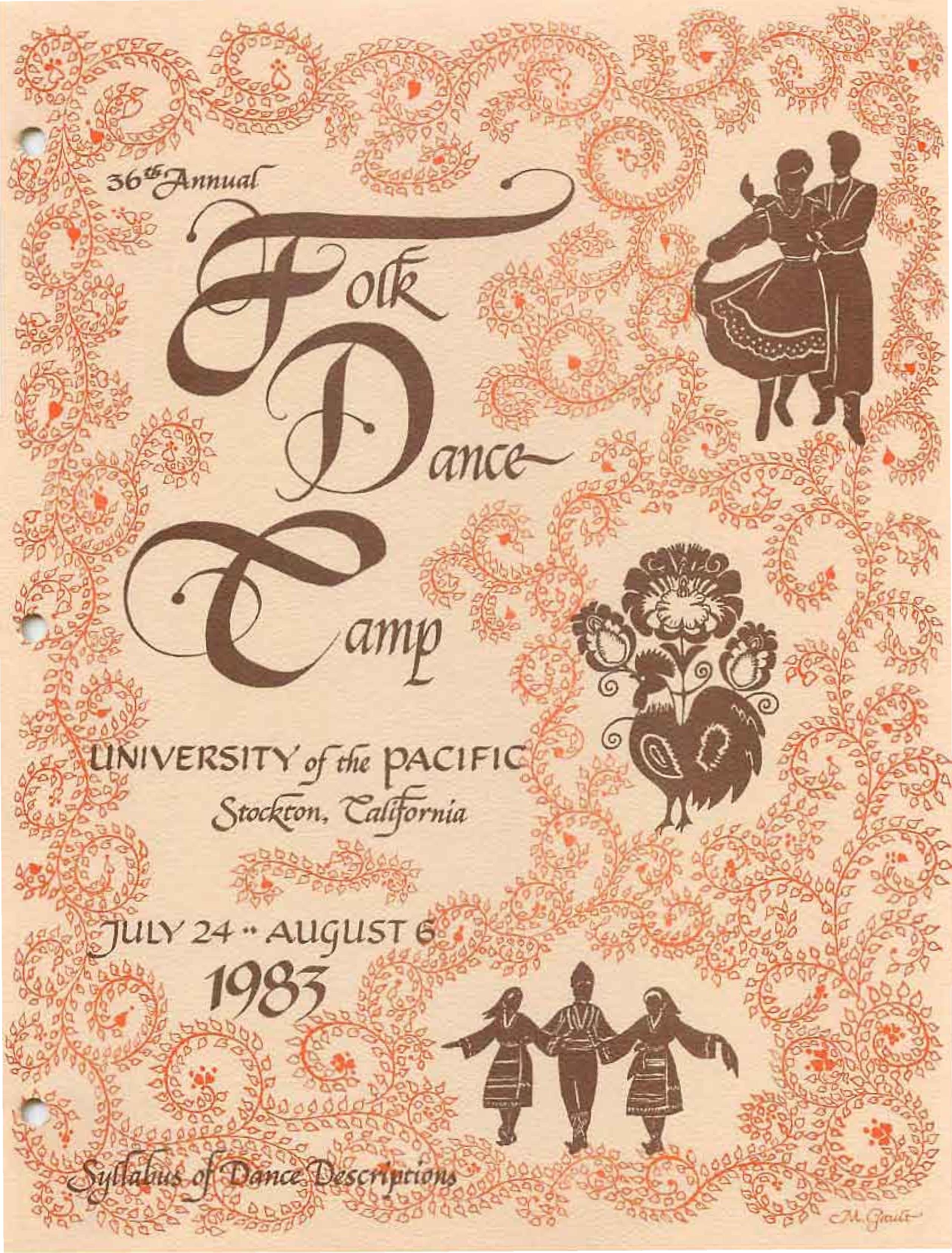
Table of Contents of the 36th World Dance Camp Handbook, University of the Pacific, California, USA, 1983: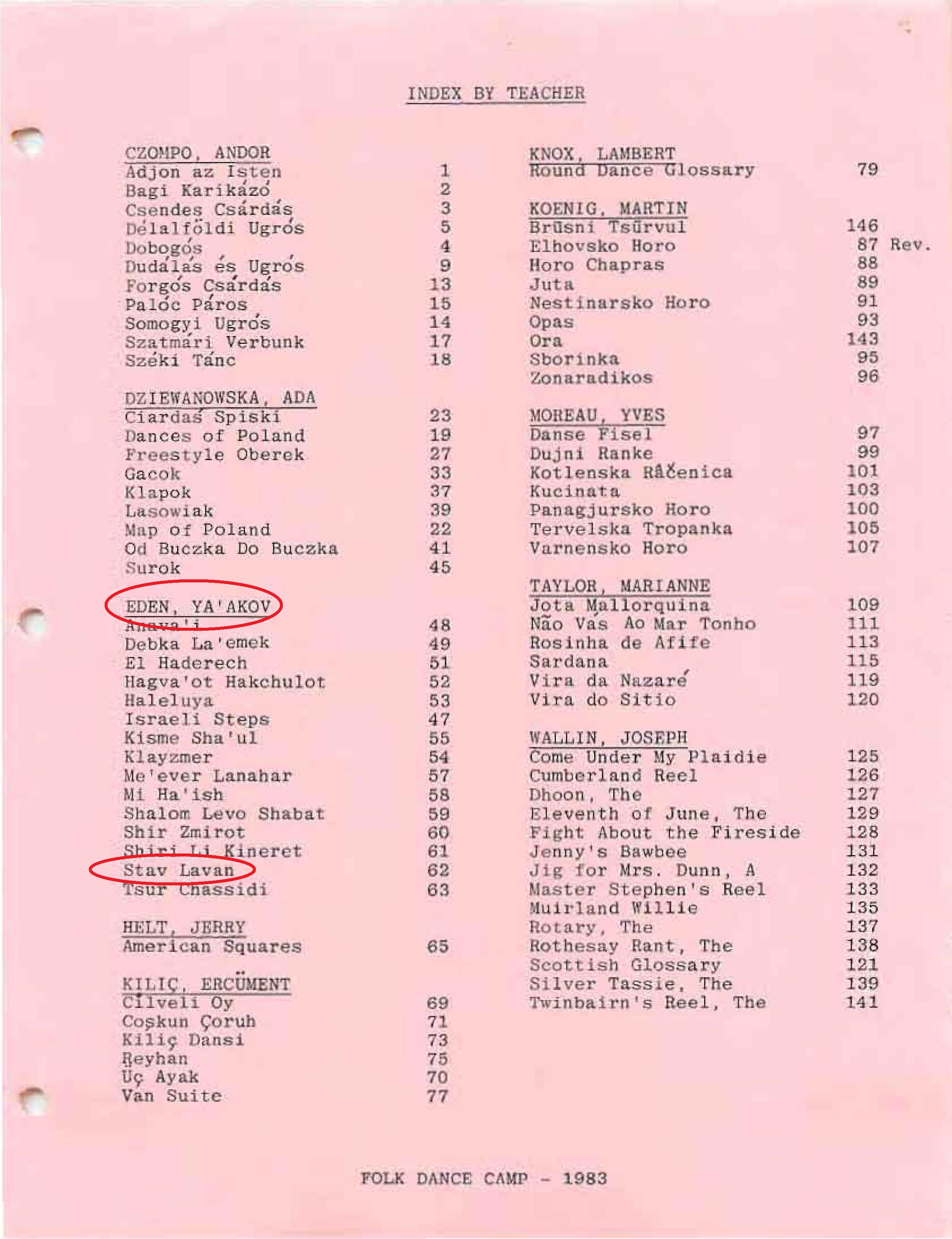
Dance synopsis of this dance in the 36th World Dance Camp Handbook, University of the Pacific, California, USA, 1983: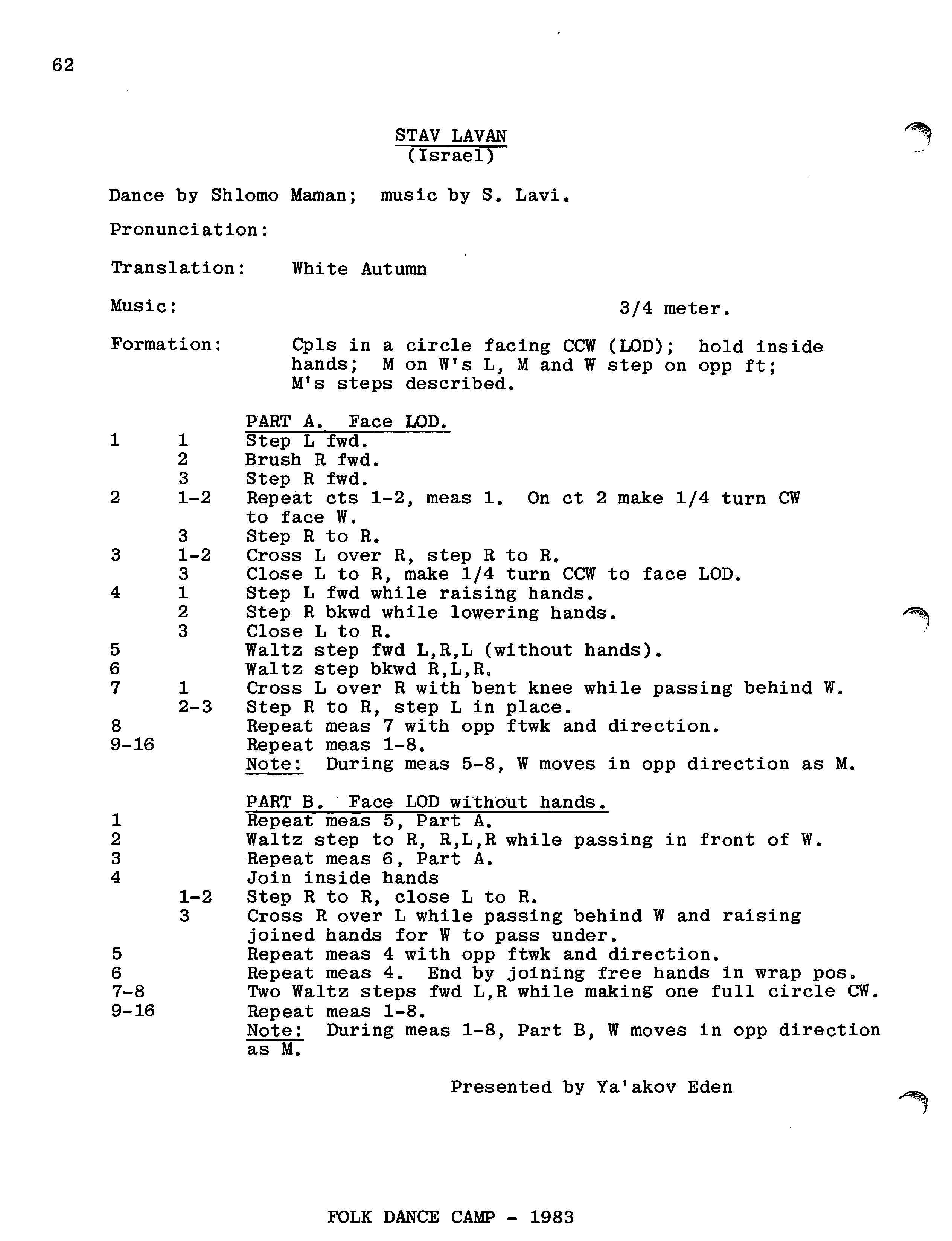
Judging from the dance synopsis in the handbook of the World Dance Camp in the USA, the initial introduction to this dance was extremely basic, only stating the choreographer, composer, and that the dance title translates to "White Autumn" in English. Other details, such as the lyricist, singer, and additional information about the dance, were completely omitted. Four months later, the Research Committee of the Folk Dance Federation of California published a new version of the English dance synopsis, adding some information as follows:
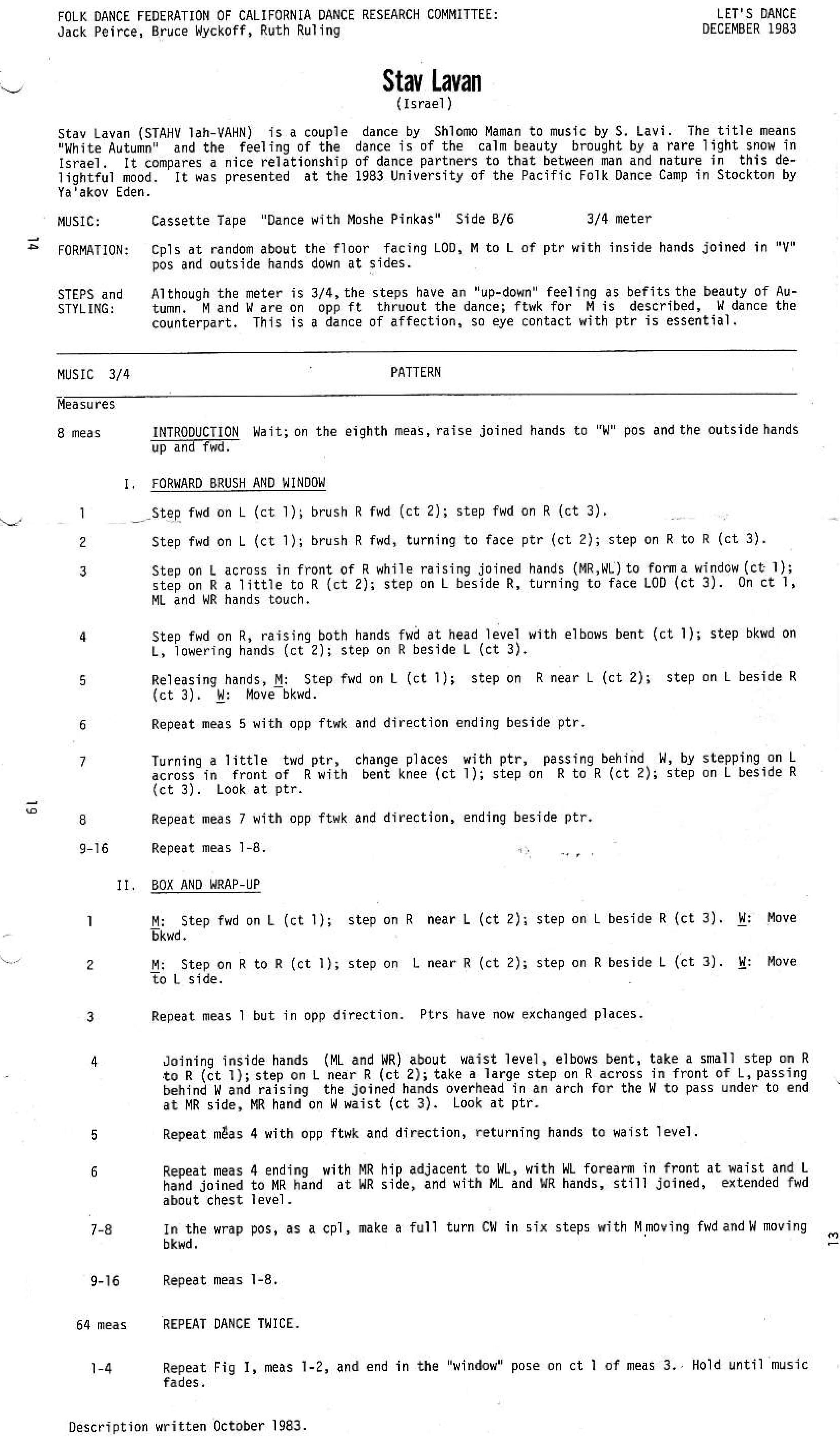
The dance synopsis itself is very straightforward and clear. However, the introductions description of the dance-"the feeling of the dance is of the calm beauty braught [sic] by a rare light snow in Israel."—has caused issues and misled dance enthusiasts worldwide for decades. Teacher Frog feels compelled to provide a clarification and correction here.
This English sentence is written very romantically. A literal translation of "the feeling of the dance is of the calm beauty braught by a rare light snow in Israel." would be "the feeling of this dance is of the serene beauty brought by a rare light snow in Israel." To put it in a more artistic and literary way, it means "the atmosphere created by this dance is as if a rare, light snow has fallen over Israel, exuding a sense of calm and elegant beauty."
However, directly associating the "white" in "White Autumn" with snowfall is a classic example of Americans viewing the world through their own cultural lens, and they looked at this Israeli dance in exactly the same way. Teacher Frog will resolve this confusion for fellow dancers from two different aspects, while also helping you understand what kind of mindset and emotion you should carry to interpret this dance when performing it.
First, looking at it from geography and climate, saying that it snows in autumn in the lowlands of Israel where cotton is grown is not "rare" as written in the English introduction, but "impossible"! If it ever snows in Israel, it happens during midwinter (January and February) and only on Mount Hermon in the north (with an elevation of about 2,800 meters, which is the "Grandfather Mountain" that Teacher Frog previously introduced in other Israeli dances like Sham Harei Golan, Dayagim, and Naara Ushma Kinneret). Therefore, snowfall in the Israeli plains during autumn is an absolute fairy tale. The fourth line of the first verse of the lyrics also explicitly states that the autumn at this time is still warm, which is typical of a Mediterranean climate, making snowfall absolutely impossible.
Mount Hermon, Israel: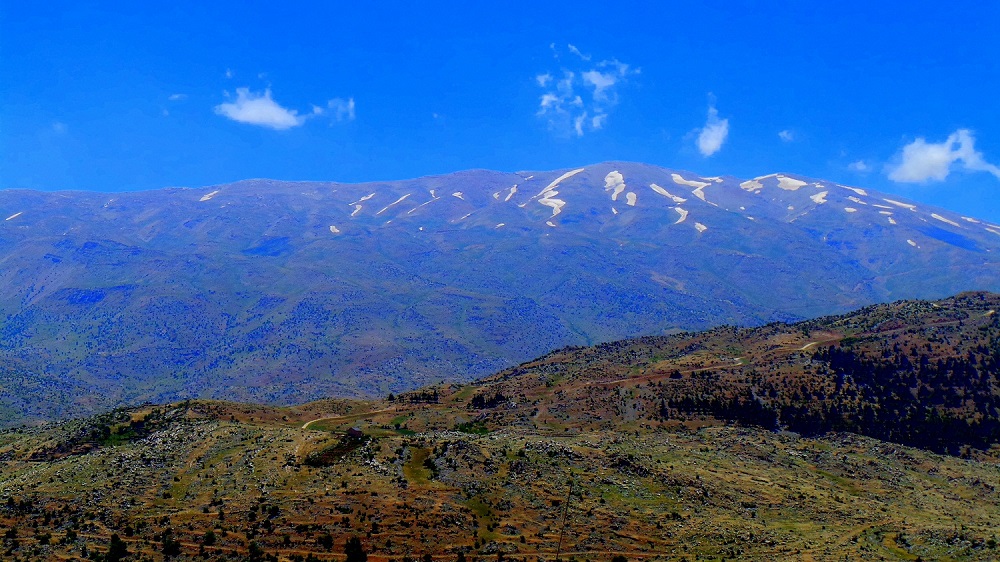
The second aspect concerns the "cultural lens" that Americans bring with them. Perhaps this is not a flaw exclusive to Americans; rather, people from every country in the world may share this blind spot—that is, viewing other nations through the cultural experiences of their own. Reading through the lyrics repeatedly, what one should truly feel is the local vitality of the Israeli Kibbutz: there are storks flying south (perhaps arriving from northern snowlands, which led to the American teachers misunderstanding?), white cotton fields rolling in the autumn wind, and the warmth of the earth brought by the hard work of Israeli farmers and a bumper cotton harvest. However, American dance enthusiasts might have looked at it through a "white, Western, temperate country" cultural lens. In their literary imagination, only snow can represent a noble and pure white aesthetic ("calm beauty"). They insisted on filtering a passionate, romantic dance of harvest filled with the scent of soil into a cold, detached painting of northern snow-watching full of Western salon aesthetics.
If fellow dancers fully believe the description in the English dance synopsis and think "White Autumn" refers to snow, their performance while dancing would appear cold, shivering, and somewhat poignantly beautiful. At this point, Teacher Frog wants to tell everyone that "white" refers to the cotton in the cotton fields. When you dance, what should well up in your hearts is the warmth, sweat, and celebration of the Kibbutz, which has absolutely nothing to do with snow!
Therefore, as we dance, the shifting and swaying of our center of gravity is no longer about drifting light snow, but about cotton fluff flying up and down in the air under the autumn breeze. The eye contact between dance partners represents the joy and romance of young men and women celebrating a successful harvest while working together in the cotton fields of a Jewish Kibbutz during the autumn cotton harvest. As for the American teachers "taking the words too literally" and mistaking cotton for autumn snow, which resulted in this mistaken introduction, we will just leave it at that.
Finally, compliments of the house: the original video of the native instructor, Teacher Yaakov Eden, personally demonstrating the dance at the 1983 USA World Dance Camp:
References:
1. English Wikipedia
2. Hebrew Wikipedia
3. Handbook of the 7th Asian Folk Dance Camp
4. Handbook of the 36th World Folk Dance Camp in the USA
