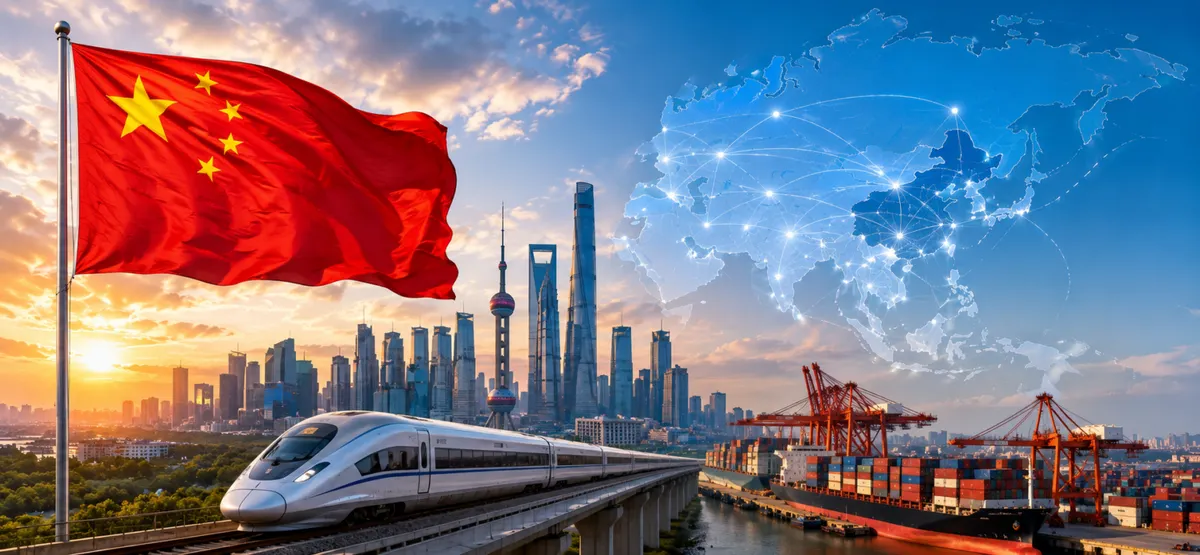
.
.
To understand this shift, we need to move beyond the assumption that the United States and its allies once enjoyed stable moral leadership that has recently come under pressure. For many, the so-called liberal rules-based order never felt especially liberal or orderly. Colonial violence, military interventionism, exploitative economic restructuring and selective humanitarianism has long shaped scepticism towards Western claims to universal authority.
What is changing is the diminishing ability of Washington and its allies to dismiss such criticism as resentment or propaganda. China has become central to this shift, increasingly functioning as a site through which frustrations with global hierarchy, violence and hypocrisy are projected.
This frustration is increasingly accompanied by something more hopeful, a newly emboldened post-colonial or post-hegemonic glee — a political form of schadenfreude with a measure of exuberance. This is not simple triumphalism or naive celebration of China, but the affective release that comes when an authority which has long been experienced as overbearing, patronising and hypocritical begins to lose its overweening sway.
This feeling can be sensed in the political energy surrounding the expansion of BRICS and can be found in Chinese Foreign Minister Wang Yi’s hopeful rhetoric of a ‘South moment’ in global governance. It emerges less from an understanding that China will lead and more that the West no longer gets to speak for everyone else.
China has both contributed to and benefited from this atmosphere, even when the enthusiasm is not directed towards Beijing. When Chinese officials speak about multipolarity, sovereignty or the Global South, they are not simply making strategic arguments but articulating a broader emotional landscape where the authority of Washington and its anxious allies appear depleted, in which alternative claims to legitimacy feel more plausible.
This emotional shift does not require that publics and governments perceive China as innocent, consistent or morally superior, nor does it mean that leaders across the Global South are automatically rallying behind Beijing. While China’s rise grounds these feelings of hope and glee , it is distributed unevenly and often sits alongside anxiety and warinessover Chinese power, debt dependence and regional coercion, as well as US unpredictability.
China’s own order-building contains profound contradictions. Beijing condemns hegemony while intimidating neighbours in the South China Sea and Taiwan. Its Global Security Initiative invokes sovereignty internationally while it imposes deeply securitised governance in Xinjiang and Hong Kong. It criticises violent interventionism by the United States while using economic leverage against smaller states.
But these anxieties and contradictions do not cancel out the palpable glee of many across and beyond the Global South for whom China represents the ability to refuse US and allied claims to emotional authority. China’s significance lies less in that it offers a coherent alternative model to US hegemony than in how its material rise has widened the emotional horizons of what various international actors believe they can refuse, demand and imagine within an evolving world order.
China’s technological capacity, infrastructure projects, manufacturing scale and diplomatic reach make a less Western-centred world feel increasingly possible. Intergovernmental institutions like the BRICS also produce and affirm this emotional sense that global politics no longer has a single centre.
The current transformation in the global order is not simply about replacing US leadership with Chinese leadership. It is also about a wider redistribution of emotional authority in world politics to determine whose grievances sound legitimate, whose future feels hopeful and in what shape the world can be reimagined.
Frustrations over US authority have long existed, but China’s rise has made them harder to dismiss and easier to share. Beyond geopolitics alone, the global power transition is also about the fading emotional grip of Western authority and the growing sense — felt with anger, relief, hope and sometimes glee — that the world no longer has to feel so incontestably Western.
Astrid Nordin is Professor at King’s College London, Associate Research Fellow at the Swedish Institute of International Affairs and Taiwan Fellow at National Taiwan University. She holds the Lau Chair of Chinese International Relations in the Lau China Institute.
.
.The changes over the last 70 years have been profound - for its economy, for its geopolitical status and, most of all, for its people.
When the Chinese Communist Party (CCP) took over in 1949, China was in a bad way and had been for some time.
It had been ravaged by Western colonial powers during the century before, seen the fall of the Qing Empire, a descent into warlordism, then a brutal occupation by the Japanese, and finally civil war between the CCP and Nationalist forces.
In 1952, average life expectancy was 36 years and Chinas GDP was just $30.55 billion. Today, its GDP is $13.6 trillion and life expectancy is 77 years.
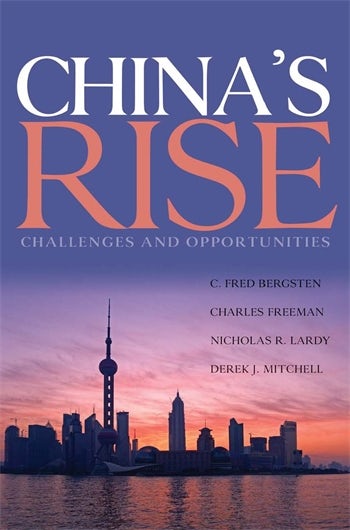 .
.
Chinas rise has become a superpower unlike anything the West has ever seen.
.What happening CHINA & worldwide ?
A NEW CHINA COMING STRONG SUPER POWER...
中國崛起西方國家從未見到的"超級力量".
西方國家戰略學者專家分析為什麼中國崛起 ?

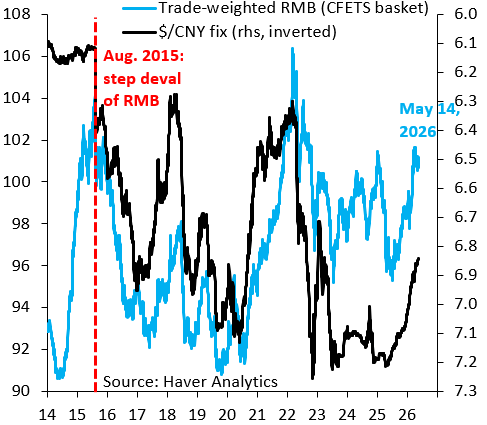
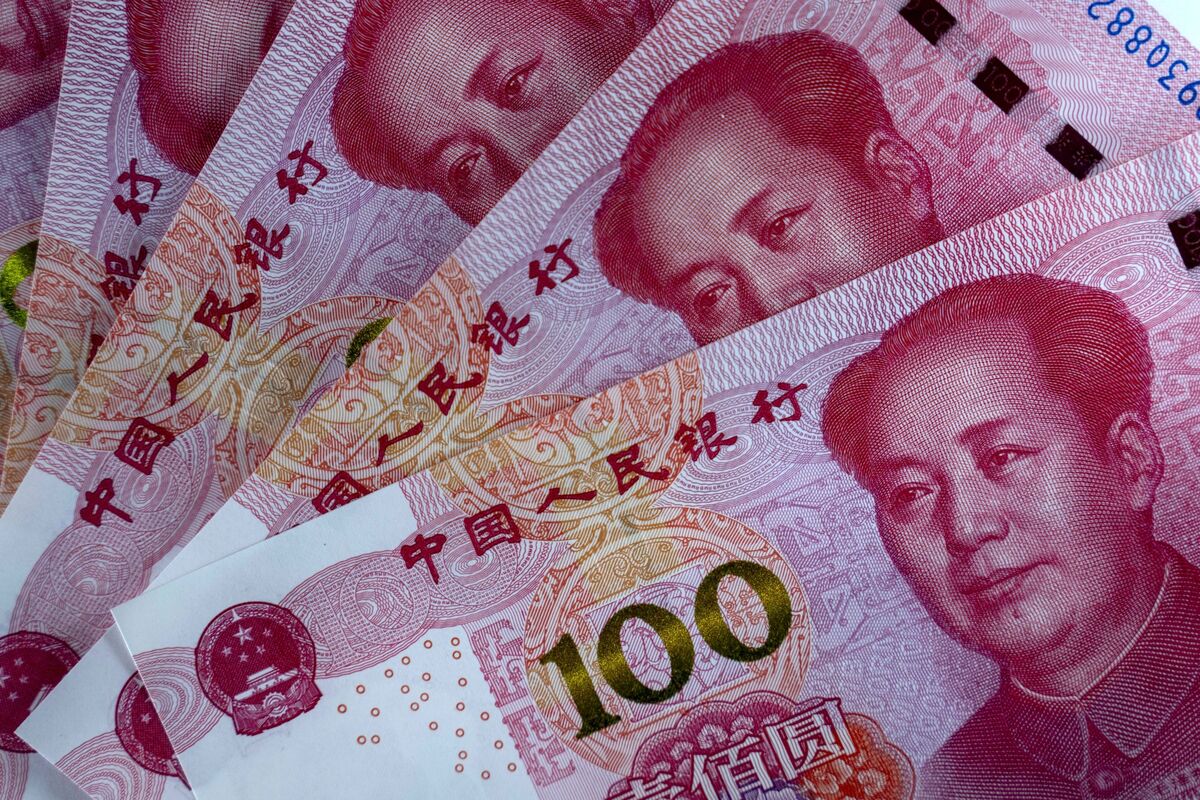 中國人民幣愈來愈值錢是真的.
因為西方人士,永遠不瞭解,華夏文明與文化,永恆留傳,自秦始皇統一中國.
車同軌,書同文,統一度量衡,以及其他人類沒有的各式各樣法令制度,無論朝代更替,始終如一,中華民族偉大複興. .
.
https://www.facebook.com/share/v/18nkJXDWss/..
.

中國的崛起(Chinas Rise)是近年來改變全球經濟與政治秩序的重要現象。這股發展帶來了龐大的影響,但也伴隨著許多國內外的挑戰.
.經濟與工業發展:中國在過去幾十年快速成長,成為全球重要的製造業與貿易中心。大量藍領勞工推動了國家的工業起飛。
The impact of these reforms has been profound. China’s economy, once agrarian and impoverished, has become the second-largest in the world, trailing only the United States. According to the International Monetary Fund (IMF), China’s GDP surpassed $17 trillion in 2023, and its share of global GDP is steadily rising. China is not only the world’s largest manufacturer but also the largest exporter and a key hub for global supply chains.The growth of China’s middle class has been one of the most striking aspects of its economic expansion. Hundreds of millions of people have been lifted out of poverty, and the country has developed an increasingly consumer-driven economy. In tandem with this transformation, China has invested heavily in infrastructure, building vast networks of high-speed rail, highways, and modern urban centers.
China’s government has also been proactive in fostering innovation, with significant investments in research and development (R&D) and ambitious plans to dominate key technologies in the coming decades. The “Made in China 2025” initiative, for example, aims to make China a global leader in sectors like robotics, aerospace, electric vehicles, and biotechnology.
The country’s increasing dominance in technology has raised concerns in some Western nations, especially over issues of data privacy, cybersecurity, and intellectual property. These concerns have led to a growing tension between China and countries like the United States, which has sought to limit China’s technological reach, most notably through restrictions on Chinese companies like Huawei and TikTok.Global Influence and Diplomacy :China’s growing economic power has been accompanied by a corresponding increase in its geopolitical influence. Under the leadership of Xi Jinping, who assumed the presidency in 2013, China has adopted a more assertive foreign policy. Central to this strategy is the Belt and Road Initiative (BRI), a massive infrastructure and investment project designed to enhance connectivity and trade between China and countries across Asia, Africa, Europe, and Latin America. The BRI has been hailed as a bold vision for global economic integration, but critics argue that it’s a way for China to extend its influence and deepen its control over strategically important regions.
.China has also sought to enhance its influence within international organizations, such as the United Nations, the World Trade Organization (WTO), and the World Health Organization (WHO), where it has increasingly played a leading role. Furthermore, China has worked to establish alternatives to Western-led institutions, including the Asian Infrastructure Investment Bank (AIIB) and the New Development Bank (NDB), which provide financing for development projects in emerging economies.
In the Asia-Pacific region, China’s rise has led to heightened tensions, particularly in the South China Sea, where Beijing has pursued territorial claims that have put it at odds with several neighboring countries, including Vietnam, the Philippines, and Malaysia. The issue has drawn international attention, with the United States and other Western powers voicing support for freedom of navigation in the region, while China has aggressively defended its claims.
The Chinese government has been especially focused on modernizing its capabilities in the areas of cyber warfare, space exploration, and nuclear technology. These efforts are designed not only to protect China’s territorial integrity but also to project power beyond its borders, signaling to the world that it is prepared to defend its growing global influence.
Environmental sustainability is another key challenge. China’s rapid industrialization has come at a cost to the environment, with severe air pollution, water shortages, and deforestation affecting many parts of the country. While China has made strides in renewable energy development, it still relies heavily on coal, and balancing economic growth with environmental preservation remains a major concern.
Finally, political control remains a key aspect of China’s governance. The Chinese Communist Party (CCP) maintains strict control over the country’s political system, suppressing dissent and limiting freedoms of speech and assembly. This has led to tensions both domestically, with protests occasionally erupting in response to government policies, and internationally, where China’s human rights record is frequently criticized.The Future of China’s Rise :Looking ahead, China’s trajectory seems poised to continue its upward climb, but challenges lie ahead. The country will likely remain a key driver of global growth, but how it navigates its demographic, environmental, and geopolitical issues will determine whether it can sustain this rise over the long term.
The question of whether China will become the world’s dominant superpower — challenging the United States for global leadership — is a matter of intense debate. Some argue that China’s economic and military power makes it a logical contender for this role, while others point to the country’s internal problems and its relations with the West as obstacles to its aspirations.
What is certain, however, is that China will play a central role in shaping the global order of the 21st century. Whether as a challenger to the status quo or as a partner in a more multipolar world, China’s rise will have lasting consequences for politics, economics, and international relations around the globe.