He is warm-hearted.
Illustrate
1. to show what something is like, or to show that something is true
2. to show something by using pictures, diagrams, lists of numbers ,etc.
Initial ADJECTIVE
happening at the beginning of a process, or when you first see or hear about something
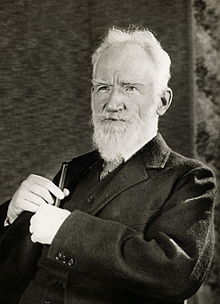
George Bernard Shaw
George Bernard Shaw (26 July 1856 – 2 November 1950) was a Nobel Prize and Oscar-winning Irish playwright, critic and socialist whose influence on Western theatre, culture and politics stretched from the 1880s to his death in 1950. Originally earning his way as an influential London music and theatre critic, Shaw's greatest gift was for the modern drama. Strongly influenced by Henrik Ibsen, he successfully introduced a new realism into English-language drama. He wrote more than 60 plays, among them Man and Superman, Mrs. Warren's Profession, Major Barbara, Saint Joan, Caesar and Cleopatra, and Pygmalion. With his range from biting contemporary satire to historical allegory, Shaw became the leading comedy dramatist of his generation and one of the most important playwrights in the English language since the 17th century.
希臘點石成金故事
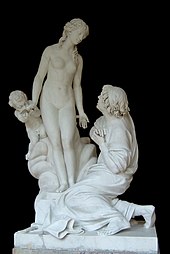
比馬龍效應並非新名稱,本身出自希臘神話,意思是指精誠所至,金石為開。比馬龍是塞浦路斯(Cyprus)的國王,熱愛雕刻藝術,他花了畢生的心血,雕成了一個少女像,命名為加拉蒂(Galatea),並視為夢中情人,日夜盼望雕像變成真人。他真摯的感情,感動了愛神阿芙達(Aphrodite),她把雕像賦以生命,石雕少女就化成真人,成為比馬龍的太太。
比馬龍(中文版譯作賣花女)也是英國著名作家蕭伯納的作品,描述一位學者在倫敦街頭找了個舉止粗魯的賣花女,加以訓練成為談吐高雅的貴婦。後來這故事被改編成窈窕淑女(My Fair Lady),於1956年在百老匯演出,並在1964年搬上大銀幕,成為家喻戶曉的點石成金故事。
Pygmalion (play)
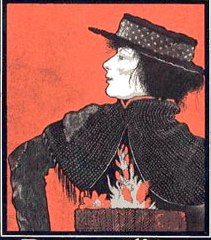
Pygmalion is a play by George Bernard Shaw, named after a Greek mythological character. It was first presented on stage to the public in 1913.
Professor of phonetics Henry Higgins makes a bet that he can train a bedraggled Cockney flower girl, Eliza Doolittle, to pass for a duchess at an ambassador's garden party by teaching her to assume a veneer of gentility, the most important element of which, he believes, is impeccable speech. The play is a sharp lampoon of the rigid British class system of the day and a commentary on women's independence.
Pygmalion effect
The Pygmalion effect, or Rosenthal effect, is the phenomenon whereby higher expectations lead to an increase in performance.[1] The effect is named after the Greek myth of Pygmalion, a sculptor who fell in love with a statue he had carved.
A corollary of the Pygmalion effect is the golem effect, in which low expectations lead to a decrease in performance;[1] both effects are forms of self-fulfilling prophecy. By the Pygmalion effect, people internalize their positive labels, and those with positive labels succeed accordingly. The idea behind the Pygmalion effect is that increasing the leader's expectation of the follower's performance will result in better follower performance. Within sociology, the effect is often cited with regard to education and social class.
Pygmalion (mythology) (精誠所至,金石為開)
In Ovid's narrative, Pygmalion was a Cypriot sculptor who carved a woman out of ivory. According to Ovid, after seeing the Propoetides he was "not interested in women",[3] but his statue was so fair and realistic that he fell in love with it.
In time, Aphrodite's festival day came, and Pygmalion made offerings at the altar of Aphrodite. There, too scared to admit his desire, he quietly wished for a bride who would be "the living likeness of my ivory girl". When he returned home, he kissed his ivory statue, and found that its lips felt warm. He kissed it again, and found that the ivory had lost its hardness. Aphrodite had granted Pygmalion's wish.
Pygmalion married the ivory sculpture changed to a woman under Aphrodite's blessing. In Ovid's narrative, they had a daughter, Paphos, from whom the city's name is derived.
Galatea (mythology)
Galatea (Greek: Γαλάτεια; "she who is milk-white")[1] is a name popularly applied to the statue carved of ivory by Pygmalion of Cyprus, which then came to life, in Greek mythology; in modern English the name usually alludes to that story. Galatea is also the name of Polyphemus's object of desire in Theocritus's Idylls VI and XI and is linked with Polyphemus again in the myth of Acis and Galatea in Ovid's Metamorphoses.

My Fair Lady (film)
My Fair Lady is a 1964 American musical film adaptation of the Lerner and Loewe eponymous stage musical based on the 1938 film adaptation of the original 1913 stage play Pygmalion by George Bernard Shaw. With a screenplay by Alan Jay Lerner and directed by George Cukor, the film depicts a poor Cockney flower seller Eliza Doolittle who overhears an arrogant phonetics professor, Henry Higgins, as he casually wagers that he could teach her to speak "proper" English, thereby making her presentable in the high society of Edwardian London.
The film won eight Academy Awards, including Best Picture, Best Actor, and Best Director.[3]

there is no place like home
https://www.youtube.com/watch?v=zJ6VT7ciR1o
Somewhere Over The Rainbow - Israel Kamakawiwo'ole
https://www.youtube.com/watch?v=eWEI6BWTuew
Where Troubles melt like lemon drops
Dean Martin - Let it Snow!


