

蒸汽機車由蒸汽鍋爐、汽機、車架、行走部、制動設備以及貯存燃料和水的煤水車等組成。
在十九世紀最先出現的機車是以蒸汽推動的。到第二次世界大戰結束時,蒸汽機車仍是最常見的機車。
第一部蒸汽機車是由英國人理查·特里維西克製造,並於1804年2月21日進行第一次上軌測試。之後經過多年的改進,蒸汽機車的經濟效益才足以在商業上的營運使用。喬治·史蒂芬生在1829年製造的火箭號(The Rocket)便是其中一個最早在商業成功使用的蒸汽機車。
蒸汽機車的速度紀錄是由英國的4-6-2 Mallard所創下。1938年7月3日,綠頭鴨號(LNER Class A4 4468 Mallard)拖著六個車廂,在一個稍微下坡路段創下時速126英里(203公里)的紀錄。德國、美國的蒸汽機車亦達到接近的速度。一般認為這是蒸汽機車的速度極限。
蒸汽機車在二十世紀中開始被內燃機車所取代。1960年代末,世界上仍然有使用蒸汽機車作商業運作的國家已寥寥無幾。到了二十世紀末,蒸汽機車在北美洲及歐洲基本上已被完全淘汰,只會間中在特別為鐵道迷及遊客安排的路線上行走。墨西哥仍有很少量的蒸汽機車在偏遠的地方運作。印度曾經大量使用蒸汽機車,但現在它們只會在空氣稀薄的山區運作。
中國曾經是全球最後一個製造大型蒸汽機車的國家,位於山西的大同車廠一直生產蒸汽機車至1988年;哈爾濱火車站在1990年代中期仍舊能夠看到為數不少的蒸汽機車,而位於同一個省份的牡丹江火車站則可以看到停放在一旁供人參觀的1930年代日本小型蒸汽機車。2005年12月9日最後運營的大型蒸汽機車在內蒙古退役,近年中國大陸蒸汽機車已所剩無幾。

A steam locomotive is a railway locomotive that produces its pulling power through a steam engine. These locomotives are fueled by burning combustible material, usually coal, wood or oil, to produce steam in a boiler, which drives the steam engine. Both fuel and water supplies are carried with the locomotive, either on the locomotive itself or in wagons (tenders) pulled behind.
Steam locomotives were first developed in Great Britain during the early 19th century and dominated railway transport until the middle of the 20th century. From the early 1900s they were gradually superseded by electric and diesel locomotives.


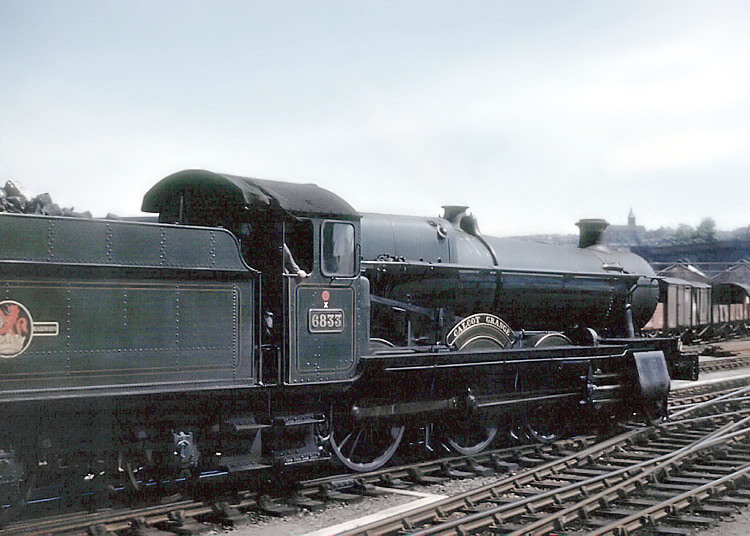
Stephenson's Rocket Before the 1923 Grouping Act, the picture in the UK was mixed. The larger railway companies built locomotives in their own workshops but the smaller ones and industrial concerns ordered them from outside builders. A large market for outside builders was abroad because of the home-build policy exercised by the main railway companies. An example of a pre grouping works was the one at Melton Constable that maintained and built some of the locomotives for the Midland and Great Northern Joint Railway. Other works included one at Boston (an early GNR building) and Horwich works.

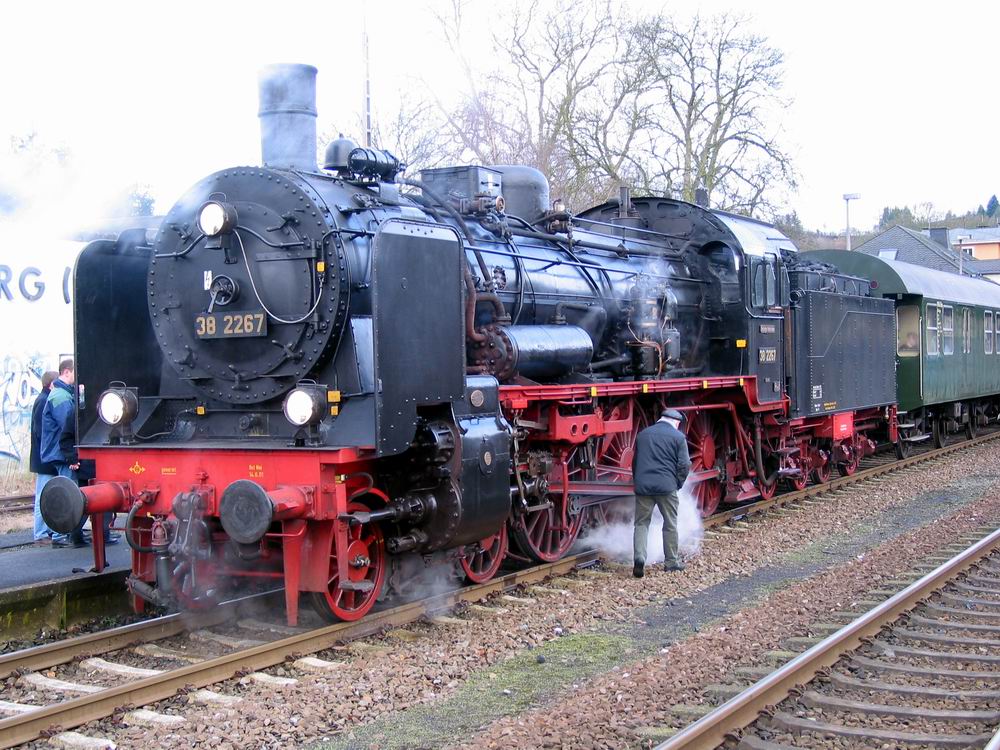
After the Second World War, Germany was divided into the Federal Republic of Germany, with the Deutsche Bundesbahn (founded in 1949) as the new state-owned railway, and the German Democratic Republic, where railway service continued under the old pre-war name Deutsche Reichsbahn.
For a short period after the war, both Bundesbahn (DB) and Reichsbahn (DR) still placed orders for new steam locomotives. They needed to renew the rolling stock, mostly with steam locomotives designed for accelerated passenger trains. Many of the existing predecessors of those types of steam locomotives in Germany had been lost in the battles or simply reached the end of their lifetime, e.g. the famous Prussian P 8. There was no need for new freight train engines, however, because thousands of the Classes 50 and 52 had been built during the Second World War.

http://youtu.be/MhAaFhXt0OUhttp://youtu.be/MhAaFhXt0OU


