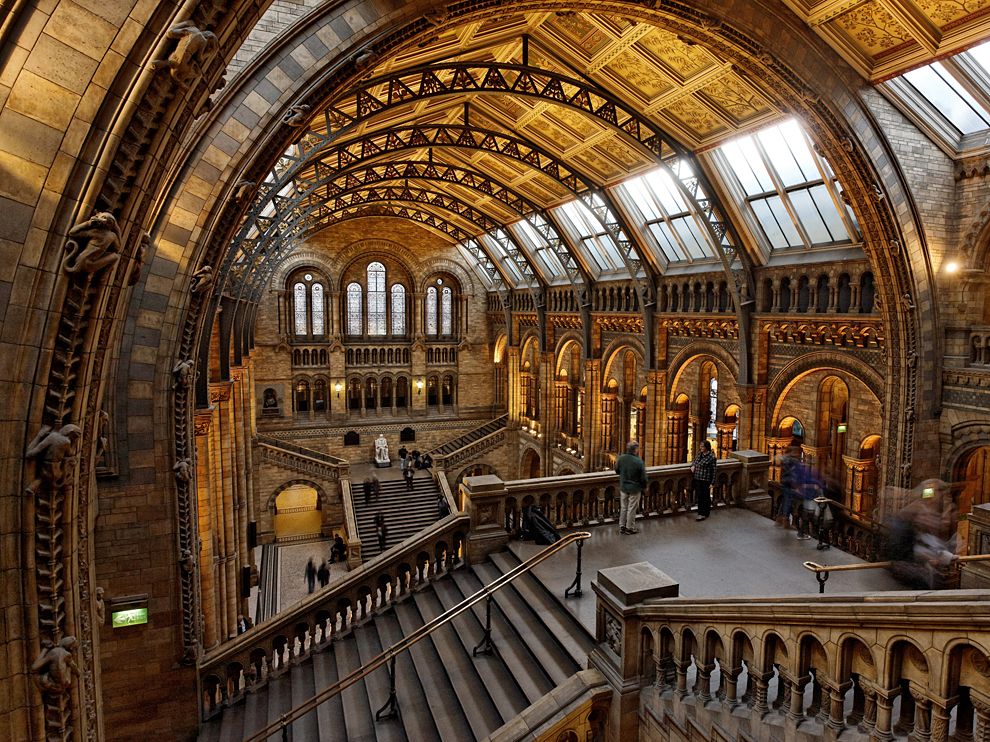
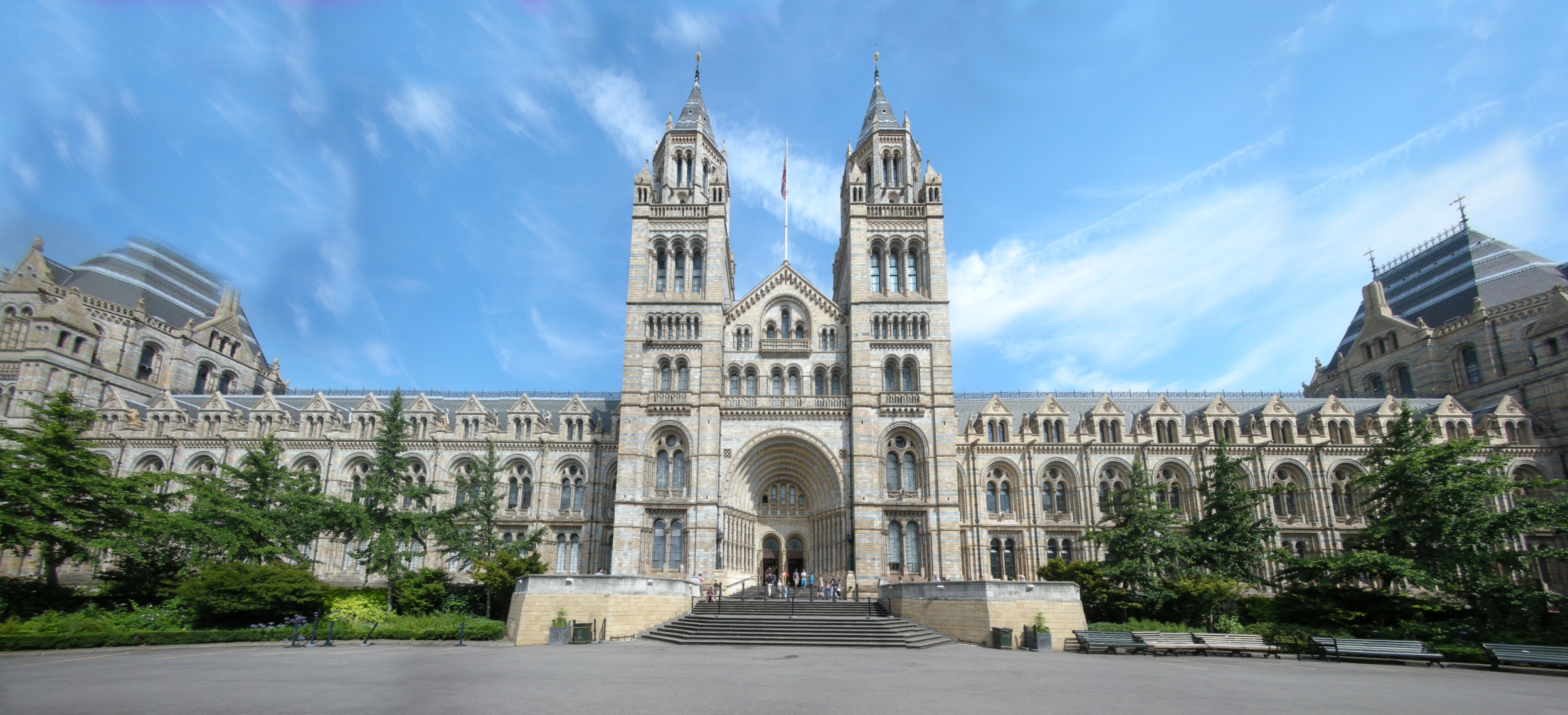
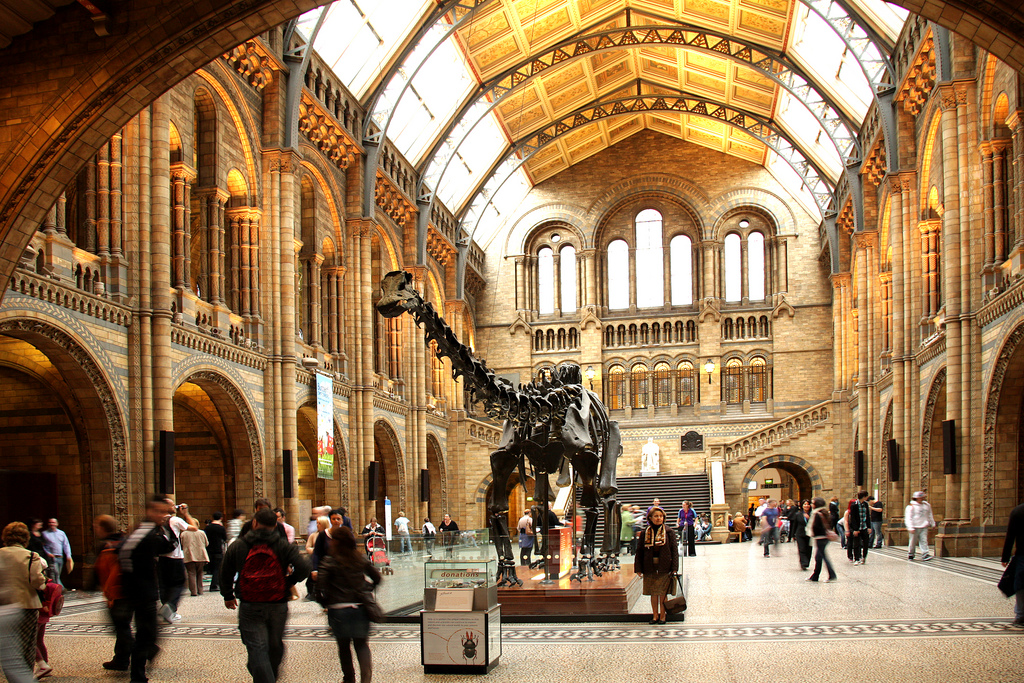
 自然史博物館,是位於英國倫敦市南肯辛頓博覽會路上的一家大型博物館,與科學博物館、維多利亞和阿爾伯特博物館比鄰。該博物館是由英國文化、媒體和體育部贊助的。這座博物館的入口位於克倫威爾路
該館所擁有的生物和地球科學標本約七千萬件,包括五個主題:植物學、昆蟲學、礦物學、古生物學和動物學。該博物館是世界著名的研究中心,專門從事生物分類、鑑定和保存。由這個機構建館已有百餘年,許多藏品具有偉大的歷史和科學價值,例如由達爾文所採集的標本。自然史博物館圖書館典藏有大量書籍、期刊、手稿,以及關連到這些科學部門的研究工作的藝術品收藏.


The newly developed Darwin Centre (named after Charles Darwin) is designed as a new home for the museum's collection of tens of millions of preserved specimens, as well as new work spaces for the museum's scientific staff, and new educational visitor experiences. Built in two distinct phases, with two new buildings adjacent to the main Waterhouse building, it is the most significant new development project in the museum's history.
The foundation of the collection was that of the Ulster doctor Sir Hans Sloane (1660–1753), who allowed his significant collections to be purchased by the British Government at a price well below their market value at the time. This purchase was funded by a lottery. Sloane's collection, which included dried plants, and animal and human skeletons, was initially housed in Montagu House, Bloomsbury, in 1756, which was the home of the British Museum.
Most of the Sloane collection had disappeared by the early decades of the nineteenth century. Sir George Shaw (Keeper of Zoology 1806–13) sold many specimens to the Royal College of Surgeons. His successor, William Elford Leach, made periodical bonfires in the grounds of the museum.[4] In 1833 the Annual Report states that, of the 5,500 insects listed in the Sloane catalogue, none remained. The inability of the natural history departments to conserve its specimens became notorious: the Treasury refused to entrust it with specimens collected at the government's expense. Appointments of staff were bedevilled by gentlemanly favoritism; in 1862 a nephew of the mistress of a Trustee was appointed Entomological Assistant despite not knowing the difference between a butterfly and a moth


