
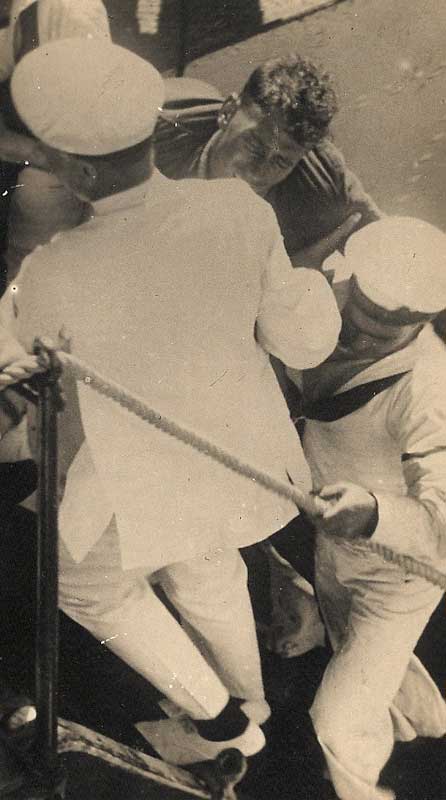
Aug. 20, 1931 file photo, the Mayor of Plymouth shakes hands with Petty Officer Willis as he meets with survivors of the sinking of the HMS Poseidon P99 submarine in Plymouth, England. The survivors arrived after traveling on the ocean liner Rawalpindhi from China. A lifelong scuba diving obsession led American journalist and diving instructor Steven Schwankert to the tale of the HMS Poseidon and the startling discovery that the British submarine, which sank off the northeastern coast of China in the 1930s, had been raised by the Chinese in 1972.

英國海軍的「海神」號潛艇在1929年下水服役,兩年後在中國山東海岸附近同一艘貨輪相撞後沉沒。
當年這艘非常先進的潛艇與中國貨輪「渝泰號」相撞后沉沒。當時潛艇上有31名海員,最後只有5人生還。那次海難事故成為當時世界各地的頭條新聞。
HMS Poseidon (P99) was a Parthian-class submarine designed and built by Vickers Shipbuilding and Engineering in Barrow-in-Furness for the Royal Navy, launched on 22 August 1929.
She spent most of her short career assigned to the Yellow Sea region, based at the Royal Navy's base at Weihai, China.
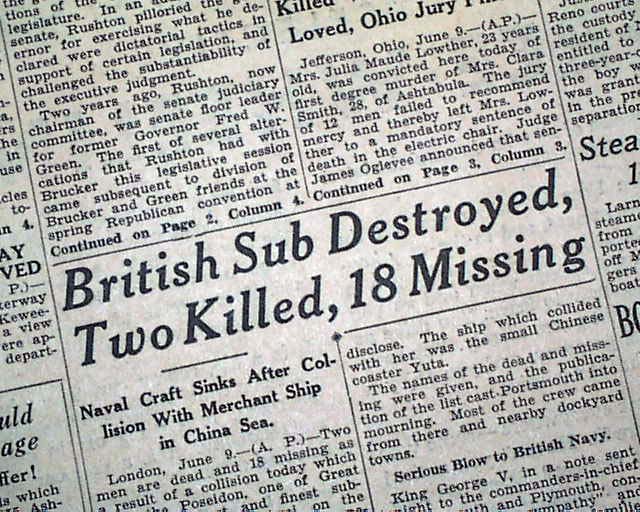
At about 12:12 on 9 June 1931, while exercising on the surface with the submarine tender Marazion 20 mi (32 km) north of the vessels' base at Weihai, and despite excellent visibility, Poseidon collided with the Chinese merchant vessel SS Yuta.
The secret salvaging of the submarine in 1972 by China's then newly formed underwater recovery units was described in 2002 in an article in the popular Chinese magazine Modern Ships (Chinese: 现代舰船; pinyin: Xiàndài jiàn chuán). This was not known about in the west until the researcher and journalist Steven Schwankert discovered that article with a Google web search and later read it in a Hong Kong library
In the former British naval cemetery on the island of Liugong, gravestones, bearing clearly legible names, dates and epitaphs of the lost sailors were found in haphazard stacks by historians looking into the sinking of HMS Poseidon and its salvage by the Chinese The British Ministry of Defence has not received an answer to what became of the remains of the crew. results of this research are told in Schwankert's book Poseidon: China's Secret Salvage of Britain's Lost Submarine[11] and the documentary film The Poseidon Project.
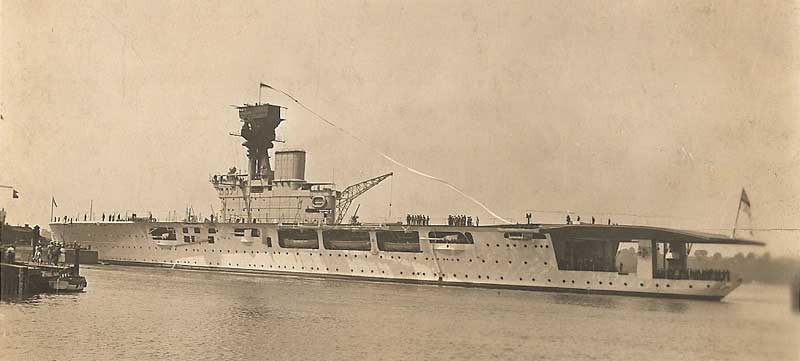
Hermes, written on the back of the photo “Arrived Sheerness July 24 1933”
Photos of aircraft and HMS Hermes, the first aircraft carrier built for the Royal Navy 
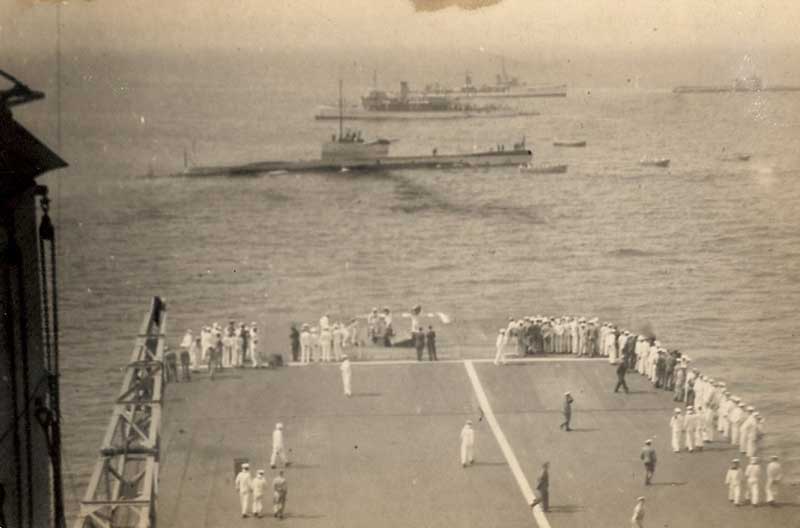
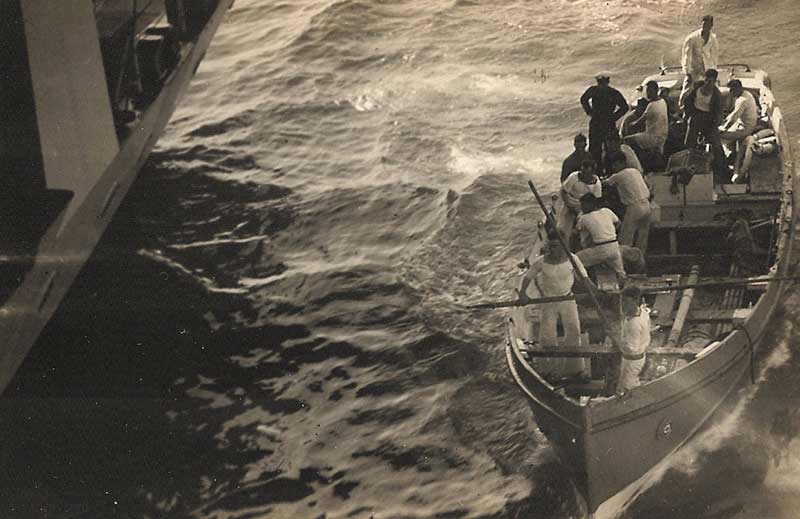
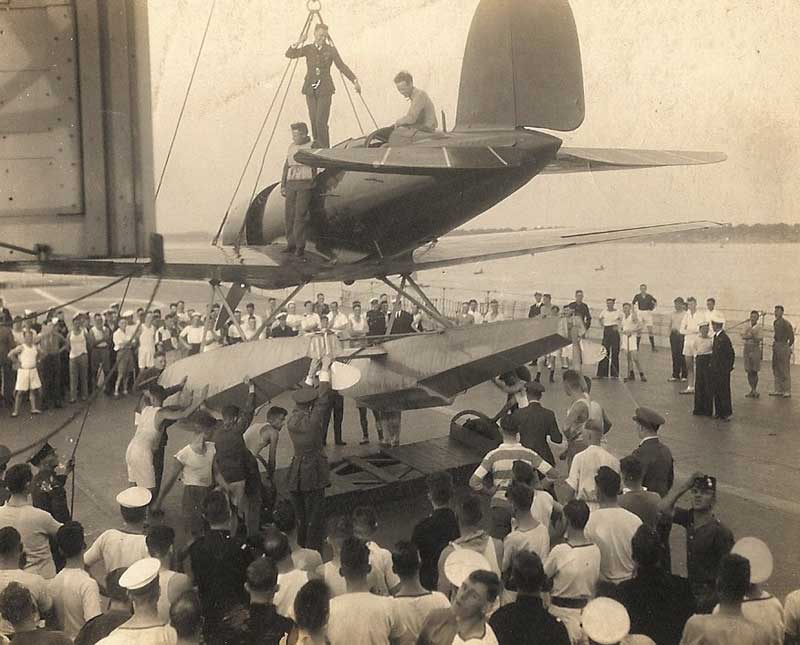



All Steven Schwankert wanted to do was dive a wreck off China’s coast. Instead, he stumbled upon the mystery of a missing submarine, man’s first use of scuba equipment to escape from certain death, and an island graveyard that was hidden in plain sight.
在北京的美國作家和一家潛水公司的老闆史蒂文•施文克特(Steven Schwankert)花六年時間研究了「海神」號的故事,撰寫了《「海神」號:中國秘密打撈英國失去的潛艇》一書。
美國記者和歷史學者史蒂文•施文克特(Steven Schwankert)本月出版一本新書,名為《「海神」號:中國秘密打撈英國失去的潛艇》。書中描述中共當局在1972年秘密打撈1931年沉沒的英國潛水艇「海神」號(HMS Poseidon)的過程,但是中共拒絕透露打撈細節。
When the HMS Poseidon struck a Chinese freighter in the Gulf of Bohai in 1931, the collision sparked a devastating accident that would see the British submarine plunge to the ocean floor in mere minutes, claiming the lives of nearly half the crew, but then making history through the daring escape of six submariners who found themselves trapped in the torpedo room of the doomed vessel and made their way to the surface nearly an hour after its sinking.
This week on Sinica, Kaiser and Jeremy help peel back the mystery of this Poseidon, as well as the secret Chinese salvage operation that took place decades later unbeknowst to the British Navy, in a discussion with Steven Schwankert, managing editor of The Beijinger, owner of the SinoScuba training school, and now author of the just-released book Poseidon: China's Secret Salvage of Britain's Lost Submarine.
The story surrounding that mystery is now the subject of a book by Mr. Schwankert, “Poseidon: China’s Secret Salvage of Britain’s Lost Submarine,” and a documentary, “The Poseidon Project,” by British filmmakers and brothers, Arthur and Luther Jones.
Both tell the story of the HMS Poseidon, a British submarine that collided with a freighter in China’s Bohai Sea in June of 1931 and sank in five minutes. Five men ultimately survived the wreck (in addition to the men who abandoned ship before it sunk) by using a prototype of today’s modern scuba gear. Their bravery is one of the compelling stories of the book.
But it’s not the only moment of drama. Mr. Schwankert, editor of Beijinger magazine and founder of the diving company SinoScuba, vividly describes the process of finding out what exactly happened to the sunken submarine. He tracked the whereabouts of the remains of the men who died in the accident, and learned the sad story of others who perished in the escape efforts.
Mr. Schwankert highlights the story of the man he says is the story’s hero, Petty Officer Patrick Willis. The book opens with a dramatic scene of Mr. Willis leading the six men and two young Chinese mates’ assistants in the forward torpedo room of the downed submarine in a prayer as they feel the cold water rising on their bodies.
The room had to be flooded so that the men could open the escape hatch and try to make their way to the surface, 126 feet (38 meters) up. And as Mr. Schwankert writes, “The submariners had no choice but to contemplate doing something that no one had ever done before: rescuing themselves from a downed submarine using an experimental breathing device.”


