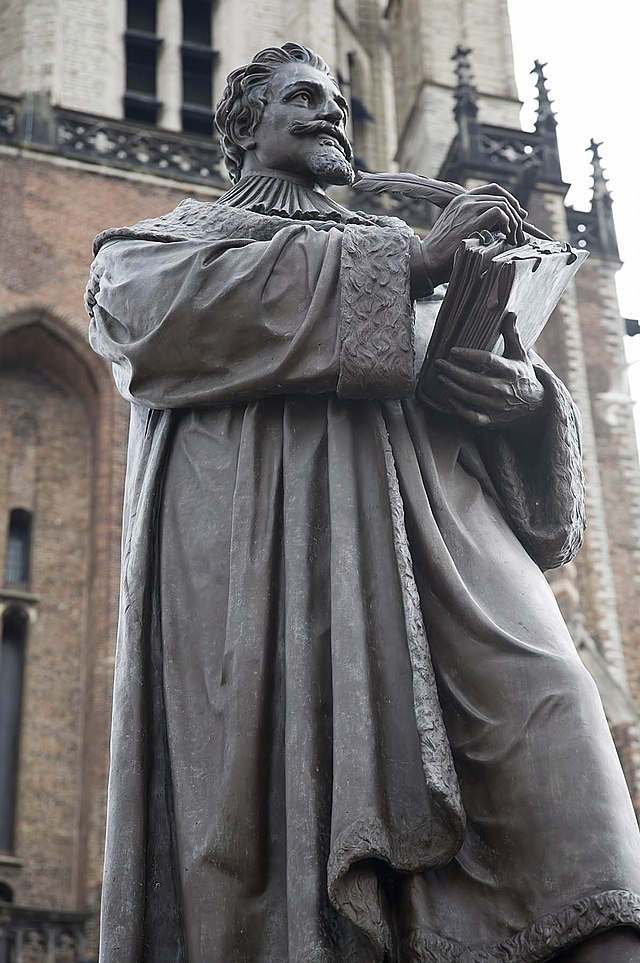
其名Hugo(胡果)在國際公法首次傳入中國時,被譯為虎哥。格老秀斯的貢獻主要是在法律方面,特別是海洋法與國際合作方面。他主張公海是可以自由航行的,為荷蘭突破西班牙和英國對海權的壟斷提供理論基礎(《海洋自由論》)。
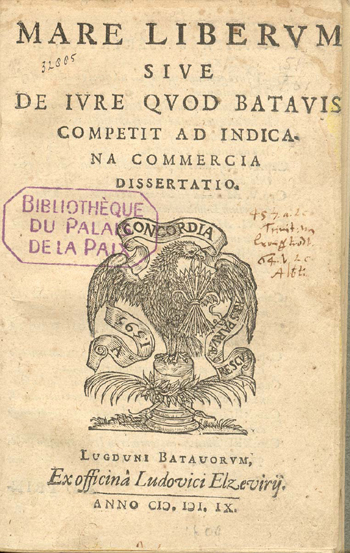
當你航行於公海之上時,你也許會想,這屬於哪國的海洋?這個問題你可以“問”一下格勞秀斯。 在《海上自由論》一書中格勞秀斯抨擊了葡萄牙對東印度洋群島航線和貿易的壟斷;他認為,“海洋是取之不盡,用之不竭的,是不可佔領的;應向所有國家和所有國家的人民開放,供他們自由使用。”時至今日,格勞秀斯的“公海自由”已作為一項國際法原則,為全世界人民所接受,對於世界人民的交往和經濟的交流有著積極的意義。
Hugo Grotius (/ˈɡroʊʃiəs/; 10 April 1583 – 28 August 1645), also known as Huig de Groot (Dutch: [ˈɦœyɣ də ɣroːt]) or Hugo de Groot (Dutch: [ˈɦyɣoː də ɣroːt]), was a Dutch jurist. With Alberico Gentili and Francisco de Vitoria he laid the foundations for international law, based on natural law. A teenage intellectual prodigy, for his involvement in the intra-Calvinist disputes of the Dutch Republic he was imprisoned and then escaped hidden appropriately in a chest of books. He wrote most of his major works in exile in France.
It is thought that Hugo Grotius was not the first to formulate the international society doctrine, but he was one of the first to define expressly the idea of one society of states, governed not by force or warfare but by actual laws and mutual agreement to enforce those laws. As Hedley Bull (Hugo Grotius and International Relations, 1992) declared: "The idea of international society which Grotius propounded was given concrete expression in the Peace of Westphalia, and Grotius may be considered the intellectual father of this first general peace settlement of modern times."
Additionally, his contributions to Arminian theology provided the seeds for later Arminian-based movements, such as Methodism and Pentecostalism and he is acknowledged as a significant figure in the Arminianism-Calvinism debate. Because of his theological underpinning of free trade, he is also considered an "economic theologist".[1]


格老秀斯;《海洋自由論》;海洋法律地位;海洋主權論;海洋自由論;公海自由;領海主權
Mare Liberum (English: The Free Sea or The Freedom of the Seas) is a book in Latin on international law written by the Dutch jurist and philosopher Hugo Grotius, first published in 1609. In The Free Sea, Grotius formulated the new principle that the sea was international territory and all nations were free to use it for seafaring trade. The disputation was directed towards the Portuguese Mare clausum policy and their claim of monopoly on the East Indian Trade. Grotius wrote the treatise while being a counsel to the Dutch East India Company over the seizing of the Santa Catarina Portuguese carrack issue.[1][2]
大發現催生了人類社會關於海洋法律地位的爭論。17世紀初,英、荷等新興歐洲列強挑戰葡萄牙、西班牙對全球海洋的壟斷地位。荷蘭法學家雨果•格老秀斯順應時代潮流,從法理角度駁斥西、葡兩國的海洋主權論。他的《海洋自由論》系統論證了各國擁有自由進行海上航行和海外貿易的天賦權利;威廉•威爾伍德等同時代法學家則大力伸張各國的近海漁場管轄權。這場爭論凸顯了歐洲各國在海洋方面對“含括性”權利和“排他性”權利的雙向追求,並為此後“公海自由”和“領海主權”這對相輔相成的理念之不斷成熟奠定了良好的起點。


 1樓. hsr2015/06/17 13:49第一,資源上,海洋蘊藏許多寶貴資源,包含漁類與天然氣等資源。第二,經貿上,海洋是運輸與交易的媒介,全球有95%的貿易經由海上。第三,文化上,海洋作為資訊、思想與文化傳播的媒介。第四,政治上,海洋作為支配的媒介,在外交、軍事、戰略上有巨大重要性。其中以第四點,最為重要,因為唯有戰略優勢,才能控制資源、航路與思想。


