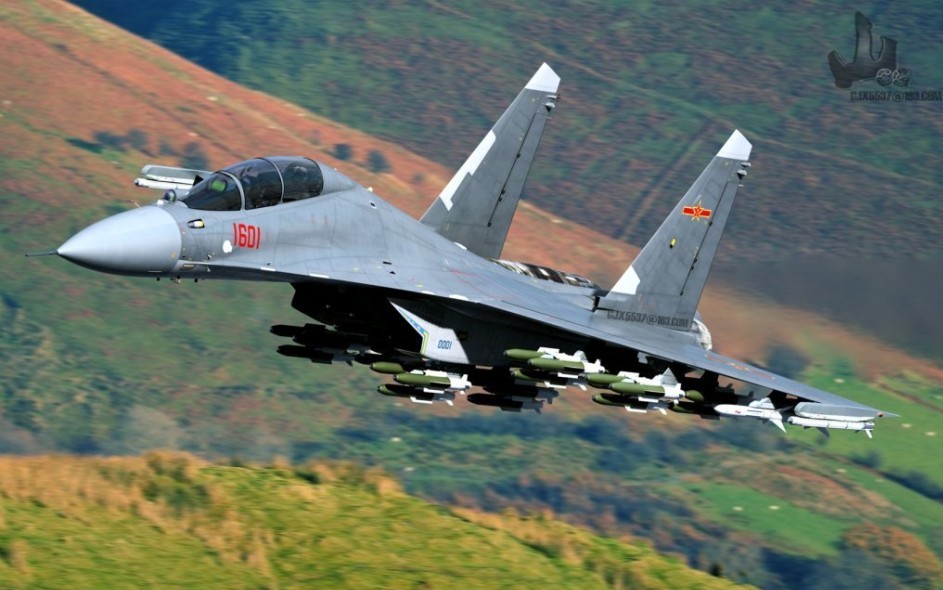
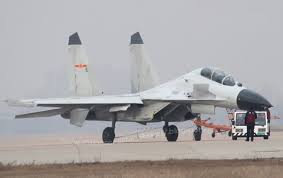
殲-16是中國瀋陽飛機公司為海軍航空兵所研發的一款新型多用途戰機,為第3.5代戰機由瀋陽飛機公司研究及發展,改自Su-30MKK戰鬥機 。
加拿大《漢和防務評論》稱,首批24架殲-16戰鬥機已經服役,2013年被目擊在巴丹吉林沙漠基地測試。俄羅斯稱,瀋陽飛機公司已經向記者展示新型殲-16戰鬥機,飛機已經塗上中國海軍航空兵的標準塗裝。該型戰機的研發主要是配備給海軍航空兵,用於加強利用反艦飛彈打擊水面艦隻的能力。俄羅斯媒體稱與殲轟-7相比較殲-16的機體更大,最大載彈量12噸,可以發射鷹擊-62和鷹擊-83反艦飛彈。此外從網上流傳的照片可以看出,殲-16裝備了國產的「太行」渦扇-10發動機。]J-16裝備自動電子掃描相控陣雷達,可與多目標作戰,性能類似美國F-15E戰鬥轟炸機。
J-16 截至201407 為止已經生產列裝完成50架中國空軍需求300 架.
Chinese Air Force Takes Delivery of New J-16 Strike Fighters.
殲-16是從殲-11B系列上發展而來的第3.5代多用途雙座戰機,殲-16最大特點是具備遠距離超視距攻擊能力和強大的對地、對海打擊能力。殲-16戰鬥機和蘇30MKK一樣採用雙座布局,為強化武器掛載能力,起落架前輪為雙輪。垂尾頂端與蘇30MKK不同,而是類似於原版蘇27,垂尾頂端切尖。翼尖掛架與殲11B不同。
基本規格
- 乘員:2
- 長度:21.9 m(72 ft)
- 翼展:14.7 m(48.2 ft)
- 高度:6.36 m(20.85 ft)
- 翼面積:62.0 m²(667 ft²)
- 空重:17,700 kg(38,600 lb)
- 載重:26,000 kg(58,000 lb)
- 最大起飛重量:35,000 kg(77,000 lb)
- 發動機:2×渦扇-10afterburning turbofans
- 推力:(89.17 kN,20,050 lbf)
- 後燃器推力:135kN(33,000 lbf)
性能
- 最高速度:2.0馬赫
- 航程:3,900 km(2,100 mi)
- 實用升限:17,300 m(56,800 ft)
- 爬升率:305 m/s
武器
- 機砲: 1× GSh-301 gun (30 mm caliber,150 rounds)
- 空對空飛彈: 8× 霹靂-12飛彈 , 4× 霹靂-9飛彈
- 對地飛彈: :反艦反雷達飛彈。
- 炸彈: 多種衛星和雷射制導炸彈及火箭。
- 總共12個掛點
The Shenyang J-16 (Chinese: 歼-16) is a strike fighter designed and manufactured by Shenyang Aircraft Corporation, China. This is a multi-role fighter/bomber variant based on the J-11BS with longer range and upgraded avionics, a concept similar to F-15E Strike Eagle. The first few photos of J-16 were published on Chinese internet websites around June 2012. The J-16 has a slightly different vertical stabilizer compared to J-11 fighter or J-15 naval fighter. It is also equipped with missile pylons for Chinese PL-8 air-to-air missiles, another difference compared to earlier J-11 variants.
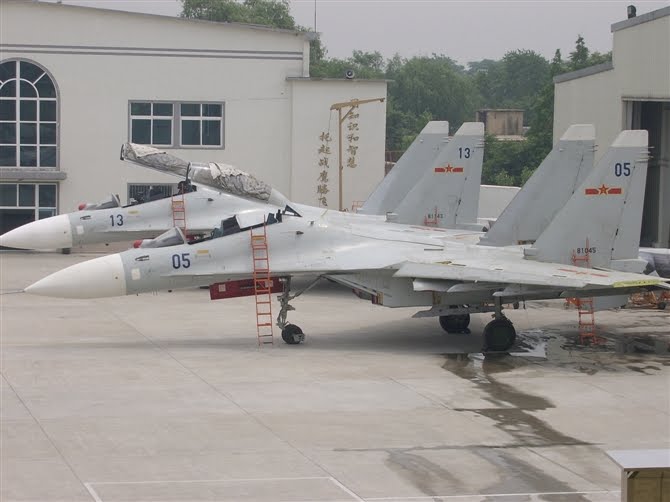
Shenyang J-16 (with CGI full bomb load depicted)
Derived from the J-11 and Sukhoi Su-30MKK fighters bought from Russia in the 2000’s, the J-16 is intended to be China’s equivalent of the American F-15E Strike Eagle. AESA radar, updated ECM, composites, and radar-absorbing material (RAM) add a technological punch, but until higher-quality WS-10 engines are manufactured, don’t look for the aircraft to be this heavily loaded anytime soon…

-16, with production number #1601 painted on the right side of the cockpit, is the first production J-16 delivered to the PLAAF. The J-16 provides China with a comprehensive aerial combat and precision bomber capability in one airframe.
By the end of April 2014, the People's Liberation Army Air Force (PLAAF) has taken delivery of a regiment of J-16 multirole fighters, with an expected initial operational capability in late 2014. Marrying the survivability and air combat power of the Russian Su-30MKK airframe with the Xian JH-7A's versatile arsenal, the Shenyang J-16 strike fighter is notable for its full suite of fully indigenous Chinese guided munitions. While the Su-30MKK was restricted to firing only Russian-made antiship and bunker busting bombs, the domestically designed JH-7A carried a full range of Chinese super and subsonic anti-ship missiles, air to air missiles, satellite guided bombs, cruise missiles and electronic countermeasure (ECM) jammers. However, the JH-7 did not have radar guided air to air missiles, which makes it vulnerable to other fighters common in the region such as the F-16.
Publically available photos of the J-16 are hard to come by, given the work of Chinese censors. What we do know is that despite their similar missions, the J-16 is actually built on a different Su-27 Flanker airframe than the Su-30MKK (notable differences include the J-16's cropped vertical fin tails vs. the Su-30MKK's square topped vertical fin tails). The J-16 is the strike version of the J-11BS, a twin seat version of the Su-27K. The most important upgrade to the J-16 is an Active Electronically Scanned Array (AESA) radar, which is more powerful than the slotted array radars that the Su-30 and JH-7A have. The AESA radar allows the J-16 to intercept enemy aircraft at longer ranges than either of its predecessors, and to attack multiple surface targets simultaneously. The AESA radar would also be datalinked to other Chinese platforms, including unmanned vehicles, to increase their situational awareness.


 1樓. reaizuguo*😻2015/05/29 06:32...
倒數第二(正數第三)張圖片裡的是 J-10,不是 J-16。


