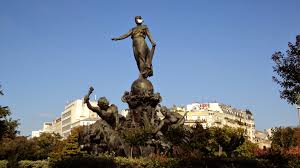


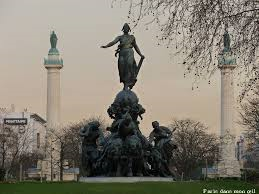

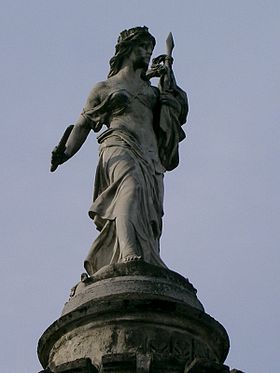
),是法蘭西共和國的國家象徵。就其外延意義而言,她還是自由與理性的擬人表現。與代表法蘭西民族及其歷史、國土與文化的「高盧雄雞」相對,瑪麗安娜代表了作為一個政治意義上的國家(state)的法國以及她的價值觀念。她的形象遍布法國各地,還常常被放置在市政廳或法院顯著位置。她的形象被雕刻成了一座銅像,矗立在巴黎的民族廣場(Place de la Nation)上,以象徵「共和的勝利」。她的形象不僅在國家政府機關的印章以及法國的郵票上出現,還被刻在了法國的歐元硬幣上,在已經退出流通的法郎上也有她的身影。瑪麗安娜是法蘭西共和國最為著名的象徵之一。


在古典時代,人們常常會用神祇、女神或是富有寓意的人格化形象來代表某種思想。儘管在中世紀受到了抑制,這種做法在文藝復興期間又重新得到了人們的歡迎。在1789年的法國大革命期間,一系列分別象徵著自由與理性的、富有寓意的人格化形象紛紛湧現。最終這兩個象徵集中到了一個女性人物身上。她既可以表現為站姿也可以表現為坐姿,同時身上也有著其它一些顯著的特徵,諸如身邊的雄雞、佩帶的三色帽章、以及頭上戴著的弗里吉亞帽。通常這位女性象徵著自由、理性以及法蘭西民族、祖國和共和國具有的平民性質。(對於這樣的形象,可以參考由法國藝術家創作的自由女神像,她的兩座複製品現在分別在巴黎和聖艾蒂安展示。)一部分人認為[誰?],「瑪麗安娜」這個名字得名於16世紀鼓吹推翻暴君的反暴君派(Monarchomaques)耶穌會士胡安·德·馬里亞納(Juan de Mariana)。也有人認為,瑪麗安娜的形象來自於大革命時期的政治家讓·弗朗索瓦·勒貝爾(Jean-François Reubel)的妻子:據說在1797年的某個晚上,督政府成員巴拉斯子爵(Vicomte de Barras)前往勒貝爾家中做客,席間他詢問女主人的芳名——「瑪麗-安娜,」她答道——「太完美了,」巴拉斯失聲喊道,「多麼簡潔的名字啊,這名字用在共和國身上,簡直同用在您的身上一樣般配,夫人!」
Marianne is a national symbol of the French Republic, an allegory of liberty and reason, and a portrayal of the Goddess of Liberty.
Marianne is displayed in many places in France and holds a place of honour in town halls and law courts. She symbolises the "Triumph of the Republic", a bronze sculpture overlooking the Place de la Nation in Paris. Her profile stands out on the official government logo of the country, is engraved on French euro coins and appears on French postage stamps; it also was featured on the former franc currency. Marianne is one of the most prominent symbols of the French Republic, and is officially used on most government documents.
Marianne is a significant republican symbol, as opposed to monarchy, and an icon of freedom and democracy against all forms of dictatorship. Other national symbols of France include the tricolor flag, the national motto Liberté, Égalité, Fraternité, the national anthem La Marseillaise, as well as the coat of arms and the official Great Seal of France.


