
.jpg)
Strasbourg (French pronunciation: [stʁaz.buʁ]; Lower Alsatian: Strossburi, [ˈʃd̥rɔːsb̥uri]; German: Straßburg, [ˈʃtʁaːsbʊɐ̯k]) is the capital and principal city of the Alsace region in eastern France and is the official seat of the European Parliament. Located close to the border with Germany, it is the capital of the Bas-Rhin département. The city and the region of Alsace were historically Alemannic-speaking, which explains the city's Germanic name. In 2006, the city proper had 272,975 inhabitants and its urban community 467,375 inhabitants. With 759,868 inhabitants in 2010, Strasbourg's metropolitan area (only the part of the metropolitan area on French territory) is the ninth largest in France. The transnational Eurodistrict Strasbourg-Ortenau had a population of 884,988 inhabitants in 2008.]
Strasbourg is the seat of several European institutions, such as the Council of Europe (with its European Court of Human Rights, its European Directorate for the Quality of Medicines and its European Audiovisual Observatory) and the Eurocorps, as well as the European Parliament and the European Ombudsman of the European Union. The city is also the seat of the Central Commission for Navigation on the Rhine and the International Institute of Human Rights.
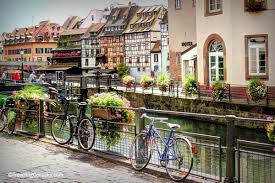
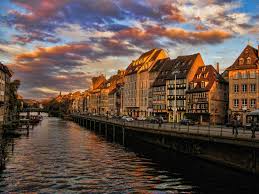
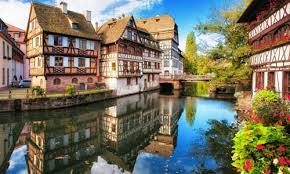
Strasbourg's historic city centre, the Grande Île (Grand Island), was classified a World Heritage site by UNESCO in 1988, the first time such an honour was placed on an entire city centre. Strasbourg is immersed in the Franco-German culture and although violently disputed throughout history, has been a bridge of unity between France and Germany for centuries, especially through the University of Strasbourg, currently the second largest in France, and the coexistence of Catholic and Protestant culture. The largest Islamic place of worship in France, the Strasbourg Grand Mosque, was inaugurated by French Interior Minister Manuel Valls on 27 September 2012.]
Economically, Strasbourg is an important centre of manufacturing and engineering, as well as a hub of road, rail, and river transportation. The port of Strasbourg is the second largest on the Rhine after Duisburg, Germany.[9] In terms of city ranking for innovation, Strasbourg has been ranked the third city in France and 18th globally.]
史特拉斯堡(法語:Strasbourg;德語:Straßburg[5]),也譯作斯特拉斯堡,位於法國國土的東端,與德國隔萊茵河相望,是法國亞爾薩斯大區和下萊茵省的首府。
史特拉斯堡目前屬於法國領土。但是在歷史上,德國和法國曾多次交替擁有對史特拉斯堡的主權,因而該市在語言和文化上兼有法國和德國的特點,是這兩種不同文化的交匯之地。谷登堡、加爾文、歌德、莫扎特、巴斯德等德法兩國名人都曾在史特拉斯堡居留。
史特拉斯堡也是眾多國際組織總部所在地的城市。史特拉斯堡與比利時的首都布魯塞爾一樣,駐有歐盟許多重要的機構,包括歐洲理事會、歐洲人權法院、歐盟反貪局、歐洲軍團(Eurocorps)、歐洲視聽觀察,以及歐洲議會。
史特拉斯堡是法國乃至西歐公路、鐵路和內河航運的重要中心。史特拉斯堡港是萊茵河沿線的第二大港口,僅次於德國的杜伊斯堡[8]。該市也是萊茵河航運中央執委會的駐地。
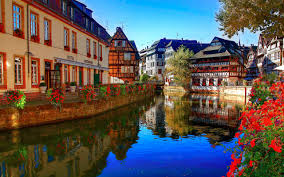
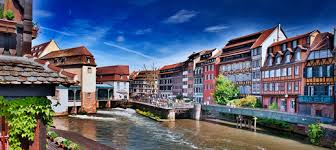
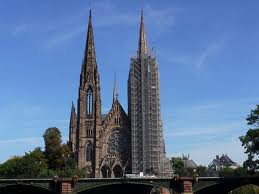
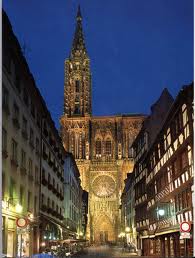
史特拉斯堡的歷史中心位於伊爾河兩條支流環繞的大島,這一區域擁有中世紀以來的大量精美建築,包括史特拉斯堡大教堂與小法蘭西,1988年被聯合國教科文組織列為世界文化遺產,這也是首次有一個城市的整個市中心區域獲此榮譽。


史特拉斯堡地處萊茵河邊,周圍河道交錯,水力資源豐富,然而,古代的史特拉斯堡並不是一處宜居之地。但是史特拉斯堡的地理位置(橫渡萊茵河的重要路口)使得古代人類很早就開始開發這一地區。最早的有跡可查的人類活動可以追溯到公元前3000年的新石器時期。青銅時代末期(公元前1200年左右)出現了以修築木排的方式在沼地居住的人群。然而之後數百年中水位的高漲使得史特拉斯堡地區變得無人居住。直到公元前600至450年該地才又一次迎來固定的居民。數千年的開發令史特拉斯堡地區的環境得以改善。考古學的發掘表明,公元前1至2世紀時,現今史特拉斯堡主教座堂的地方可能是一座廟宇,而旁邊還有一定規模的集市[

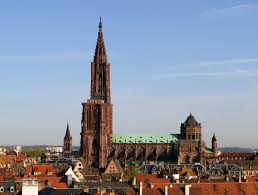
史特拉斯堡主教座堂始建於12世紀,到1439年才基本完成(南塔樓尚未完工),當時是世界最高的建築,超過了吉薩大金字塔。1520年代宗教改革期間,該市接受了馬丁·路德的教導,他的追隨者在下一個世紀創建了史特拉斯堡大學,新教清除偶像的主張導致許多天主教堂和修道院被毀。史特拉斯堡是人文主義學術中心和神聖羅馬帝國早期的印刷中心,它在知識與政治方面,對新教在德國西南部確立其地位產生了重大影響。1530年,在帝國奧格斯堡會議上, 史特拉斯堡和另外4個自由城市一起呈遞了一份表明他們新教信仰的信條,不過與他們呈交給查理五世的奧格斯堡信綱略有不同。
16世紀初,神聖羅馬帝國憲法改革以後,成立了帝國圈(Reichskreis),史特拉斯堡成為帝國西南部的上萊茵循環的一部分,主要負責供養軍隊監督造幣、確保公共安全。
史特拉斯堡自由市在三十年戰爭期間保持中立。1681年9月,史特拉斯堡被法國國王路易十四奪取,這次吞併得到了1697年里斯維克和約的承認。1685年,路易十四公布《楓丹白露敕令》,宣布廢除1598年的《南特敕令》,官方的宗教不寬容政策導致許多新教徒被逐出史特拉斯堡和亞爾薩斯。史特拉斯堡主教座堂也從路德會手中交給羅馬天主教。德語的路德會大學一直堅持到法國革命,其中著名的學生有歌德和赫爾德。


