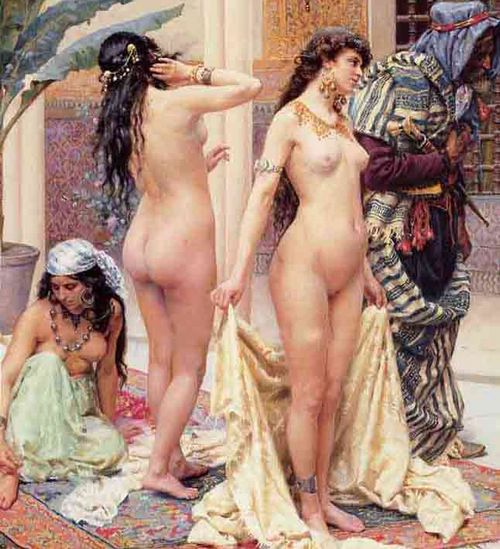
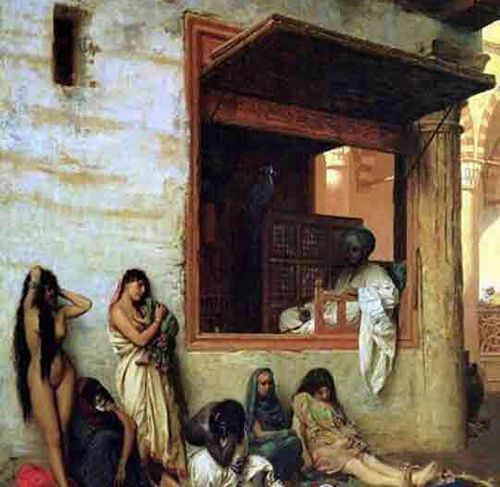
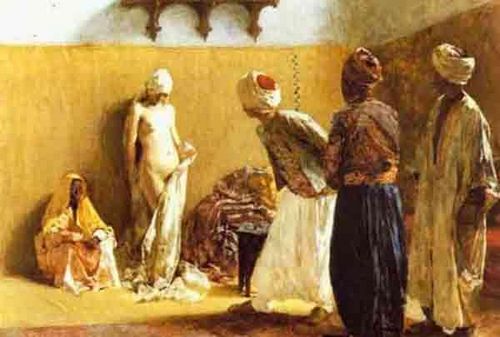
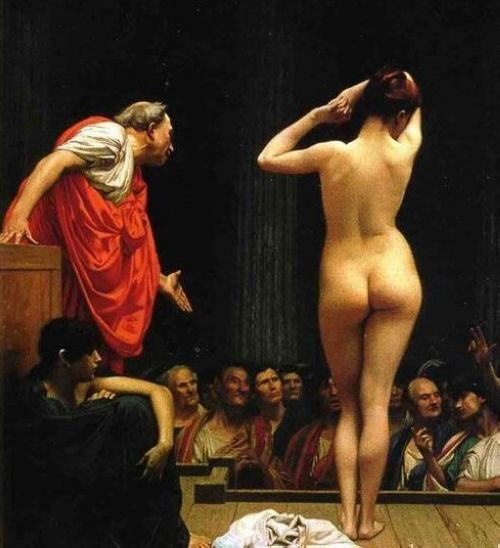
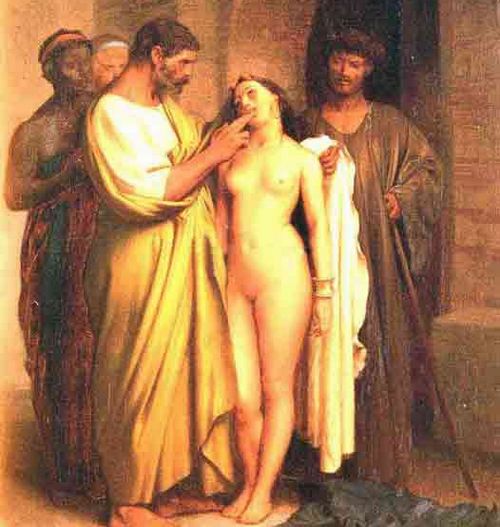
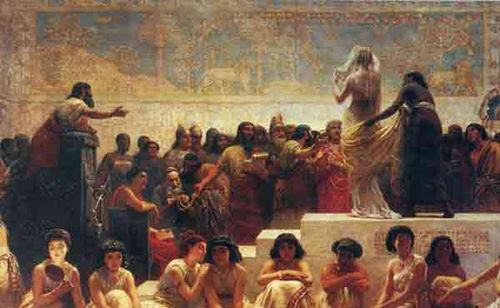
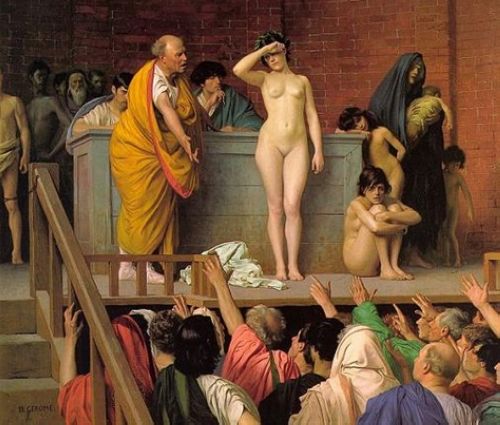
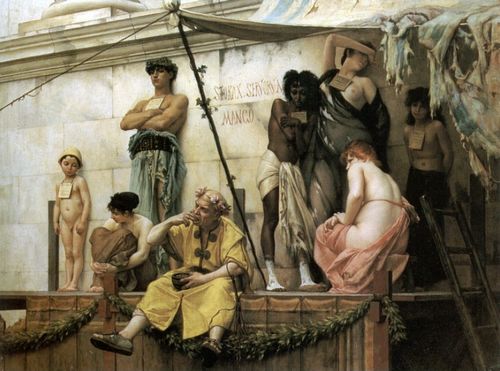
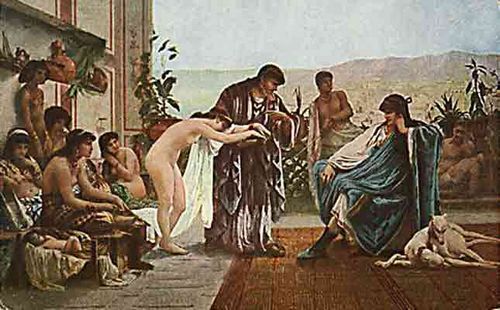
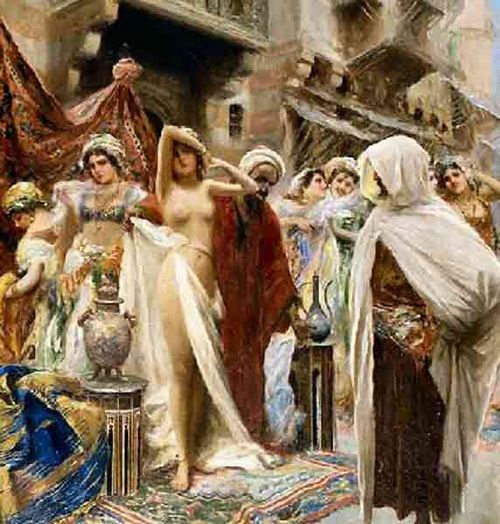
奴隸拍賣的起源是在古羅馬。最初拍賣方式用於古羅馬拍賣女奴隸,當時沒有出現拍賣槌,賣家用揮鞭子抽地三次作為成交的標誌。當拍賣品為外型姣美的女奴時,競買人往往激動得青筋暴起,眼珠發紅,唾沫四濺地怪叫著喊出價格來表達他的愛慕程度。整個場面火爆慘烈,抬手喊價此起彼伏層層攀升。賣場之外,有擔架和醫師等待著昏迷者或倒地吐白沫者或神經失常者被抬出來。

羅馬的奴隸貿易,隨著羅馬帝國的分崩離析而走向衰落。後來,阿拉伯人在“繼承”東羅馬帝國的領土的同時,也繼承了羅馬的蓄奴傳統。奴隸拍賣在中世紀的阿拉伯地區長久不衰。甚至到了近代,奧斯曼帝國依然保留著形形色色的奴隸制度
The Rome Statute (1998) (that defines the crimes over which the International Criminal Court may have jurisdiction) encompass crimes against humanity (Article 7) which includes "enslavement" (Article 7.1.c) and "sexual enslavement" (Article 7.1.g) "when committed as part of a widespread or systematic attack directed against any civilian population". It also defines sexual enslavement as a war crime and a breach of the Geneva Conventions when committed during an international armed conflict (Article 8.b.xxii) and indirectly in an internal armed conflict under Article(8.c.ii), but the courts jurisdiction over war crimes is explicitly excluded from including crimes committed during "situations of internal disturbances and tensions, such as riots, isolated and sporadic acts of violence or other acts of a similar nature" (Article 8.d).
The text of the Rome Statute does not explicitly define sexual enslavement, but does define enslavement as "the exercise of any or all of the powers attaching to the right of ownership over a person and includes the exercise of such power in the course of trafficking in persons, in particular women and children" (Article 7.2.c)]


