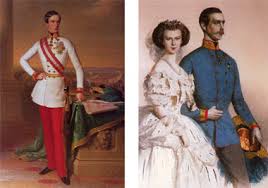
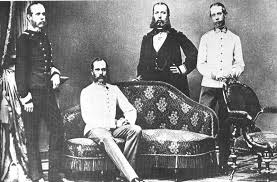
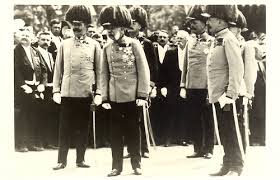
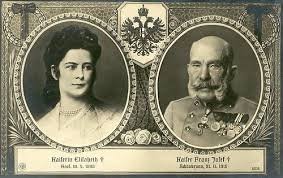

法蘭茲·約瑟夫一世(Franz Josef I,),奧地利皇帝兼匈牙利國王(1848年-1867年),奧匈帝國締造者和第一位皇帝(1867年-1916年在位)。法蘭茲·約瑟夫一世從1850年至1864年間擔任德意志邦聯總統。
1848年,其伯父、奧地利皇帝斐迪南一世宣布遜位,其父弗蘭茨·卡爾宣布放棄皇位繼承權,於是18歲法蘭茲·約瑟夫繼位為奧地利皇帝和匈牙利國王、倫巴第國王、波希米亞國王,稱弗蘭茨·約瑟夫一世。
.png)

1867年6月8日,他與匈牙利貴族達成和解,加冕為匈牙利國王,戴上聖史蒂芬王冠,建立了奧匈帝國.
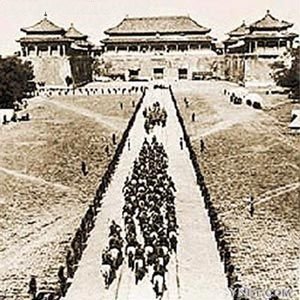
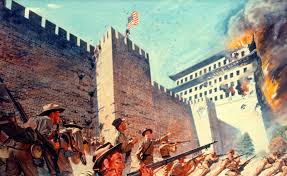
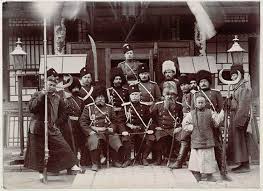
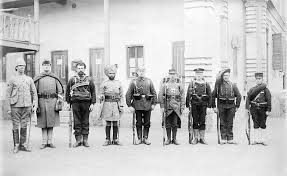
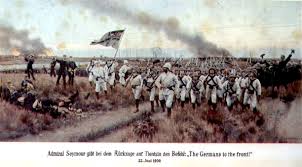
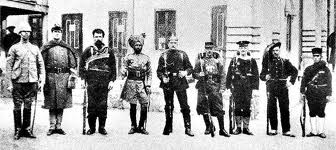
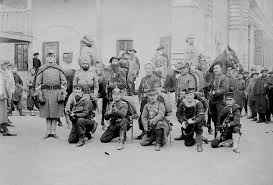
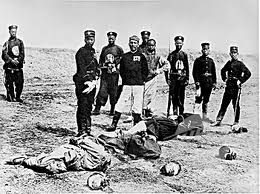
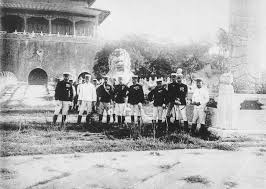
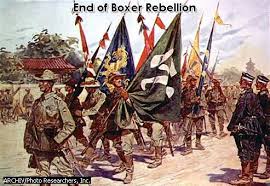
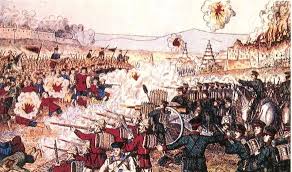
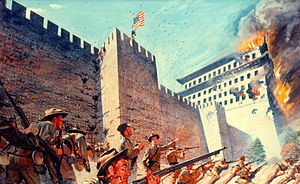
1900年奧匈加入八國聯軍出兵中國。
1914年,其侄奧地利皇儲法蘭茲·斐迪南大公與庶妻霍恩貝格女公爵蘇菲在波赫首府塞拉耶佛遇刺。奧匈以「塞拉耶佛事件」為由對塞爾維亞宣戰,隨後德、俄、法、英等國相繼捲入戰爭,第一次世界大戰爆發。
Franz Joseph I or Francis Joseph I (German: Franz Joseph I., Hungarian: I. Ferenc József, Slovene: Franc Jožef I.,18 August 1830 – 21 November 1916) was Emperor of Austria and Apostolic King of Hungary from 1848 until his death in 1916. From 1 May 1850 until 24 August 1866 he was President of the German Confederation.[1]
In December 1848, Emperor Ferdinand abdicated the throne as part of Ministerpräsident Felix zu Schwarzenberg's plan to end the Revolutions of 1848 in Austria, which allowed Ferdinand's nephew Franz Joseph to ascend to the throne. Largely considered to be a reactionary, Franz Joseph spent his early reign resisting constitutionalism in his domains. The Austrian Empire was forced to cede most of its claim to Lombardy–Venetia to the Kingdom of Piedmont-Sardinia following the conclusion of the Second Italian War of Independence in 1859, and the Third Italian War of Independence in 1866. Although Franz Joseph ceded no territory to the Kingdom of Prussia after the Austrian defeat in the Austro-Prussian War, the Peace of Prague (23 August 1866) settled the German question in favour of Prussia, which prevented the unification of Germany under the House of Habsburg (Großdeutsche Lösung).[


