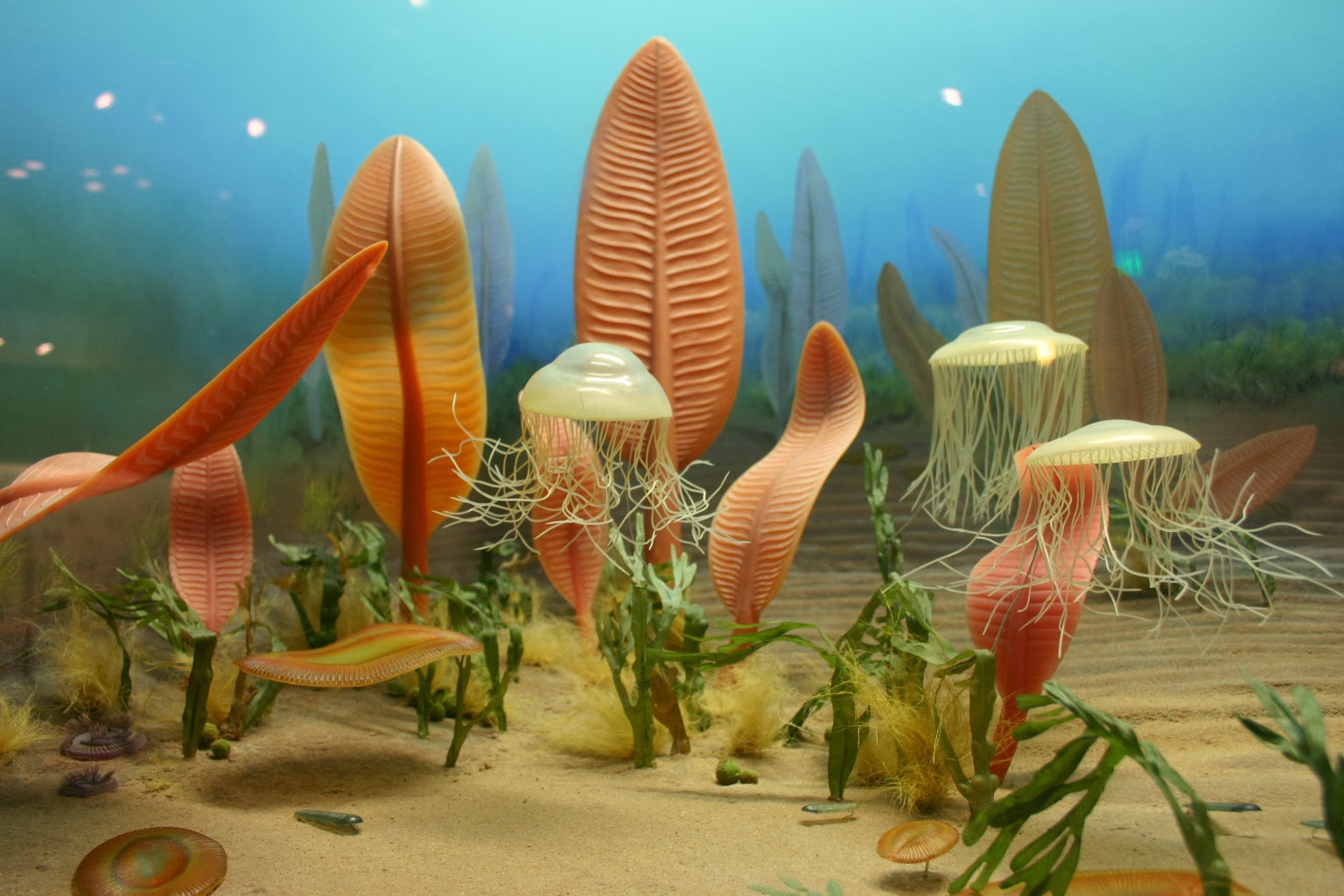
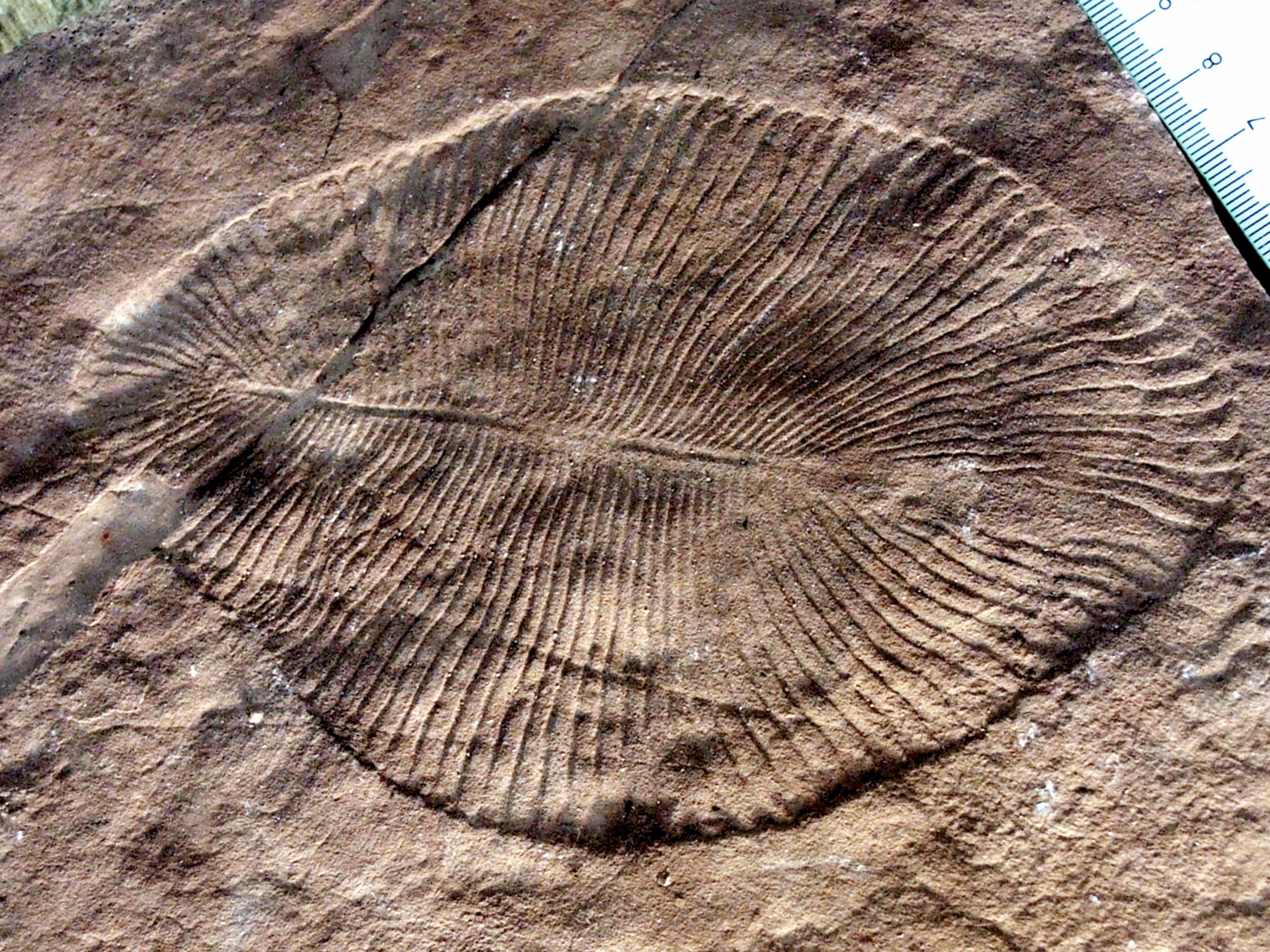
埃迪卡拉生物群(英語:Ediacaran biota)是1946年發現於澳大利亞南部埃迪卡拉(Ediacara)山地的末遠古系龐德石英岩中的化石群,這類化石群已在世界30多個地點被發現。
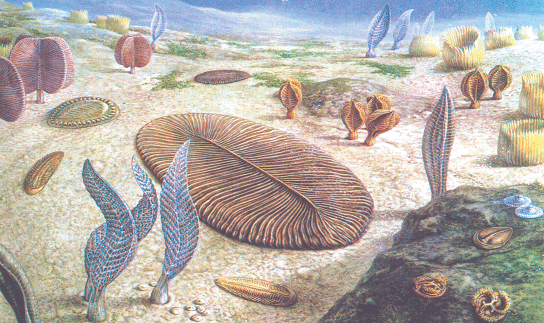
已描述的生物主要是腔腸動物,包括水母類和海鰓類,其次是環節動物、節肢動物等。這些動物體型獨特,一般較大,個別長達1米以上,沒有發現消化器官。身軀往往扁平,可能生活於淺海近岸的水中。德國古生物學家賽拉赫(A.Seilacher)認為這是一類由多分區相互纏結或縫合的扁平體組成,用液體支持身軀,擴大體表面積,以獲取氧氣。
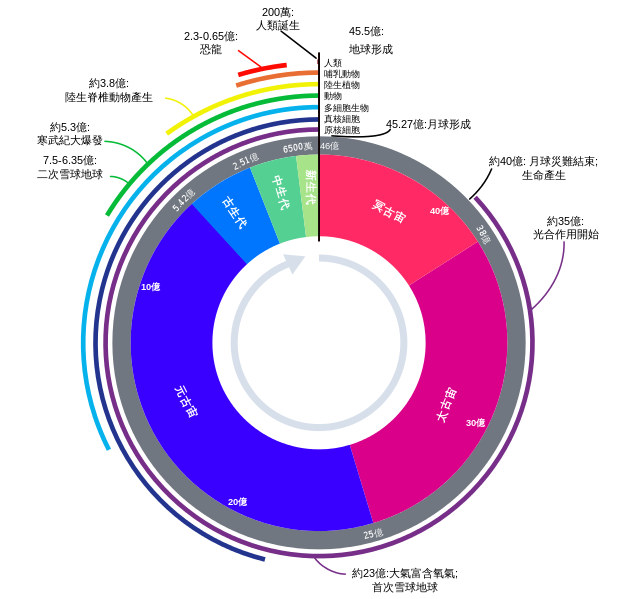
這些生物體的印痕化石廣布全球,存在於埃迪卡拉紀(6億3500萬年前-5億4200萬年前),呈古怪的管狀和藻體狀,普遍不能移動。是迄今已知最早的複雜多細胞生物[註 1]。埃迪卡拉生物群在成冰紀的廣大冰川融化、地球回暖時首次出現蹤影,隨後又在同時期寒武紀大爆發、生物多樣性劇增之際,大量滅絕。然而,現存動物的基本結構(body plan)卻源於寒武紀的化石紀錄,而非較早的埃迪卡拉紀。在肉眼可見的大型生物(macroorganism)方面,寒武紀生物群完全取代了埃迪卡拉紀化石紀錄中所演化出的生物。
The Ediacara (/ˌiːdiˈækərə/; formerly Vendian) biota consisted of enigmatic tubular and frond-shaped, mostly sessile organisms which lived during the Ediacaran Period (ca. 635–542 Ma). Trace fossils of these organisms have been found worldwide, and represent the earliest known complex multicellular organisms. The Ediacara biota radiated in an event called the Avalon Explosion, 575 million years ago,[1][2] after the Earth had thawed from the Cryogenian period's extensive glaciation. The biota largely disappeared contemporaneously with the rapid appearance of biodiversity known as the Cambrian explosion. Most of the currently existing body plans of animals first appeared only in the fossil record of the Cambrianrather than the Ediacaran. For macroorganisms, the Cambrian biota completely replaced the organisms that populated the Ediacaran fossil record.