Mother Goose
Charles Perrault
|
|
|
Charles Perrault (1628-1703) was a member of the Académie Française and a leading intellectual of his time. Ironically, his dialogue Parallèles des anciens et des modernes (Parallels between the Ancients and the Moderns), 1688-1697, which compared the authors of antiquity unfavorably to modern writers, served as a forerunner for the Age of Enlightenment in Europe, an era that was not always receptive to tales of magic and fantasy. |
|
Perrault could have not predicted that his reputation for future generations would rest almost entirely on a slender book published in 1697 containing eight simple stories with the unassuming title: Stories or Tales from Times Past, with Morals, with the added title in the frontispiece, Tales of Mother Goose. ✦Sleeping Beauty ✦Little Red Riding Hood ✦Blue Beard ✦Puss in Boots ✦The Fairies ✦Cinderella ✦Ricky with the Tuft ✦Little Tom Thumb |

Nursery Rhyme :
Nursery rhymes are often consolidated into collections, such as Mother Goose, a famous collection of nursery rhymes that actually originated in France.
|
A nursery rhyme is a short rhyming story, often set to music and usually designed for young children, such as those in a nursery. Songs for children are a part of many cultures, and they often serve as an oral record of important political and historical events. They also can preserve archaic forms of language. In the English language, the bulk of commonly used nursery rhymes date from the 16th-18th centuries, with some originating in Europe and others, such as Mary Had a Little Lamb, coming from North America. |
|
Richard Scarry's Best Sing Along Mother Goose Video Ever! Theme: -lost / found -dream / adventure -friendship / brotherhood -magic & spell Concepts: ✩Naming ✩Sorting
✩Describing “He is lost.” “He is a worm.” “LONG, THIN, GREEN hat, ONE SHOE” Children in the Middle period had a difficult life.
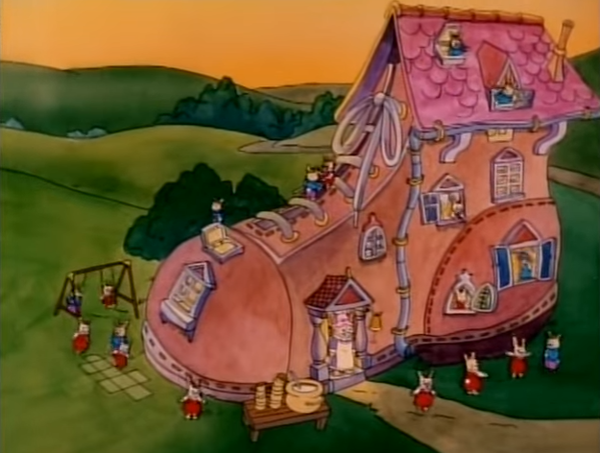
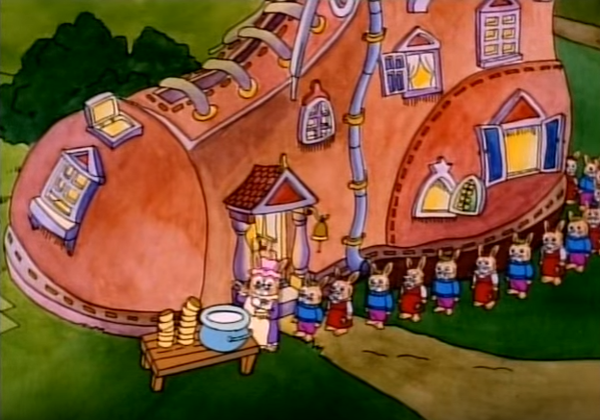
There was an Old Woman Who Lived in a Shoe
Old King Cole
More Discussion:
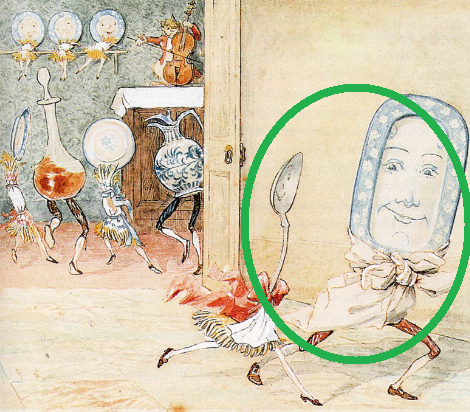
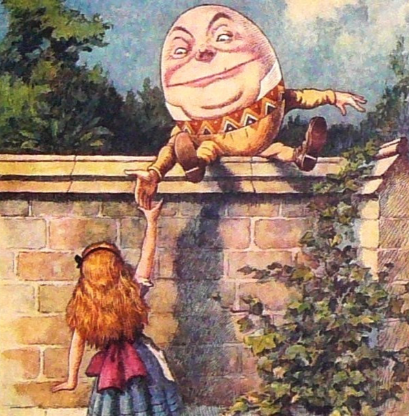
Humpty Dumpty Humpty Dumpty sat on a wall, Humpty Dumpty had a great fall. All the king's horses and all the king's men Couldn't put Humpty together again. ⇒ Humpty Dumpty was a colloquial term used in fifteenth century England describing someone who was obese. This has given rise to various, but inaccurate, theories surrounding the identity of Humpty Dumpty. The image of Humpty Dumpty was made famous by the illustrations included in the 'Alice through the looking glass' novel by Lewis Carroll. However, Humpty Dumpty was not a person pilloried in the famous rhyme!
|
Hooding Ceremony
The Hooding Ceremony is an event whereby recognition is given for those graduating with doctoral degrees. These individuals are doctoral candidates and will be full recipients of their doctorates at the graduation ceremonies. The Hooding Ceremony is symbolic of passing the guard from one generation of doctors to the next generation of doctors. During the ceremony a faculty advisor or Dean of the Graduate School place the doctoral hood over the head of the graduate, signifying his or her success in completing the graduate program. The ceremony is similar to a graduation in that faculty and students are dressed in academic attire. The Hooding Ceremony is in addition to and does not replace the Graduation Exercises.

Teddy Bear
|
|
|
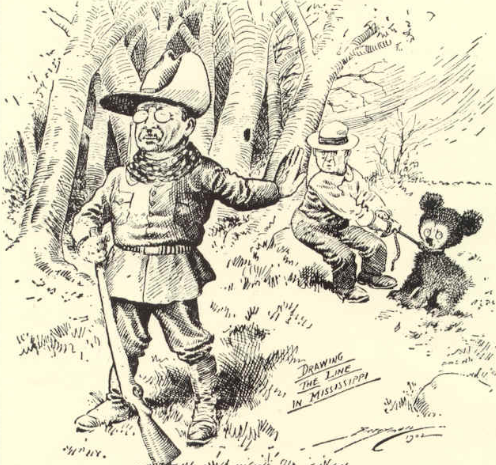
The name teddy bear comes from former United States President Theodore Roosevelt, who was commonly known as "Teddy" (though he loathed being referred to as such). The name originated from an incident on a bear hunting trip in Mississippi in November 1902, to which Roosevelt was invited by Mississippi Governor Andrew H. Longino. There were several other hunters competing, and most of them had already killed an animal. A suite of Roosevelt's attendants, led by Holt Collier, cornered, clubbed, and tied an American black bear to a willow tree after a long exhausting chase with hounds. They called Roosevelt to the site and suggested that he should shoot it. He refused to shoot the bear himself, deeming this unsportsmanlike, but instructed that the bear be killed to put it out of its misery, and it became the topic of a political cartoon by Clifford Berryman in The Washington Post on November 16, 1902. |
|
|
|
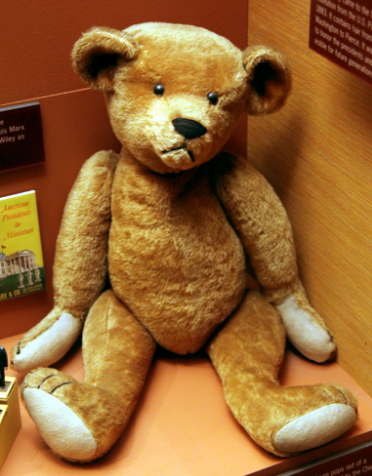
Morris Michtom saw the drawing of Roosevelt and was inspired to create a teddy bear. He created a tiny soft bear cub and put it in the shop window with a sign "Teddy's bear," after sending a bear to Roosevelt and receiving permission to use his name. |
限會員,要發表迴響,請先登入


