More discussion on Charlotte’s Web
Character :
|
Flat Character : ★ A flat character is less well developed, and has fewer traits. ★ Flat characters are not fully developed, we call them flat. ★ We must have these flat characters to help carry the action, to show how the central character behaves or relates to others, to make the setting a believable place because in this setting live these people. |
|
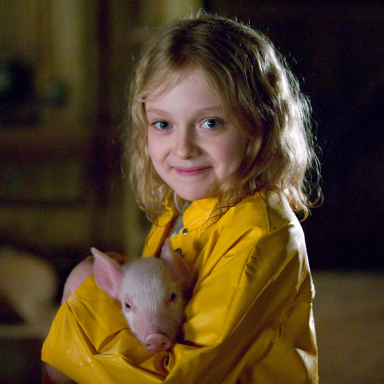
Fern in Charlotte’s Web, for example, is a flat character. Fern has few traits that distinguish her from other little girls. |
|
Stock Character : Stock characters are ones who represent specific stereotypes. These characters are types and not individuals. |
|
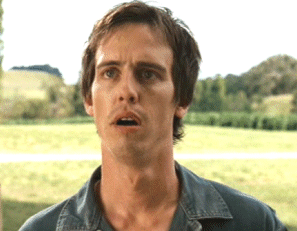
In Charlotte’s Web, Lurvy is an example of a stereotype, in this case of a hired man. Lurvy has only the expected traits and does only the expected things. He nails down the loose board on Wilbur’s pen, slops Wilbur and discovers the exploded dud. Lurvy is neither eloquent nor imaginative. |
|
Character Foil :
Occasionally the writer may use a character foil, a minor character whose traits are in direct contrast to a principal character, and thus highlight the principal. |
|
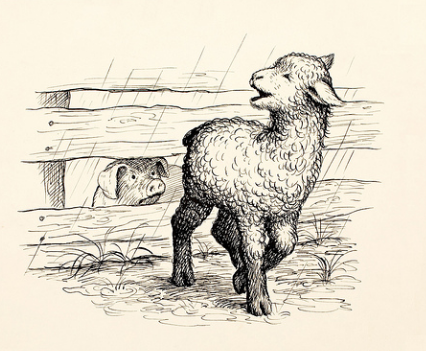
The snobbish lamb is as young and naive as Wilbur, but she is smug instead of humble. Pigs are little or nothing to her. Since the lamb is consistently disdainful, her behavior contrasts sharply to Wilbur’s, and in this way she acts as a foil. |
|
Round Character : a round character is one that we know well, who has a variety of traits that make him or her believable. |
|
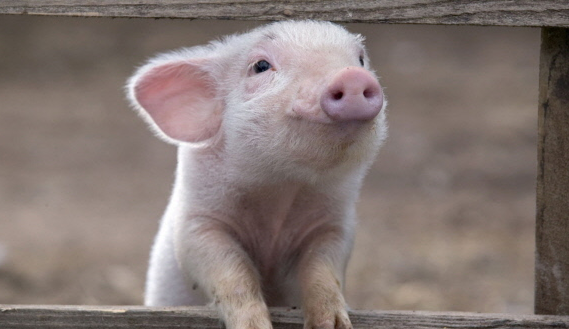
From the first words of the first page when Fern asks where her father is going with the ax, we are anxious about Wilbur’s fate. We soon discover that Wilbur’s struggle is the conflict, and that he is therefore the protagonist, or central character. |
Quote :
“Wilbur... we're born, we live, and when our time comes, we die. It's just a natural cycle of life.” ☚ a miracle!!! 讚美造物主!!!
another example :
The Tyger
By William Blake
Tyger Tyger, burning bright,
In the forests of the night;
What immortal hand or eye,
Could frame thy fearful symmetry?
In what distant deeps or skies.
Burnt the fire of thine eyes?
On what wings dare he aspire?
What the hand, dare seize the fire?
And what shoulder, & what art,
Could twist the sinews of thy heart?
And when thy heart began to beat,
What dread hand? & what dread feet?
What the hammer? what the chain,
In what furnace was thy brain?
What the anvil? what dread grasp,
Dare its deadly terrors clasp!
When the stars threw down their spears
And water'd heaven with their tears:
Did he smile his work to see?
Did he who made the Lamb make thee?
Tyger Tyger burning bright,
In the forests of the night:
What immortal hand or eye,
Dare frame thy fearful symmetry?
Onomatopoeia:
An onomatopoeia is a word that phonetically imitates, resembles or suggests the source of the sound that it describes.
|
An oxymoron is a figure of speech that juxtaposes elements that appear to be contradictory, but which contain a concealed point. |
|
for example: (a) Ordinary Miracles (b) "Parting is such a sweet sorrow." Shakespeare has used this phrase in Act-II, Scene-II of his play, Romeo and Juliet.
(c) bittersweet: |
|
Alliteration is a stylistic literary device identified by the repeated sound of the first letter in a series of multiple words, or the repetition of the same letter sounds in stressed syllables of a phrase. |
|
To Helen Related Poem Content Details By Edgar Allan Poe
Helen, thy beauty is to me Like those Nicéan barks of yore, That gently, o'er a perfumed sea, The weary, way-worn wanderer bore To his own native shore.
On desperate seas long wont to roam, Thy hyacinth hair, thy classic face, Thy Naiad airs have brought me home To the glory that was Greece, And the grandeur that was Rome.
Lo! in yon brilliant window-niche How statue-like I see thee stand, The agate lamp within thy hand! Ah, Psyche, from the regions which Are Holy-Land! |
|
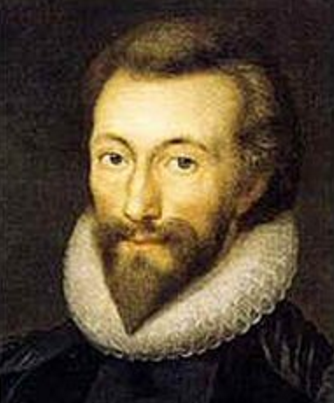
John Donne
|
|
Holy Sonnets: Death, be not proud Related Poem Content Details By John Donne Death, be not proud, though some have called thee Mighty and dreadful, for thou art not so; For those whom thou think'st thou dost overthrow Die not, poor Death, nor yet canst thou kill me. From rest and sleep, which but thy pictures be, Much pleasure; then from thee much more must flow, And soonest our best men with thee do go, Rest of their bones, and soul's delivery. Thou art slave to fate, chance, kings, and desperate men, And dost with poison, war, and sickness dwell, And poppy or charms can make us sleep as well And better than thy stroke; why swell'st thou then? One short sleep past, we wake eternally And death shall be no more; Death, thou shalt die. Wit (2001) - Death be not proud A Valediction: Forbidding Mourning By John Donne As virtuous men pass mildly away, And whisper to their souls to go, Whilst some of their sad friends do say The breath goes now, and some say, No:
So let us melt, and make no noise, No tear-floods, nor sigh-tempests move; 'Twere profanation of our joys To tell the laity our love.
Moving of th' earth brings harms and fears, Men reckon what it did, and meant; But trepidation of the spheres, Though greater far, is innocent.
Dull sublunary lovers' love (Whose soul is sense) cannot admit Absence, because it doth remove Those things which elemented it.
But we by a love so much refined, That our selves know not what it is, Inter-assured of the mind, Care less, eyes, lips, and hands to miss.
Our two souls therefore, which are one, Though I must go, endure not yet A breach, but an expansion, Like gold to airy thinness beat.
If they be two, they are two so As stiff twin compasses are two; Thy soul, the fixed foot, makes no show To move, but doth, if the other do.
And though it in the center sit, Yet when the other far doth roam, It leans and hearkens after it, And grows erect, as that comes home.
Such wilt thou be to me, who must, Like th' other foot, obliquely run; Thy firmness makes my circle just, And makes me end where I begun. |
限會員,要發表迴響,請先登入


