Stigmata
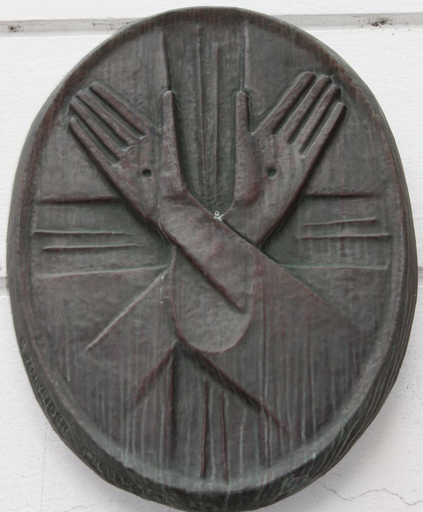
Stigmata (singular stigma) is a term used by members of the Christian faith to describe body marks, sores, or sensations of pain in locations corresponding to the crucifixion wounds of Jesus Christ, such as the hands, wrists, and feet causing extreme pain and torrid affect of humiliation. An individual bearing the wounds of Stigmata is referred to as a Stigmatist.
The term originates from the line at the end of Saint Paul's Letter to the Galatians where he says, "I bear on my body the marks of Jesus." Stigmata is the plural of the Greek word στίγμα stigma, meaning a mark, tattoo,[1] or brand such as might have been used for identification of an animal or slave.
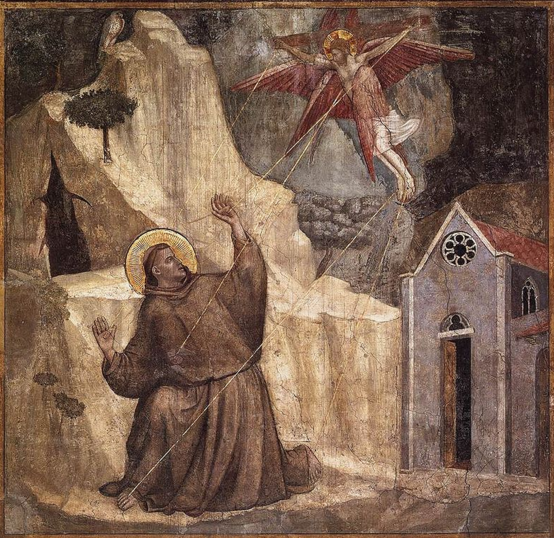
Stigmata are primarily associated with the Roman Catholic faith. Many reported stigmatics are members of Catholic religious orders. St. Francis of Assisi was the first recorded stigmatic in Christian history. For over fifty years, St. Padre Pio of Pietrelcina of the Order of Friars Minor Capuchin reported stigmata which were studied by several 20th-century physicians.
A high percentage (perhaps over 80%) of all stigmatics are women. In his Stigmata: A Medieval Phenomenon in a Modern Age, Edward Harrison suggests that there is no single mechanism whereby the marks of stigmata were produced.
Saint Francis of Assisi born Giovanni di Pietro di Bernardone, informally named as Francesco (1181/1182 – 3 October 1226) was an Italian Roman Catholic friar and preacher. He founded the men's Order of Friars Minor, the women’s Order of Saint Clare, the Third Order of Saint Francis and the Custody of the Holy Land. Francis is one of the most venerated religious figures in history.
Fresco of Saint Francis Receiving the Stigmata
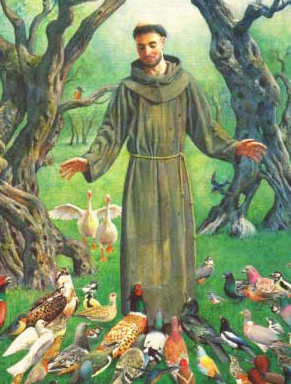
Saint Francis of Assisi knew the language of birds.
★ succeed (v.) :
to achieve something that you planned to do or attempted to do
to replace someone in an important or powerful job or position
success (n.)
successful (adj.)
successive(adj.) coming or happening one after another in a series
★ cardinal : very important
(heart)
★ The names of people in South Europe should pronounce the last sound.
e.g. Persephone, penelope
★hypo- : under
hypodermic : a narrow plastic tube with a needle used for putting drugs into your body through the skin
hypothesis : an idea that attempts to explain something but has not yet been tested or proved to be correct
★ cripple : an offensive word for someone who is physically disabled, especially someone who
is unable to walk
lame duck : someone who is not successful and needs a lot of help and support
★ leave office
law firm
I got a great job offer.(我獲得一份很好的工作)。
★ memorandum :
a. a short written statement containing information about a particular subject, passed between officials in a government or organization
b. a memo
referendum : an occasion when everyone in a country can vote to make a decision about
one particular subject
★cosmopolitan :
(adj.) showing the influence of many different countries and cultures
(n.) someone who has a lot of knowledge and experience of many different countries and cultures
metropolitan : belonging to a big city, or typical of big cities

The unicorn is the national animal of Scotland.
In ancient times, the Scots believed in many aspects of mythology, including mythical sea monsters (such as the kraken) and unicorns. The unicorn appears in ancient mythology, and it has come to symbolize innocence, healing powers, joy, and life. The first known written account of the unicorn is from John Guillim's "Displays of Heraldy" from the 17th century. The unicorn was also worshipped by the ancient Babylonians.
限會員,要發表迴響,請先登入


