中國與美國..CHINA SO STRONG.2026. China vs USA.

時間證明看誰笑到最後
.資本主義的美國與社會主義的中國, 誰人知曉優與劣?
.
. .
.
21世紀是中國人的天下,當中國統治世界.
When US was very strong, China accepted the fact and tried hard to improve itself , but when China is getting stronger and stronger, US gone crazy !...........
.美國瘋狂無止境的印刷美元鈔票,害人害己,強迫世界各國購買美國的國家債券,企挽救美國的經濟與財政,就是本末倒置,走進死胡同的死路,美國帝國主義霸權的滅亡日期,愈來愈近喇.美國霸權以軍事力量在世界各國發動戰爭自取滅亡.
In today’s rapidly shifting global power landscape, the military comparison between the United States and China has become one of the most searched, debated, and high-engagement geopolitical topics online. This visual breakdown captures the essence of a modern superpower rivalry, where defense spending, manpower, and strategic dominance shape the future of global security.
.

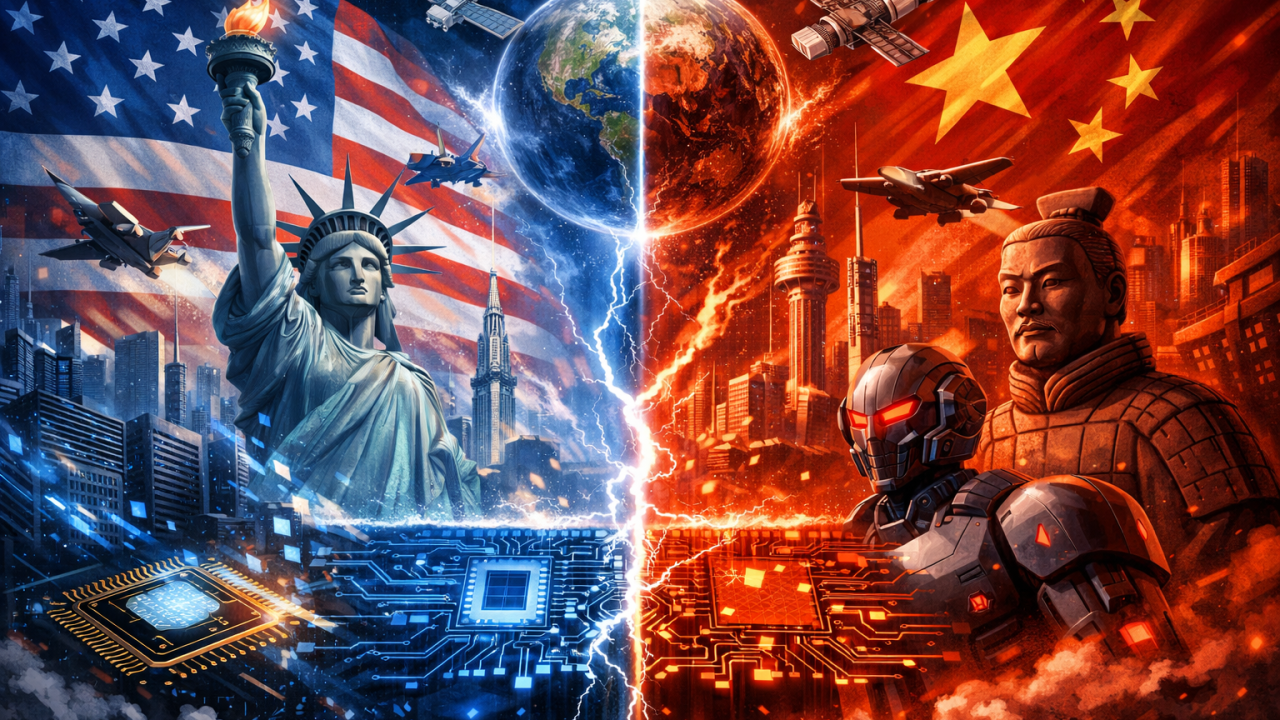
Here’s a 2026 comparison of China vs. United States technology — covering major sectors where both countries are competing for global leadership. This spans AI, semiconductors, research output, manufacturing, infrastructure, strategic priorities, and geopolitical impacts.
 1) Artificial Intelligence (AI)
Still leads in frontier AI research, compute infrastructure, and top-tier AI chips (e.g., Nvidia GPUs dominate global AI hardware).
Hosts the majority of global AI supercomputer performance and large data centers.
DeepMind (Google) continues to push AGI research frontiers.
Rapidly closing the gap in AI model performance, with large language models and practical AI applications matching or even exceeding some Western counterparts in benchmarks.
China produces a high volume of AI research publications — in some metrics more than the U.S. — although quality and infrastructure still differ.
Domestic policies emphasize AI self-reliance amid US export controls.
US strength: compute-oriented, infrastructure-rich, commercial AI ecosystems.
China strength: massive data scale, cost-efficient models, rapid deployment.
 2) Semiconductors & Chips
Leads in chip design, core IP, Electronic Design Automation (EDA), and AI processors. American firms contribute large parts of value in the global semiconductor ecosystem.
Export controls target high-end tools to slow China’s access to cutting-edge manufacturing.
Still behind in cutting-edge semiconductor manufacturing due to technology and equipment limitations — domestic fabs mostly at 7 nm node or below.
Huawei and others are scaling production but face limitations in performance vs. top U.S. chips.
US: stronger in advanced design and tools
China: aggressive scaling, but constrained on high-end production
 3) Scientific Research & Innovation Output
China reportedly leads in a large share of critical technology categories and research output measures (e.g., publication counts, patent activity) in many domains.
However, the US still excels in cutting-edge conceptual breakthroughs and talent density in elite research.
 4) Manufacturing, Robotics & Deployment
World’s largest producer of many technologies:
• EVs, solar panels, batteries and related green tech supply chains.
Manufacturing is highly automated, with heavy use of industrial robots and rapid scaling.
Strong in advanced manufacturing tech and aerospace/space technologies (e.g., SpaceX expansion potentially adding to economic output).
Robotics and automation innovation remain growing areas, but broader industrial deployment can lag behind China’s scale.
 5) Infrastructure & Strategic Tech (5G/6G, Quantum, Power)
5G/6G and Telecom Standards: China leads in deployment scale; the US concentrates on standards and security frameworks.
Quantum Technologies: China leads in some advanced quantum communications and applied projects like long-distance quantum networks.
Energy & Power: China expanding nuclear and clean energy capacity aggressively, though the US still has higher total installed nuclear power at present.
6) Policy, Geopolitics & Export Controls
Technology competition heavily shapes US–China relations — especially around AI and semiconductor trade restrictions.
Allies (e.g., EU) are also restricting certain Chinese tech in critical infrastructure due to security concerns.
 Big Picture: Strengths & Weaknesses
AI (frontier & compute) Strongest globally Rapidly catching up
Chip design & tools World leader Behind on cutting-edge fabrication
Manufacturing & scaling High-end precision Massive volume, automation leader
Research output High impact quality Large volume and breadth
Domestic market & deployment Innovation hubs Largest deployment scale
Strategic policy Export controls & alliances Self-reliance & industrial policy
 Overall Assessment (2026)
United States retains leadership in core high-end innovation, AI compute infrastructure, semiconductor design, and foundational technologies.
China has narrowed the gap significantly in many areas, leads in several technology deployment metrics, and competes effectively in research output and manufacturing scale.
The rivalry is global in scope — influencing geopolitics, standards, trade policies, and alliances..
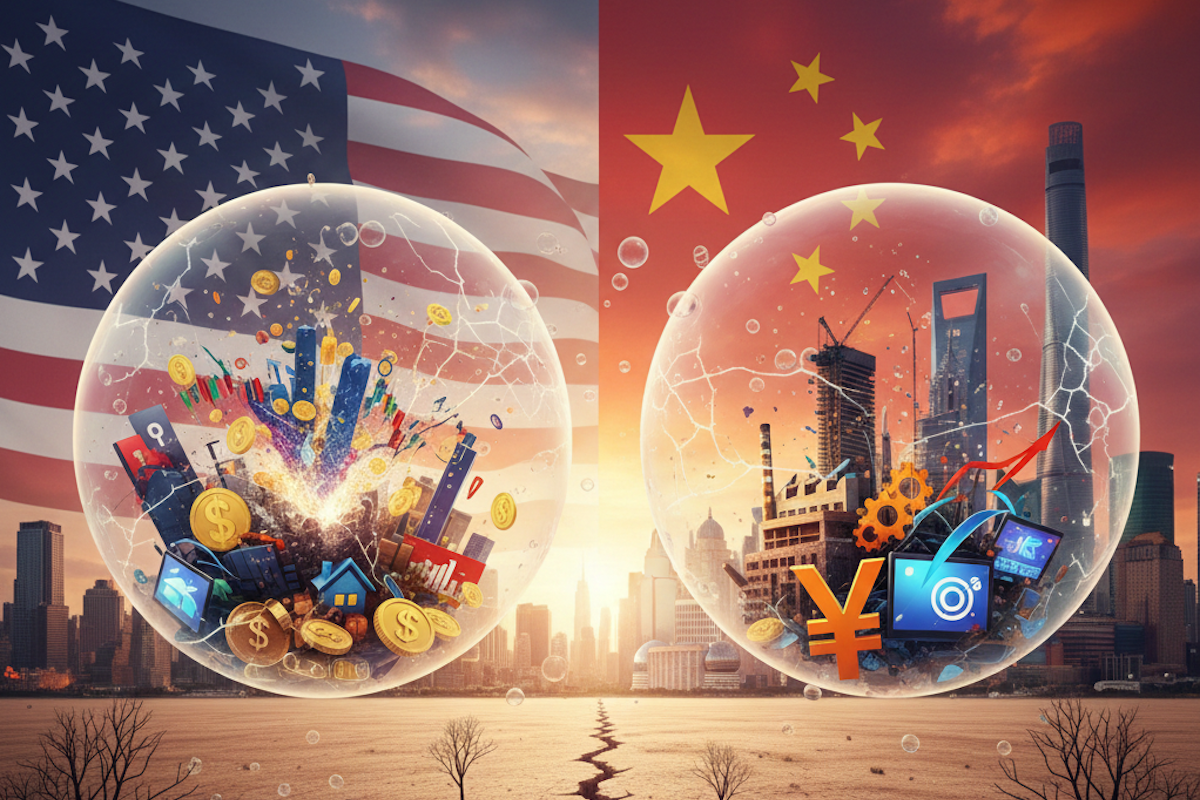
2026.丙午馬年中國與美國 全世界的戰略佈局 誰人1馬當先金馬奔騰創新局?
.
 .
.
WHO IS REAL LEADER ?
World’s Largest Economies in 2026. On average, the global GDP is forecast to rise about 3.3% in 2026, so the pie is getting bigger just not very fast. The United States remains the world’s largest economy in 2026, with a nominal GDP of about $31.82 trillion, while China is second at about $20.65 trillion.


 .
.
Comparisons of America with China are inevitably tendentious. China is huge but poor, and at a different stage of development.