.


.
.
.華盛頓智庫戰略與國際研究中心(CSIS)一項調查研究顯示,多數美國和台灣學者都認為,一個類似1995-96年中國大陸在台灣周邊舉行大規模軍事演習的台海危機,有可能在今年發生。.
「台海危機」的定義是:「一個類似1995、1996年台海危機的情況——台海兩岸緊張關係顯著升級,並且伴隨至少一個旨在脅迫台灣並重申中國對台動武威脅的中國人民解放軍重大演習。」
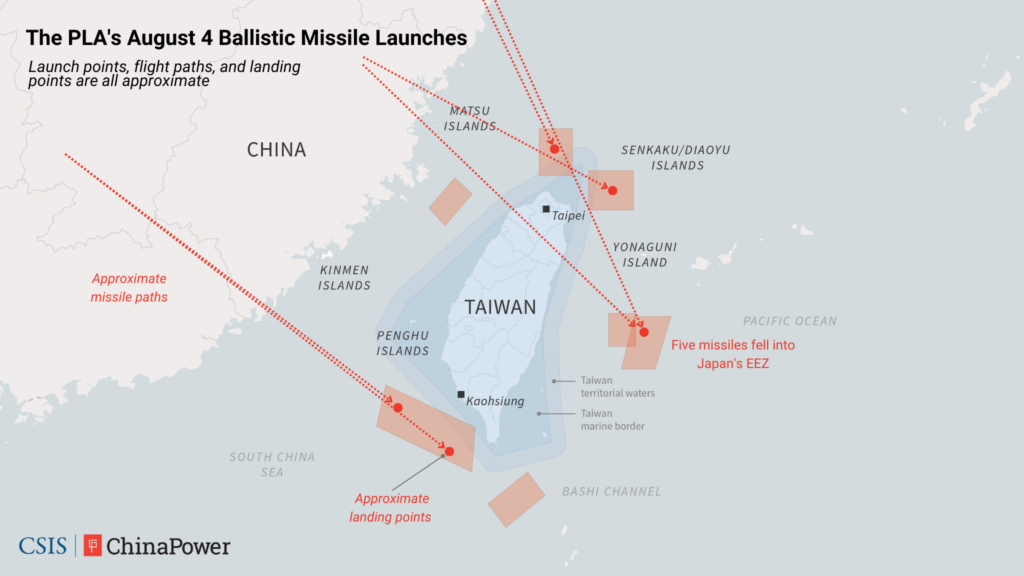 .美國智庫分析認為,2024 年中國,極為可能性,再度舉行大規模封鎖與包圍台灣的軍事演習,以震摄台灣島內的台獨勢力極意識,並且包括以美國為首西方國家及日本等許多國家的外部勢力,企圖協助台灣獨立,而得到的戰略利益.引起台灣海峽進行戰爭狀態?
CSIS.大約有67%的美國專家及57%的台灣專家認為,2024年有可能發生台海危機。
.
67% of US experts think Taiwan Strait crisis likely in 2024: CSIS.
90% of US experts say China could impose quarantine on Taiwan.
A new study by the Center for Strategic and International Studies (CSIS) found a majority of U.S. and Taiwanese experts believe that a Taiwan Strait crisis is likely in 2024, that China is capable of imposing a blockade on Taiwan, but that it is not currently capable of launching an amphibious invasion.
.The majority of the experts said that attempts to ease tensions between Washington and Beijing have lowered the risk of a crisis in the Taiwan Strait. Of the U.S. experts, 67% said that a Taiwan Strait crisis is likely in 2024, while 57% of Taiwan participants held this opinion.
Tracking the Fourth Taiwan Strait Crisis
Cross-strait crisis likely to occur in 2024: Taiwan, U.S. experts.
.Washington, Jan. 22 (CNA) More than half of surveyed U.S. and Taiwan experts said they believed a cross-Taiwan Strait crisis was likely to occur in 2024, although there were mixed views on how exactly it would play out, a report released Monday by the Center for Strategic and International Studies (CSIS) said.
In the report, which involved surveying 52 U.S. and 35 Taiwanese cross-strait experts ahead of Taiwans presidential election on Jan. 13, the American think tank said that about 67 percent of the U.S. experts and 57 percent of the Taiwan experts believed "a Taiwan Strait crisis is likely in 2024."
Such a crisis was defined as "a situation similar to the 1995/1996 Taiwan Strait Crisis where there is a significant increase in cross-strait tension that is accompanied by at least a major PLA exercise aimed at coercing Taiwan and renewed Chinese threats to use force against the island" in the report, titled "Surveying the Experts: U.S. and Taiwan Views on Chinas Approach to Taiwan."
The report said that the experts pessimism is likely driven by a combination of factors, including assessments of potential negative Peoples Republic of China (PRC) responses to Taiwans presidential elections, and the overall state of U.S.-China relations.
"Despite notable efforts by Washington and Beijing to stabilize relations, the bilateral relationship remains fundamentally focused on competition," the report said.
Citing the November 2023 summit between U.S. President Joe Biden and his Chinese counterpart Xi Jinping (習近平), the report said the meeting did not change that situation.
It pointed out that about 75 percent of U.S. experts and 66 percent of Taiwan experts in the survey said that the Biden-Xi meeting did not stabilize relations or significantly reduce the potential of a Taiwan Strait crisis.
When asked how Beijing would respond if Taiwans favored presidential candidate failed to win, "U.S. and Taiwan experts overwhelmingly assessed that Beijing would seek to improve cross-strait ties."
"Only about 15 percent of U.S. experts and 17 percent of Taiwan experts believed China would maintain its existing coercive approach or increase coercion against China," the report said.
There was no consensus, however, on exactly how Beijing would alter its approach, the report added, citing the survey results that about 46 percent of the experts from Taiwan assessed Beijing would shift its approach unilaterally -- whether offering carrots or reducing coercive measures.
Meanwhile, 46 percent of U.S. experts believed that Beijing would act only after the new Taiwan leader showcased goodwill toward Beijing, the report said.
In addition, nearly half of the Taiwan experts believed that if Beijing saw the election result as unfavorable, its most escalatory move in 2024 would be "coercive nonmilitary action."
In contrast, U.S. experts worried about the potential of large-scale military exercises encircling Taiwan, but few thought China would quarantine, blockade, or invade the island.
The report said that most of the experts did not think recent efforts to manage U.S.-China tensions would impact the likelihood of a cross-strait crisis.
Concerning the next five years, the experts believed Beijings most likely course of action would be a "law enforcement-led quarantine" of the island nation, the report said.
A "quarantine" refers to a law enforcement operation led by nonmilitary actors that is focused on limiting the flow of commercial goods into Taiwan, according to the report.
A more intense quarantine could involve some Peoples Liberation Army (PLA) assets and limited kinetic military action, however, experts believed it would not be the primary method, the report said.
Meanwhile, although Chinese leaders found Taiwans election outcome unfavorable, only 27 percent of U.S. experts believed that China could execute an amphibious invasion given its current capabilities, and just 17 percent of Taiwan experts believed the same, the report showed.
The report explained that an amphibious invasion would require a much larger commitment of military forces than a quarantine or blockade -- a PLA-led operation to heavily restrict the flow of commercial goods and military activity around Taiwan -- and the operations involved would be more complicated, resulting in a lower likelihood of China going down that path.
The report further said that those surveyed likely factored in the likelihood of U.S. intervention in more intense types of cross-strait conflict, such as an invasion.
The report noted that nearly half of the experts from Taiwan believed that quarantine was a flexible option China could employ to pressure Taiwan, while the U.S. experts believed Beijing could execute a quarantine if it wanted to up the pressure on Taiwan without sparking a kinetic conflict.
Meanwhile, according to the report, most respondents believed a blockade alone would not be sufficient in forcing Taiwan to unify with China, but a third of the Taiwan experts worried a blockade could escalate into an invasion.
According to the report, the survey was conducted by the CSIS China Power Project between Nov. 28 and Dec. 15 in 2023, ahead of Taiwans presidential and legislative elections which were held on Jan. 13, 2024.
.
..
.
.
.


限會員,要發表迴響,請先登入


