WANGER GROUP SO GREAR.
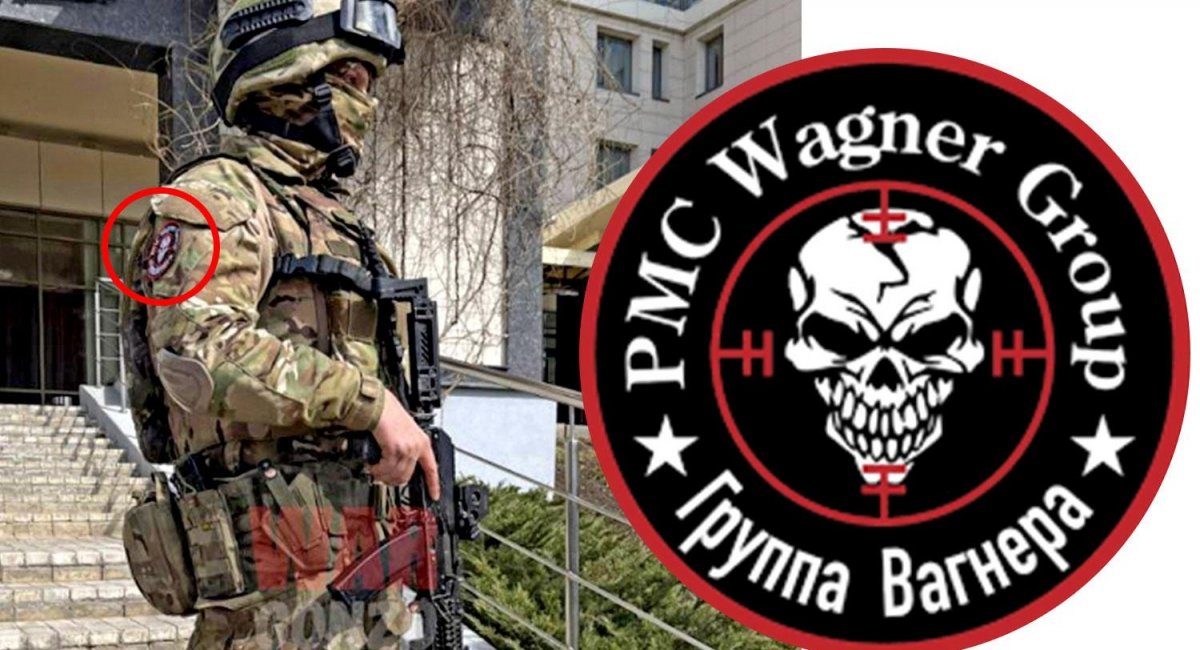 ...
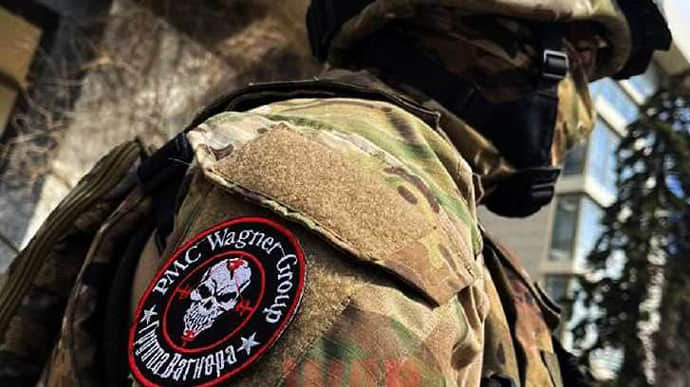
...
Wagner Mercenaries Bail Out Chinese Miners Amid Uncertainty Over the Group’s Future in the Central African Republic.
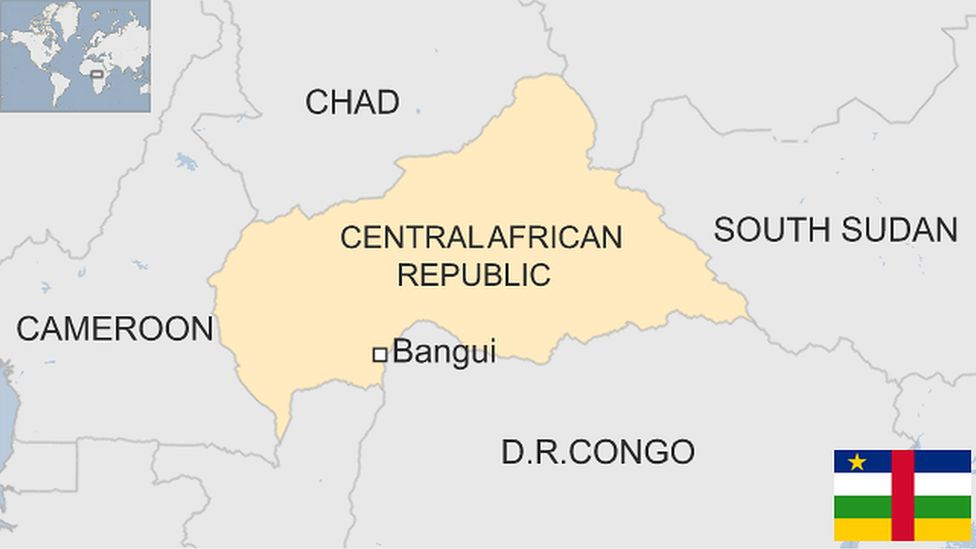
Wagner Group militants have conducted a mission last night to evacuate and search for Chinese citizens who were targeted by terrorist groups, they were working at a mine near Dimbi village in the Central African Republic.
China & Wagner Group are now collaborating in Africa:
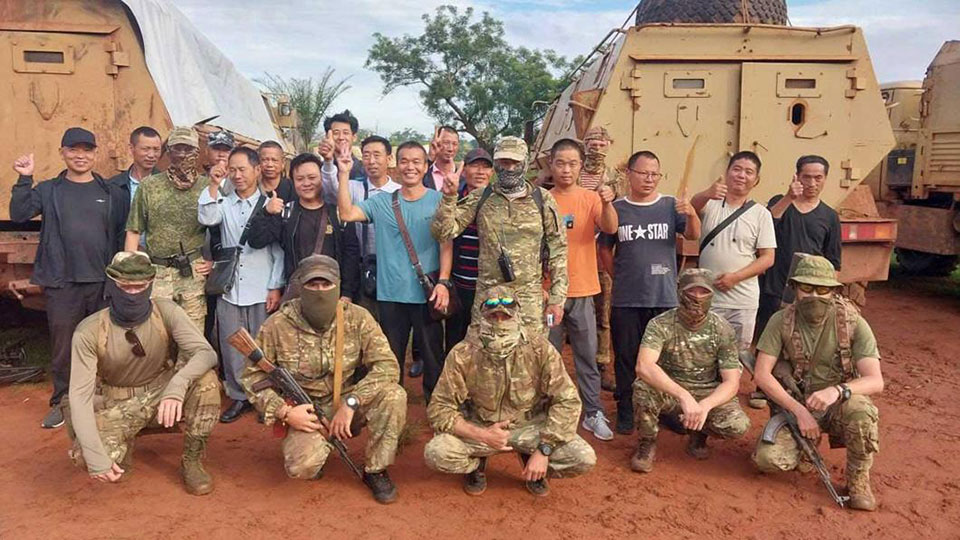
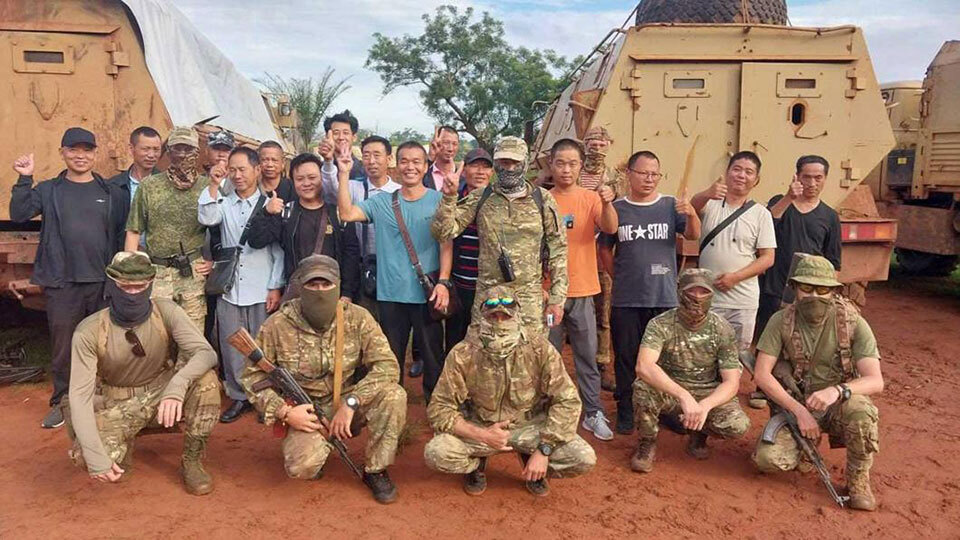
Wagner soliders pose with a group of Chinese nationals rescued by the Russian mercenary group in a remote southern viillage in the Central African Republic.
https://youtu.be/d-Fm7NWOCdo
Wagner has claimed China sought its help to rescue miners who were reportedly at risk of a militant attack in the Central African Republic (CAR). Wagner says it rescued and evacuated a group of Chinese miners in an operation at a mining site near Bambari about two weeks ago. The purported Wagner operation took place just days after the mercenary group waged a brief revolt against the Kremlin. Meanwhile, Chinese experts explained a possible reason why Wagner is showing off its successful operation. .
.
中國與瓦格納集團目前在非洲開展合作:瓦格納集團武裝分子昨晚執行了一項任務,撤離並蒐尋被恐怖組織襲擊的中國公民,他們當時正在中非共和國丁比村附近的一個礦井工作。
瓦格納集團僱傭兵,成功從中非共和國,恐怖份子手中,解救出中國人質,傳聞開礦區是開採金礦?
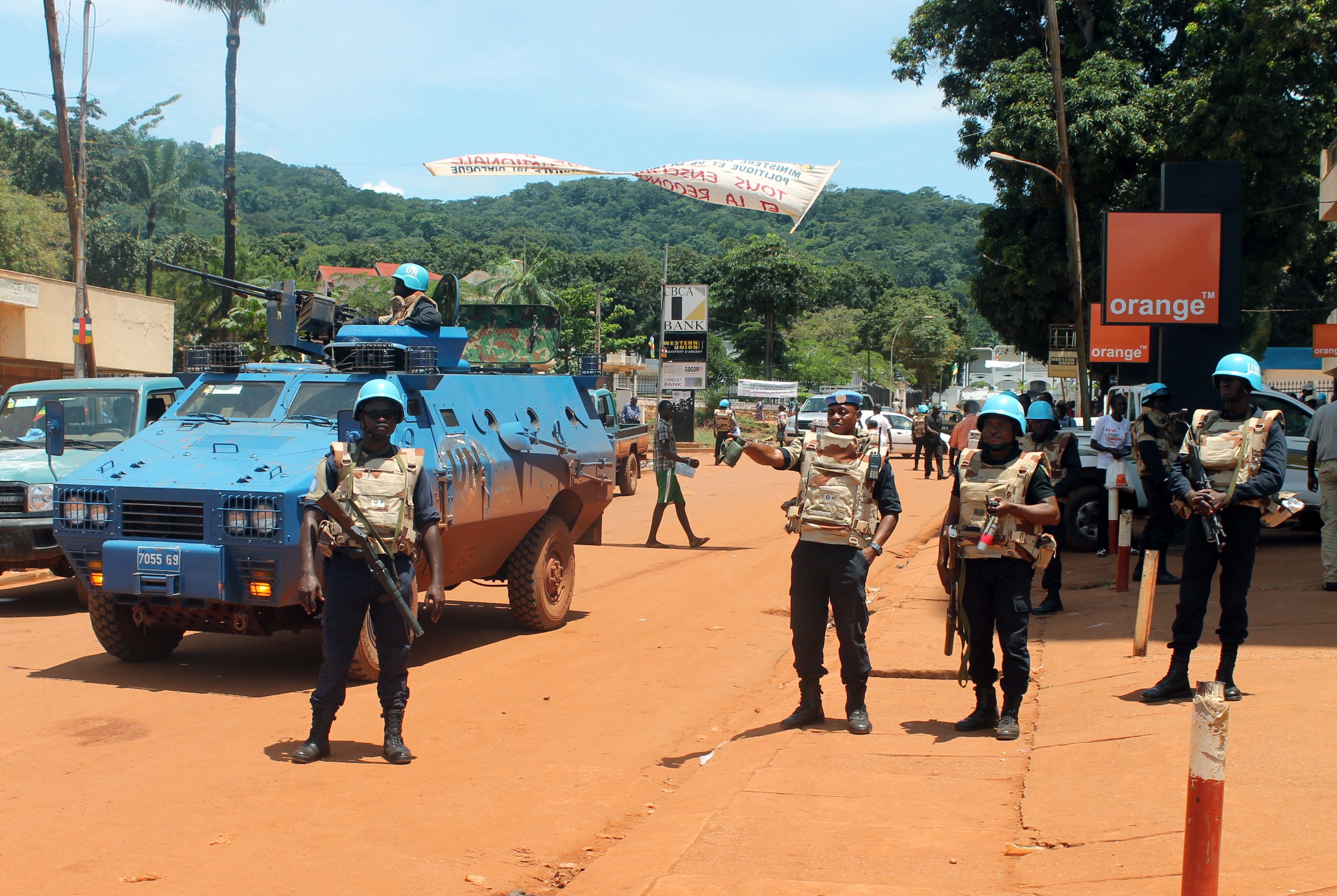 .
.
 What the Wagner Mutiny Means for China in Africa ?
When it comes to increasing its security footprint abroad, Beijing is facing a conundrum in reconciling Maoist doctrine with contemporary reality..
.As the Wagner revolt against the Kremlin unfolded last month, China seemed to pay little attention to Russian President Vladimir Putin’s faltering attempts to restrain the mercenaries, which laid bare the fractures in Moscow. Though Beijing eventually put out a public statement of support for the Russian president, it is biding its time—observing how firm Putin’s grip on power is. Indeed, the possibility of Moscow failing to rein in Russian mercenaries in areas where Chinese economic interests are present could create a fault line in the Chinese-Russian “no-limit friendship.”.
The immediate peril lies in the potential ramifications of Wagner Group splinter factions, or a Wagner franchise under new management, which would compromise the security of China’s Belt and Road Initiative (BRI)—and the safety of its overseas workers—in Africa and in other regions. To enhance the security measures for Chinese companies investing abroad, Beijing is ramping up regional threat assessments and offering security training to workers before deploying them overseas. However, despite Beijing’s efforts to strengthen security, the risks faced by Chinese workers and BRI investments are escalating at a faster pace.
China’s foreign direct investment in Africa, has been increasing steadily since 2003—surging from $75 million in 2003 to $5 billion in 2021. While Beijing is looking at security guarantees from Moscow, Chinese private security companies (PSCs) operating in Africa are bracing for impact. While the leading Chinese PSCs such as Haiwei, Huaxin Zhongan, Kunlun Lion Security, and FSG are operating in safer areas from Egypt to Kenya and Uganda, a multitude of small Chinese PSCs are expanding their footprint in much more complex environments without the proper capabilities to counter terrorist and criminal violence.
Regardless of the upcoming revision to the 2018 set of security regulations, when it comes to increasing China’s private security footprint abroad, the Chinese Communist Party will employ every means necessary to uphold Mao Zedong’s dictum of retaining absolute control over the gun. Beijing is facing a conundrum in reconciling that Maoist doctrine with contemporary reality: How to protect Chinese citizens abroad without outsourcing the security function to Wagner-like groups or evolving its own PSCs into to a Blackwater-style force? While Beijing is determined to get more involved in regional security and politics, most notably through President Xi Jinping’s Global Security Initiative, it is unclear when and how the initiative will gain traction.
In the case of Mali, the French Army ended the nearly nine-year counterterrorism Operation Barkhane, after a major falling-out with Malian authorities, prompting the Wagner Group to step in at Bamako’s request. In Beijing, the killing of three executives from the state-owned China Railway Construction Corp. in Bamako’s Radisson Blu Hotel in 2015 is still a vivid memory, and the recent slaughter in cold blood of nine Chinese miners in the Central African Republic is keeping Chinese consular officials nervous..
.While the investigation in the latter case is still open, and the early suspicion fell on a rebel coalition, some accusations are also pointing at Wagner mercenaries operating in the area. Beijing may soon need to raise its own security presence and negotiate with Russian mercenaries—as highlighted by the recent news of the Wagner Group claiming to have successfully prevented an attack on Chinese miners near Bangui.
.Since Wagner leader Yevgeny Prigozhin’s exile to Belarus, the options for Wagner’s survival outside Ukraine could be summarized in three scenarios: Prigozhin retiring to Africa, a Wagner franchise continuing under new management, or the dissolution of the group into splinter cells. All three options spell disaster for Beijing. That’s because while mercenaries thrive on manageable chaos, the Belt and Road Initiative needs stability to prosper. No matter what, China stands to lose in each scenario.
Long before the fateful 36 hours of the armed mutiny, Prigozhin had mentioned in his Telegram channel his intentions to retire to Africa once his work in Ukraine was completed. Even if Prigozhin has already returned to Russia from his short-lived exile, this option remains viable, as Wagner’s fighters are dispatched to safeguard the survival of various local regimes, with Mali and the Central African Republic serving as prominent examples. Nevertheless, the seizing of Prigozhin’s disinformation and propaganda media empire by the Russian authorities in St. Petersburg and the mounting uncertainty regarding his financial assets raise crucial questions about mercenaries: How long are they on your side when money is not flowing?
As early as 2017, the Wagner Group provided security and logistical support to protect the Sudanese former President Omar al-Bashir in exchange for diamond mining concessions. The continued presence of Wagner in Darfur, arming the Sudanese Rapid Support Forces, is still paid by mining concessions.
In the Central African Republic, Russian military advisors and Wagner mercenaries protect the status quo, benefiting from access to large diamond and gold deposits. In 2019, the same business model was replicated in Mozambique, providing anti-insurgency forces in exchange for energy resource exploitation. On the same path, the Malian government contracted with the Wagner Group in 2021 to fight extremism in the Sahel.
.

..


限會員,要發表迴響,請先登入


