.
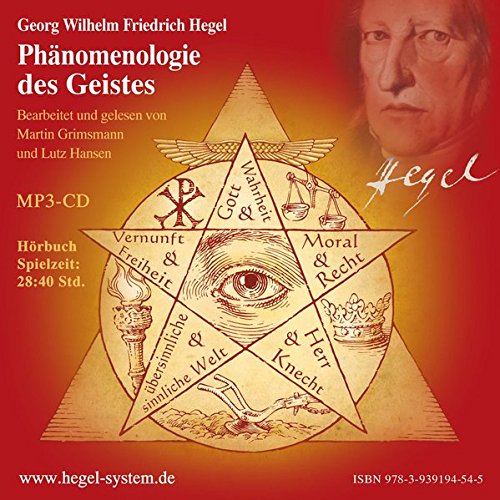
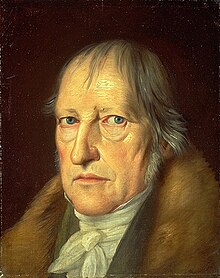
格奧爾格·威廉·弗里德里希·黑格爾(德語:Georg Wilhelm Friedrich Hegel,常縮寫為G. W. F. Hegel;)是一名德國哲學家。其時代晚於康德,是德國19世紀唯心論哲學的代表人物之一。黑格爾出生於今天德國西南部巴登-符騰堡首府斯圖加特;卒於柏林去世時是柏林大學(柏林洪堡大學)的校長]。
一般認為黑格爾的思想,標誌著19世紀德國唯心主義哲學運動的頂峰,對後世哲學流派如存在主義,馬克思的歷史唯物主義,法西斯主義以及歷史虛無主義都產生了深遠的影響。黑格爾在後世爭議很大,一派認為黑格爾的思想為自由主義開闢了一條新的出路,而另一派認為黑格爾的國家主義、民族主義為法西斯主義提供思想基礎。
. .
.

哲學上,黑格爾極為讚賞並且效法康德,他認為康德的「道德律令」是一種不同於消極自由,或習慣自由的,真正自由的體現,但他也批評康德自在之物的觀念,該概念會推出人永遠無法認識客觀事物的結論。黑格爾哲學的重要性超越康德之後的學術論戰,他概述那個時代的創傷與幸福,並且宣告新世界的誕生不僅展現在哲學上,也展現在國際政治上。既然「世界精神」即將進入新時代,哲學也將達成它最後的目標;對包羅萬象的歷史與人性產生完全的理解。
一般認為,黑格爾為哲學領域增添了新向度,即哲學的歷史向度。不可否認,哲學家原本就會提及並褒貶他們之前的哲學家;然而,真正的哲學史觀念--不只是哲學觀念,還包括人類理智體系地演進的觀念--卻是個嶄新且令人興奮的觀念。黑格爾哲學是一種自覺的嘗試,企圖超越過去兩千五百年來界定人類思想的各種優異思想與哲學論戰。
黑格爾堅持,必須在「世界精神」的大脈絡下觀察這些歷史上的思想與衝突,如此將會發現這些衝突只是局部的混戰與不合,而非決定性的對立。世俗主義與一神論,科學與精神,理性與熱情,個人與共同體--這些概念各有恰如其分的位置,雖然都是有用的概念,但是在涵蓋所有人類經驗與知識的歷史「辯證法」中,卻往往彼此衝突。
.
要理解《精神現象學》的主旨,可以看看黑格爾本人於1807年10月28日為此書所寫的發行廣告。黑格爾指出《精神現象學》「闡述了一種處於轉變過程中的知識。⋯⋯精神現象學把不同的精神形態作為一條道路上的諸多停靠站點包攬在自身之內,通過這條道路,精神成為純粹知識或絕對精神。」
十九世紀德國哲學家特倫德倫堡(Friedrich Adolf Trendelenburg)曾經說過,黑格爾的《精神現象學》(Phänomenologie des Geistes)是而且始終是人們「誇得多讀得少的一本書」。在當今這個無比浮躁的時代,有多少哲學經典被人們以「艱澀難懂」就判了死刑,永遠擱置在書架上,靜靜地躺著?
人們可以在叔本華的《倫理學的兩個基本問題》中找到共鳴,叔本華大筆一揮寫道,讀《精神現象學》的感覺猶如闖進了瘋人院,就這樣為《精神現象學》草草地結了案。事實上即使在黑格爾本人心目中,《精神現象學》的地位也遠遠不如《哲學全書》或《邏輯學》。這導致了這本著作從黑格爾在世時直到他死去之後的一段很長時間內備受冷落。
在台灣的學術界極為少數的學者,對於黑格爾的思想有研究的興趣,上一世紀台灣的某位歸國學者,大力宣揚教授黑格爾的思想,可惜孤掌難鳴,叫好不叫座,因為黑格爾的思想有部份是屬於,馬克思的歷史唯物主義,抵觸瞭當時國民黨主政的國家政策堅決的反對共產主義的思想傳播,因此那位教授只有默默無聞的再度離開台灣不知所蹤,台灣的學術思想始終無法與歐洲的學術思想接軌,更何況論及思想交流,台灣在此方面是不及格不具資格的,甚至於牽涉到藝術界,音樂界等層次,所以歐洲人不願意與台灣交流是有原因的,台灣人一貫親美主義搞亂台灣的學術思想,以至於日後中國改革開放,台灣的學者教授想到中國謀求發展,也就是說無法如願,終結原因就是沒有研究歐洲人的學術哲學思想,中國雖然是共產主義的社會主義思想體系,畢竟它們是可以與歐洲人溝通的,否則馬克思的歷史唯物主義就不會根深柢固的存在於中國,而且發揚光大,衍繹成為適合中國固有文化的一部份,換句話說就是歐洲人的社會主義的思想,由中國共產黨學習後,改造並且改良適合當時的中國社會環境需要,讀者門若是有興趣可以閱讀黑格爾的思想書籍.
.
.要理解《精神現象學》的主旨,可以看看黑格爾本人於1807年10月28日為此書所寫的發行廣告。黑格爾指出《精神現象學》「闡述了一種處於轉變過程中的知識。⋯⋯精神現象學把不同的精神形態作為一條道路上的諸多停靠站點包攬在自身之內,通過這條道路精神成為純粹知識或絕對精神。因此在這門科學的主要部分及其細分章節裡,意識,自我意識,從事觀察和有所行動的理性,精神本身以及不同形式下的精神(倫理精神,教化精神,道德精神,最後是宗教精神)依次得到考察。
.
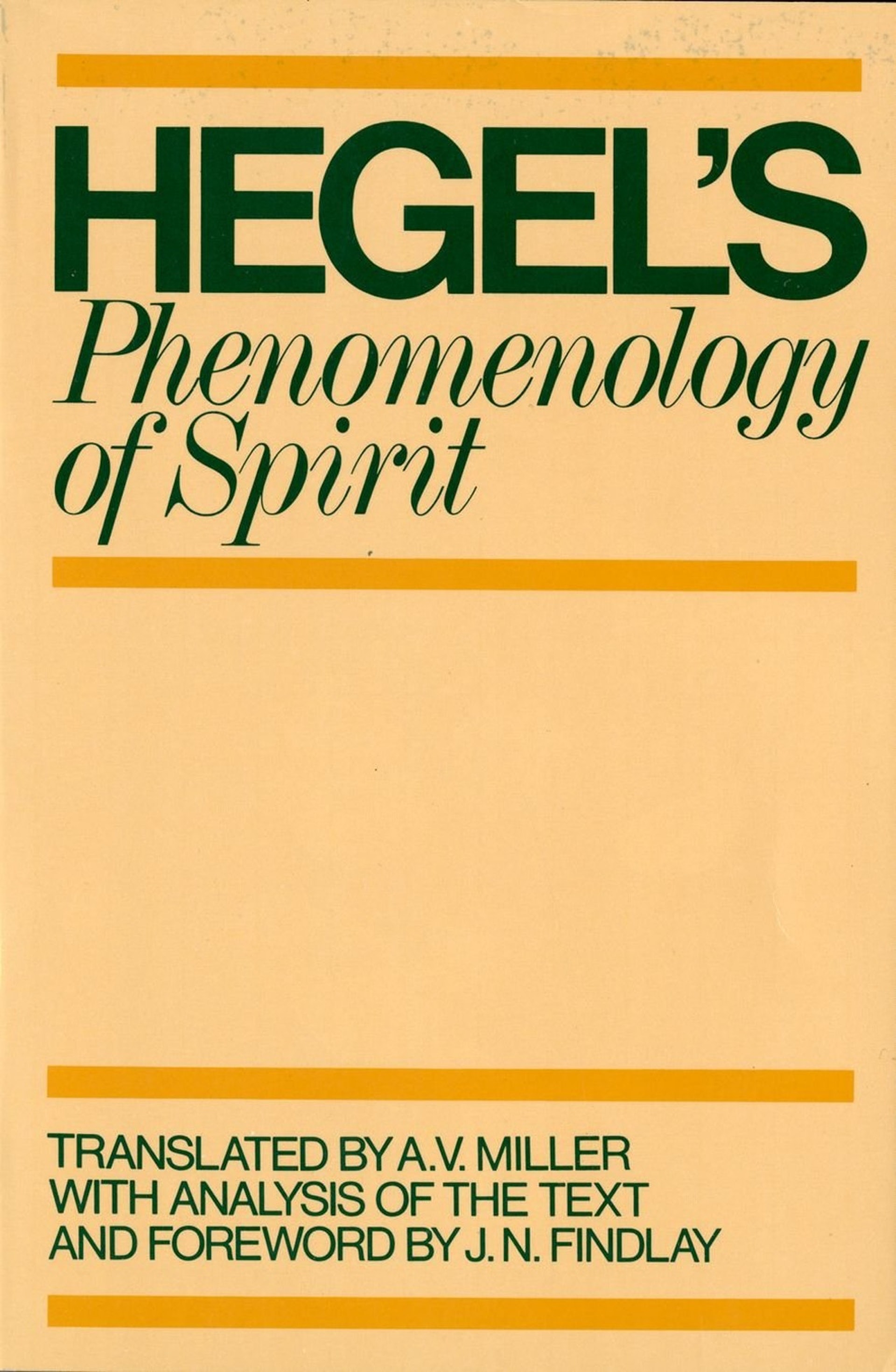
1807年黑格爾出版第一部作品《精神現象學》.
(Phänomenologie des Geistes)。《精神現象學》是一段偉大的概念旅程,帶領我們從最基本的人類意識概念,走向最包羅萬象而複雜的人類意識概念。它的目的在於獲致真理--「絕對」真理--但「絕對」並不代表「最終與完成」,而「真理」也不代表「事實」。黑格爾追尋的哲學真理是無所不包的觀點,而「絕對」這個驕傲的用語其實是宏觀哲學下的一種謙卑態度:意識到我們都是宏觀脈絡下的一小部分。個人對知識與真理的貢獻絕對不是決定性的,相反地,總是局部,「間接」且片面的。
《精神現象學》的核心關切是精神--將所有人類與自然囊括在內的宇宙靈魂觀念——的本質。《精神現象學》的結論在於無所不包的精神,在這個精神中,並非所有的不合都已化解,所有的爭端都已解決,所有的問題都已回應,而是無論不合有多嚴重,爭端有多激烈,問題有多難回答,全都結合在這個精神中。拿破崙渴望統一世界,但真正統一世界的卻是黑格爾--當然,理論上說是如此。儘管如此涵蓋一切的意識觀念卻是邁向真實世界統一的第一步。
Georg Wilhelm Friedrich Hegel (/ˈheɪɡəl/;[ German: [ˈɡeːɔʁk ˈvɪlhɛlm ˈfʁiːdʁɪç ˈheːɡl̩] was a German philosopher. He is considered one of the most important figures in German idealism[] and one of the founding figures of Modern philosophy, with his influence extending from epistemology, logic, and metaphysics to aesthetics, philosophy of history, philosophy of religion, and the history of philosophy.]
Hegels principal achievement was the development of a distinctive articulation of idealism, sometimes termed absolute idealism,] in which the dualisms of, for instance, mind and nature and subject and object are overcome. In contrast to Immanuel Kant, who believes that the subject imposes rational a priori pure concepts of understanding upon the sense-data of intuitions, Hegel believes that the pure concepts are grounded in reality itself. Pure concepts are not applied subjectively to sense-impressions, but rather things exist for their concept. The unity of concept and reality is the idea. The idea itself is dynamic, active, self-determining, self-moving, and purposive. The idea properly exists as life. In life, the parts of the body are unified for the final cause of actualizing the living organism. Non-organic nature is also grounded in the concept, but is only "latent" and not fully self-determining. Geist, or Spirit, is the highest form of life and the idea. Geist is the collective purposive agency and genus of man. Geist is equally substance and subject, meaning that geist is not only a living organic substance, but also a subject involved in complex normative and social spaces.
Hegel is also known for his dialectical logic, which is mostly contained within his Science of Logic. In this book, Hegel creates a presuppositionless logic of pure thought, which begins with pure being. In the logic, positions and ideas are examined and revealed to be immanently contradictory. The contradiction within the position and itself is sublated [aufgehoben], in which a new position is posited which negates the previous positions contradiction. An example of sublation is the contradictory nature of pure indeterminate being. Pure being is revealed to be both equal to and different from nothing. This contradiction within being is resolved with its sublation into becoming, in which nothing passes into being and being passes into nothing. However, becoming also reveals its own contradictions and is sublated into determinate being. The logic progresses along through contradictions and sublations until there are no more contradictions that can be sublated. This is the absolute, which for Hegel is the idea.
Hegel influenced a wide variety of thinkers and writers. For example, theologian Paul Tillich wrote that the historical dialectical thought of Hegel "has influenced world history more profoundly than any other structural analysis."] In his work Systematic Theology, Tillich referred to Hegels work as "perfect essentialism," later writing "essentialism was in Hegels system fulfilled."] Karl Barth described Hegel as a "Protestant Aquinas"] while Maurice Merleau-Ponty wrote that "all the great philosophical ideas of the past century—the philosophies of Marx and Nietzsche, phenomenology, German existentialism, and psychoanalysis—had their beginnings in Hegel."[35] Michael Hardt has highlighted that the roots of post-structuralism and its unifying basis lies, in large part, in a general opposition not to the philosophical tradition tout court but specifically to the "Hegelian tradition" dominating philosophy in the twentieth century prior to post-structuralism.[
Hegels work has been considered the "completion of philosophy" by some of the most influential thinkers in existentialism, post-structuralism, and twentieth-century theology.[
Jacques Derrida wrote of Hegel in his work Of Grammatology that "if there were a definition of Différance, it would be precisely the limit, the interruption, the destruction of the Hegelian dialectical synthesis wherever it operates." Martin Heidegger observed in his 1969 work Identity and Difference and in his personal Black Notebooks that Hegels system in an important respect "consummates western philosophy"] by completing the idea of the logos, the self-grounding ground, in thinking through the identification of Being and beings, which is "the theme of logic", writing "[I]t is... incontestable that Hegel, faithful to tradition, sees the matter of thinking in beings as such and as a whole, in the movement of Being from its emptiness to its developed fullness." Heidegger in various places further stated Hegels thinking to be "the most powerful thinking of modern times."[.................................................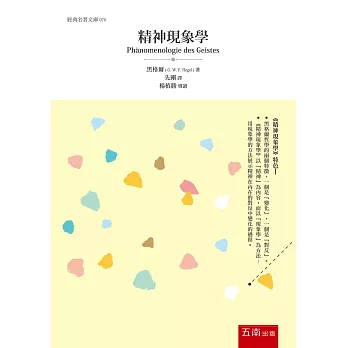
.


 1樓. red square 1232022/05/30 13:28《精神現象學》展示「精神」亦即「意識」不斷改變它的型態的過程,內文分成三個部分,第一部分是「意識」,第二部分是「自我意識」,第三部分則包含「理性」、「精神」、「宗教」與「絕對知識」四個進一步的章節。總的來說,它們都是《精神現象學》的同一個主角,但是因為在不同階段顯現為不同的樣貌或所謂的「意識的型態」,因此被賦予不同的名稱
《精神現象學》展示精神的變化,那麼「展示」(Darstellung)就是本書作者的一方所使用的方法。對於《精神現象學》的展示,讀者的一方只能任由精神亦即意識開顯它自己,而不做任何的添加,而且正因為我們只做純粹的觀看,才能如實地看到精神顯現出來的現象。這個讓現象如實的、如其所是的顯現就是《精神現象學》的主旨所在;至於作者的「展示」與讀者的「不做任何添加,只有純粹觀看」,則是讓我們看到現象如實地、如其所是地顯現的方法——這就是《精神現象學》的「現象學」
red square 123 於 2022/05/30 13:29回覆


