
Chinese Strategy and Military Forces in 2021..
Chinese Strategy and Military Forces in 2021 A Graphic Net Assessment Working draft, Please send comments and suggested additions to acordesman@gmail.com Photo: STR/AFP via Getty Images Anthony H. Cordesman Burke Chair in Strategy, CSIS With the Assistance of Grace Hwang Major Revision: June 22, 2021.........................................................................

There is no simple way to introduce the challenge that China’s strategic presence and growing civil and military capabilities pose in competing with the United States.
China’s capability to compete at given levels has increased radically since 1980 in virtually every civil and military area, and China has set broad goals for achieving strategic parity and superiority, although the timeframes for such goals are vague – and neither China nor the United States has published anything like a credible unclassified net assessment of current and future capabilities or provided details as to how each countriy’s broad statements about strategic goals would actually be implemented.
It is also a competition where there are strong incentives to cooperate and to limit the level of actual conflict. To paraphrase War Games, the only way that China and the U.S. can “win” at theater levels of conflict and above is to not play. Successful deterrence means playing by Sun Tzu’s rules, not those of Clausewitz.
First, China emphasizes the integrated use of political, economic, and military power, and it is using such assets to achieve its goals without warfighting with major powers like the United States. It also has a potential advantage as a unified authoritarian state in using centralized state planning to commit its resources and competition at the civil as well as at the military level. The U.S. and other Western states have increasingly attempted to respond using measures like sanctions, but they do not have political and economic systems that allow the state to directly integrate such operations, and much of the U.S. and Western analytic effort focuses separately on military dynamics and warfighting compared to civil and economic competition. This analysis too focuses on military trends, although some broad data on civil, economic, and technology competition are included.
• Second, the nature of warfare is changing rapidly both in terms of irregular warfare and in every aspect of major conflict. Manu of the changes involve high levels of future uncertainty and are taking place at highly classified levels. Cyber conflict, space, “informitization,” joint all-domain operations, precision conventional strike,use of artificial intelligence, and use of third-party state and non-state actors are only a few of the changes involved. These do not lend themselves easily to the broad
force and trend data used in this analysis, but they have already sharply shaped the ability to influence, intimidate, deter, and actually fight, and China’s comparative success in these areas – many of which are cutting edge aspects of civil technology and manufacturing – may dominate the future of military competition over the coming decades in ways that no one can now credibly predict and assess.
• Third, parts of this analysis reflect the fact that the U.S. has heavily emphasized competition in the Pacific, and particularly in the South China Sea, dealing with Taiwan and involving China’s growing pressure on South Korea, Japan, and in the Indian Ocean region. The data in this analysis show that focus is all too justified given the growth of Chinese military power in each region. So far, this focus has led the U.S. to understate the importance of China’s ability to use its economic power
on a global basis to conduct the equivalent of gray and white area warfare, its growing capability to put pressure on Central Asian and Indian Ocean states, its growing links to Russia, and its role as a truly global power where its economic strength may compensate for its current lack of military power projection capability.
The U.S. has so far focused on improving its capability to fight a major war against China – improvements that are necessary but no substitute for effective civilmilitary competition on a global basis.
• Fourth, it is still too early to predict exactly how China will improve its nuclear and dual nuclear/conventional warfighting forces and defenses over time, and President’s proposed FY2022 budget shows the U.S. is still in the process of forming a coherent strategy and force posture as well. It now seems likely that that China will develop a far more advanced capability for mutual assured destruction at high levels of conflict, but willy focus on economic and civil competition – and gray
area, irregular, and conventional wars at low theater levels. China’s emergence as a direct rival to the United States and as a far more powerful military and economic power than Russia, not only is redefining the nuclear balance, but it is creating a world in which the risk of nuclear escalation between the major power must be evaluated in terms of three states, rather than two – and with the risk that new forms of warfare will further complicate the challenges for deterrence, warfighting,
defense, and arms control. There is an important difference between “mutual assured destruction” and “mutual assured confusion and uncertainty.”
Fifth, international statistics always present major challenges in comparability, but these problems are generally far greater when they involve radically different political, military, and economic systems. Many of the data in this brief are also are derived from classified sources and are rounded or adjusted to provide and accurate picture of broad trends, but they are not the exact data from a given source or methodology – which often are not described in the original source. Given sources of data and experts often disagree or focus on different metrics, time periods, and method of comparison. There are also a number of areas where current unclassified estimates are lacking or do not seem credible..................................................................................................................
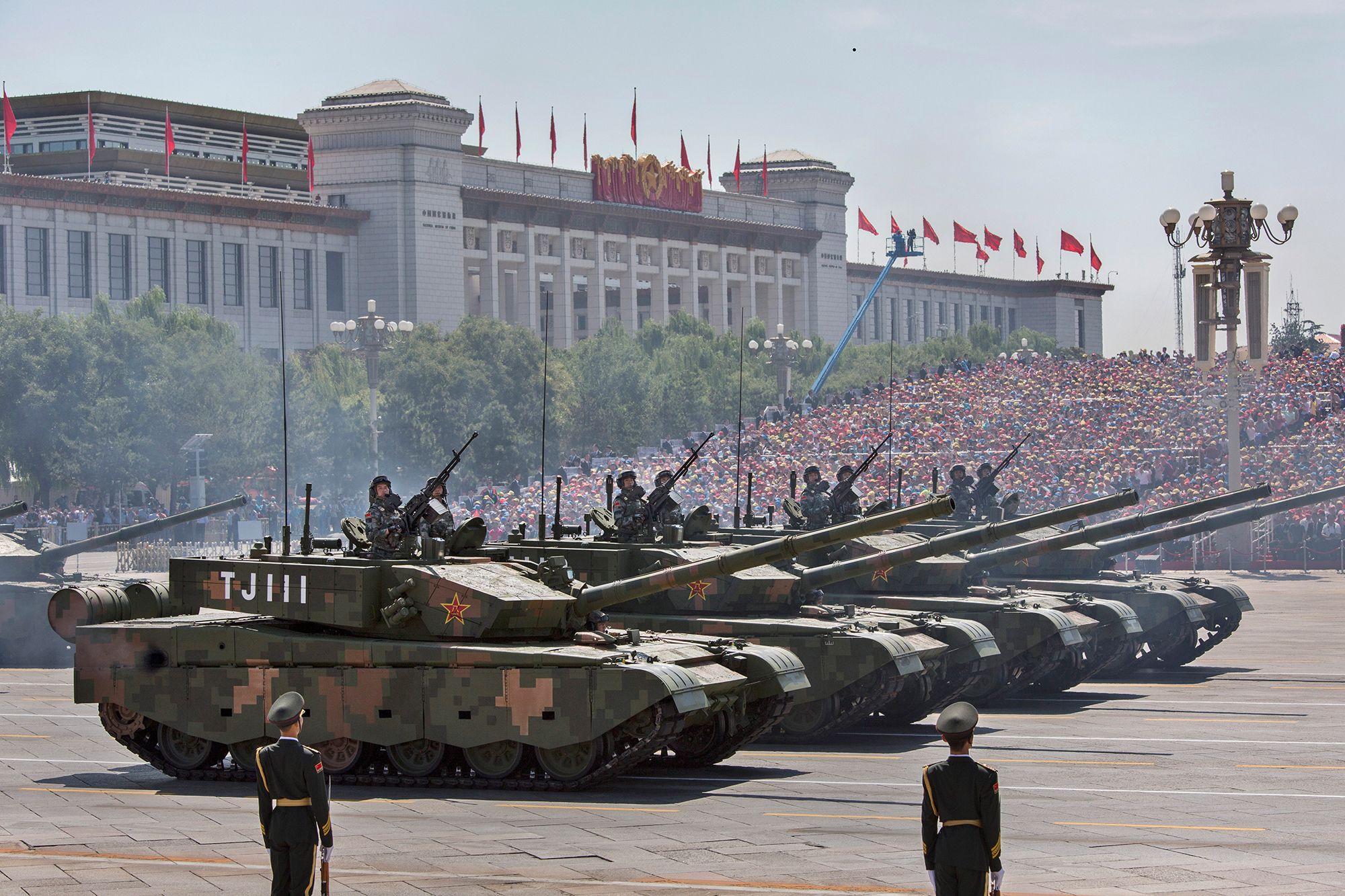
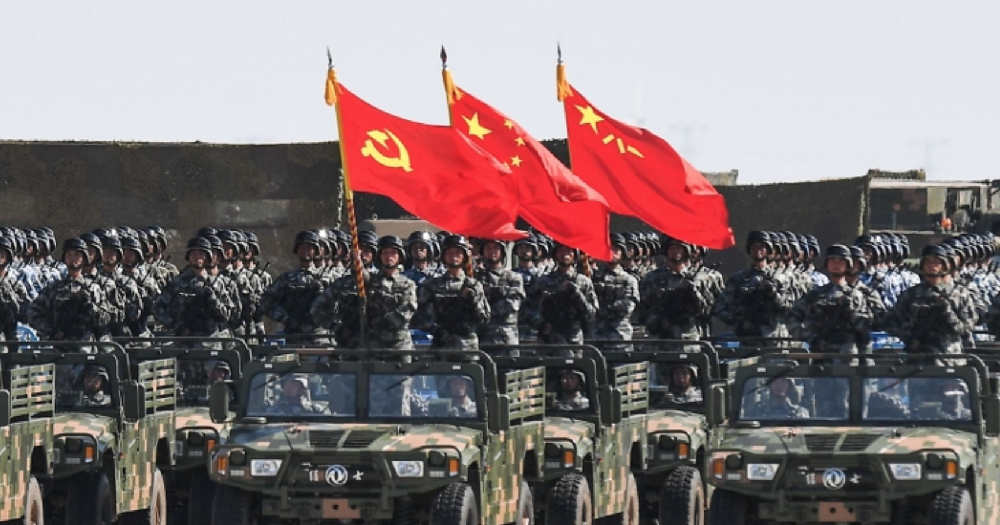

本報告認為,中國軍隊繼續以美國為假想敵,加速軍隊現代化進程,投射能力不斷增強,在各個作戰領域的能力都在提高,正在侵蝕美國在某些領域的軍事優勢。
報告也同時指出了中國軍隊的弱點,包括缺乏實際海外作戰經驗、實兵實彈演習訓練不足,3軍聯合作戰能力有限,新的軍隊組織結構未經考驗,以及某些軍事裝備和材料對外國供應商的依賴。中國共產黨人民解放軍和中共領導人關係 報告開篇就揭示,中共軍隊的優先事項是保衛中國共產黨,其次是保衛領土和海外利益,以及太空和網絡空間的利益。........
由此看來美國國防部的中國工作小組做了更深入的研究,把中國軍隊的屬性描述得一清二楚,很大程度上也算嚴格區分了中共與中國。這樣的評價對中國老百姓應該有利,假如中,美真的開戰,國軍隊應該會盡力保護平民,甚至包括減少傷害中共軍隊的最底層官兵。
對習近平「強軍夢」的評價報告描述,中共軍隊努力從以步兵為主,技術含量低的軍隊,轉變為越來越重視聯合作戰和海,空力量投送的高科技,網絡化部隊。
美軍透徹地掌握了中國軍隊組織機構上的最大弱點。報告沒有提及的是,若真的開戰,中共高層很可能不敢向下級授權,無法及時應對前線的決策指揮。
中國軍隊的戰力評估報告描述,中國軍隊現役約300萬人左右,並預測到2035年,中國軍隊可能試圖在整個印太地區,與美國和盟國在所有衝突領域進行競爭,包括地面,空中,海上,太空,網絡空間和電磁環境。..............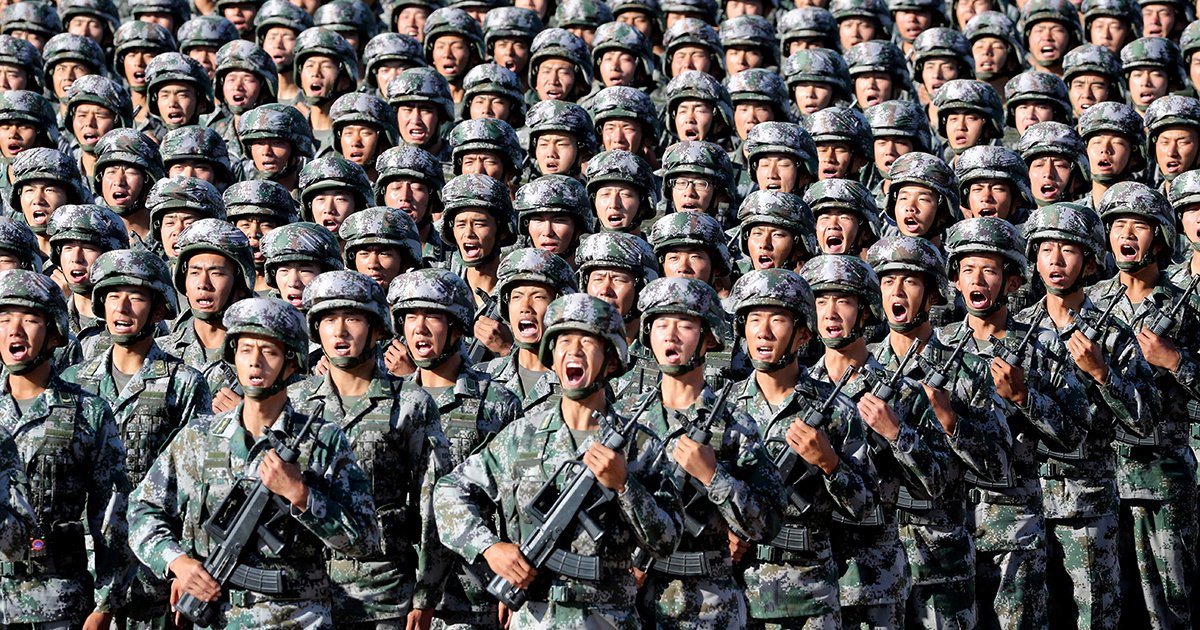 長久以來中國人民解放軍的口號,血洗台灣,解放台灣,直到今日尚未有任何武力攻打台灣的機像?
但是國際戰略專家分析認為,中國今日不攻打台灣,明天也不攻打台灣,後天也不攻打台灣,但是有朝1日就會突如其來的攻擊台灣,採取速戰速決的戰略與戰術運用,讓台灣反應不級,更令美國不會輕舉妄動的派兵馳援台灣,國際戰略專家分析認為,美國每年耗費人力,物力,財力,蒐集中國的軍事情報,加以分析整理,最後釋出報告書資訊,無疑的是對西方國家視告知,中國強勢崛起,不僅在經濟,國際貿易的成長,尤其是國防軍事武力的成長不容輕視...
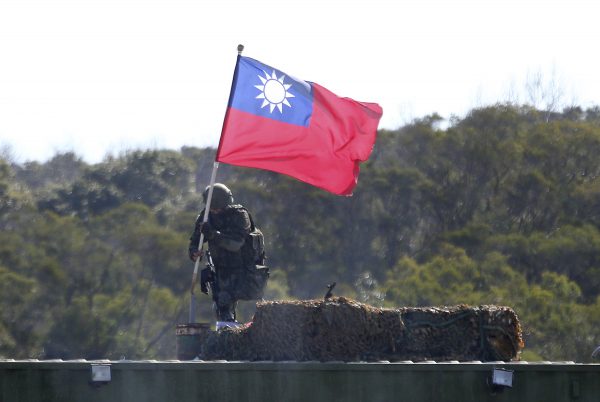
.台灣軍隊的戰鬥力如何過度的依賴美國並不是好現象屆時美國為了自身利益而出賣台灣.
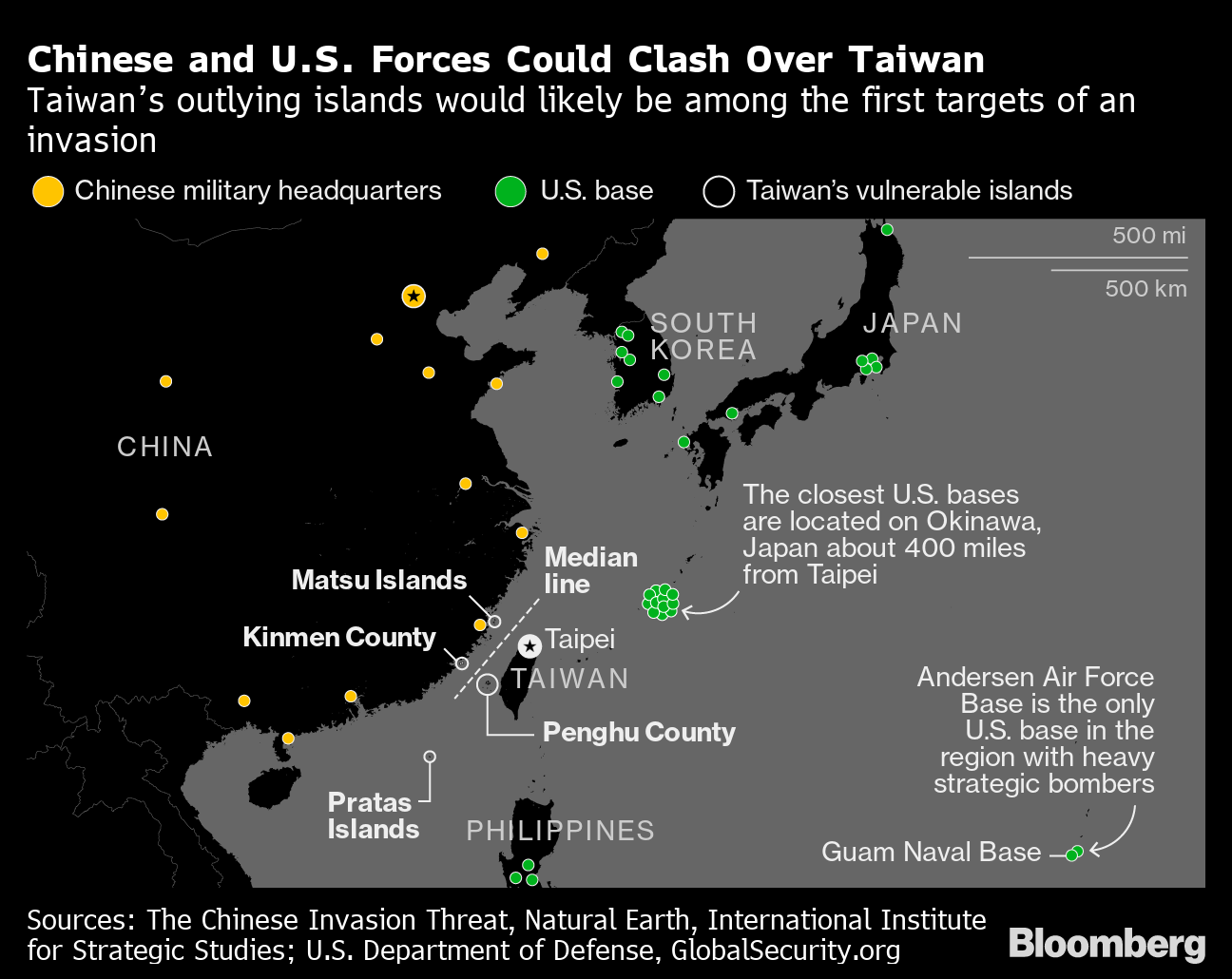
中國在準備「一場大規模,強度相對較高的海上局部戰爭」,最有可能是圍繞南海或東海有爭議的海洋主張的規模相對較小的衝突,更大規模的衝突,應是美國介入的台海衝突。
1. 威懾核能力報告描述,冷戰後中共的核戰略主要針對美國。與美國或俄羅斯相比,中共目前的核武庫小得多但正在產生一支規模更大的核力量,估計中共庫存350枚核彈頭,包括約240枚陸基彈道導彈,4艘核潛艇上的 48 枚導彈,和轟炸機攜帶的20 枚空投炸彈。中共在核武三位一體的方向上取得進展,但中共仍然擔憂,美國的導彈防禦和遠程精確常規武器,可能會削弱中共的核力量。
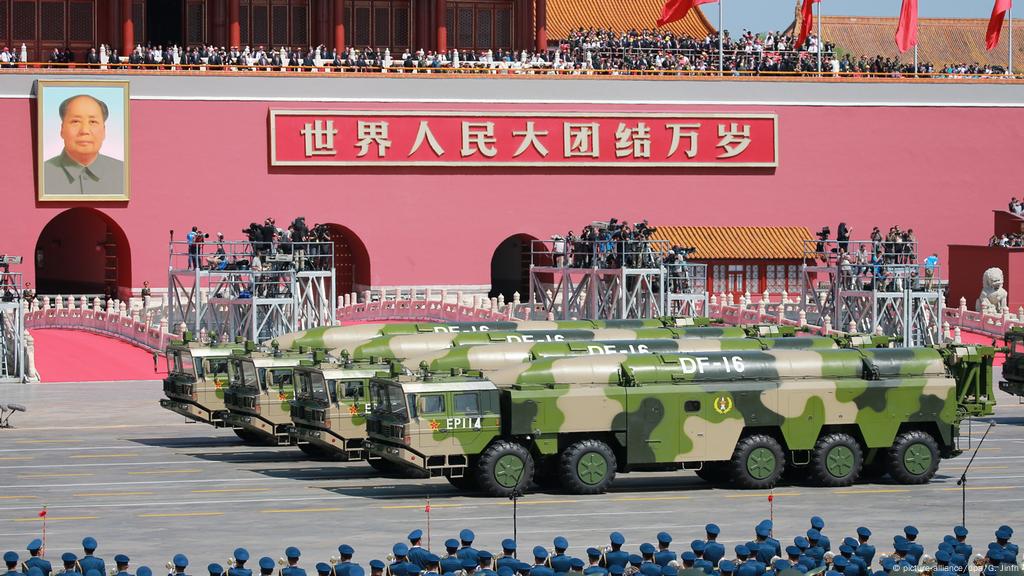
2. 常規導彈:報告認為,中共正在提高遠距離精確打擊的能力,包括針對美國和印太地區盟軍的基地。 報告估計中共有約600枚或更多短程彈道導彈,射程300-1,000公里,超過150枚中短程彈道導彈,射程1,000-3,000公里,超過200枚中程彈道導彈,射程 3,000-5,500公里,約100枚洲際彈道導彈,射程超過5,500公里。這些導彈的一部分,對美國在印太的軍事基地造成了威脅,包括關島。
3. 中共空軍:報告認為,中共空軍正在從領土防空的傳統角色,轉變為可以遠離邊界進行攻防,主要方向是東南。中共空軍的現代化正在侵蝕美國長期以來的軍事優勢。中共有約八百多架第四代戰鬥機,包括J-10,J-11 和,J-16等,第五代J-20隱形戰鬥機也投入使用。中共還有約450架轟炸機或攻擊機,包括轟H-6K,可攜帶六枚對地巡航導彈。
中共也在開發預警機,包括空警-2000,空警-200,空警-500,還有運-20運輸機和從俄羅斯進口的伊爾-78 加油機,以及大型無人機。
報告透露,中共從俄羅斯採購了數量不明的S-400地對空導彈,可能攔截一些短程彈道導彈;
中共正在模仿的紅旗-19防空導彈,或可攔截射程3,000公里的彈道導彈。 .........................
4. 中共海軍:報告描述,中共海軍擁有大約350艘戰艦,包括2艘航空母艦,最新的075型兩棲艦艇,6艘核動力彈道導彈潛艇,6艘核動力攻擊潛艇和46艘柴油動力攻擊潛艇,以及052D型驅逐艦和054A型護衛艦,能進行區域防空和反艦作戰,其它較小的戰鬥艦如056型護衛艦,僅在海岸附近作戰。報告認為,中共海軍「在第一島鏈以外執行任務的能力不大,但隨著遠海作戰的經驗越來越多,獲得更大,更先進的平台,會不斷增長能力」但是隨者中國海軍不斷的強勢發展,最新的055D.導向飛彈驅逐艦的服役,讓美國海軍感受到壓力,並宣稱美國海軍遇到對手.
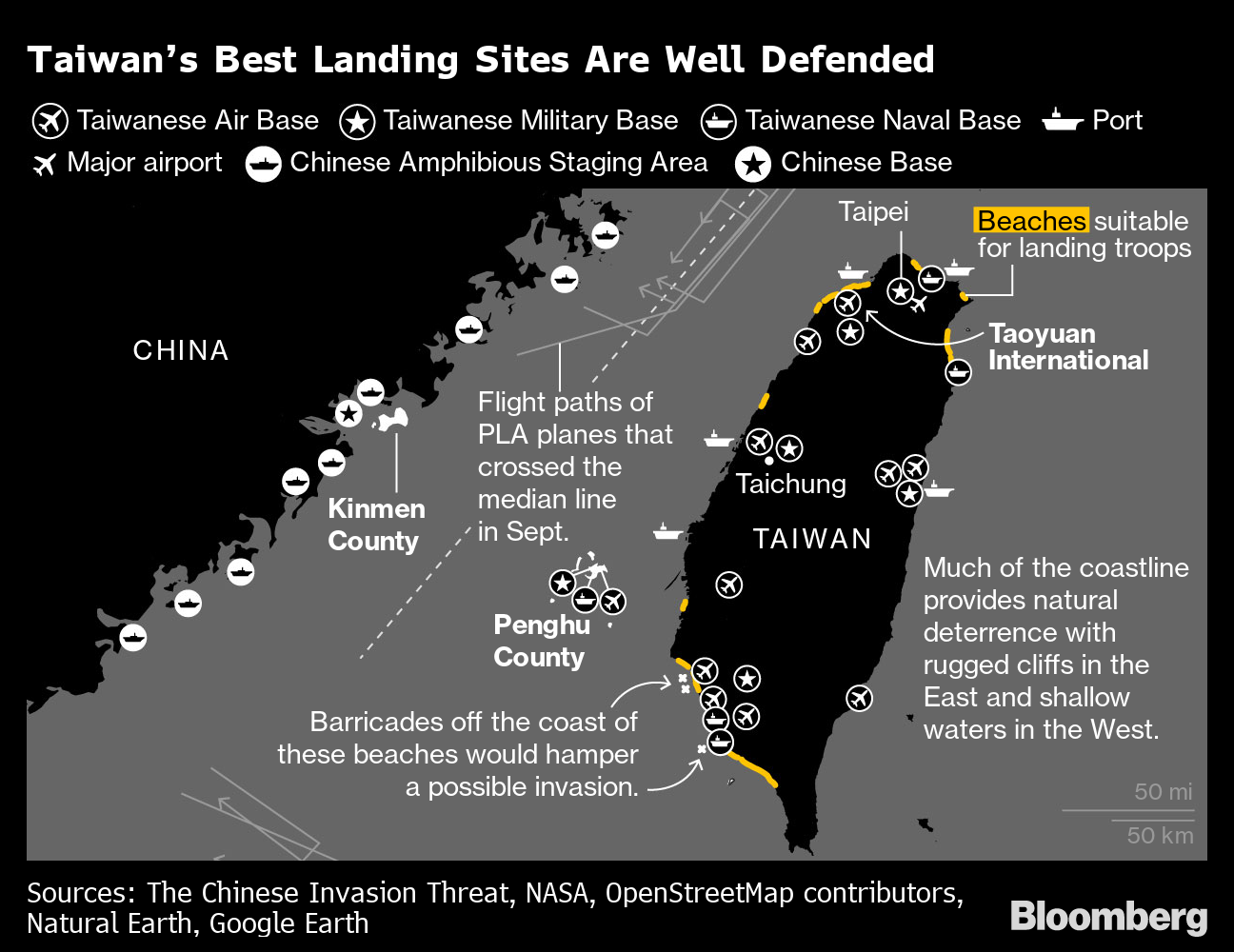
中共的海軍陸戰隊主要面向華南的島嶼,是南海主權聲索國中最有能力的兩棲部隊,可能入侵台灣控制的一些島嶼,但對台灣發動全面兩棲攻擊,將涉及重大的地緣政治和軍事風險。
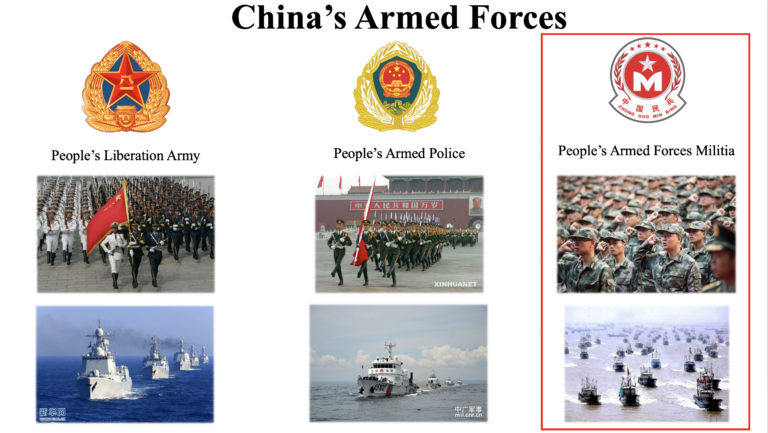
報告提到中共的海警和海上民兵,採用「灰色地帶」脅迫策略,可以否認接受中共軍隊的命令,並將矛盾升級的責任推給其它國家,這些國家大多數遠沒有強大的海岸警衛隊或海軍。
5. 戰略支援部隊:報告透露,中共的太空作戰和信息作戰(包括網絡、電子和心理戰),主要目標是美國。中共尋求使用進攻性網絡行動來破壞,降級或破壞敵對系統,包括關鍵基礎設施,還包括針對軍事,民用或商業目標的網絡間諜活動,盜竊軍事技術訣竅,知識產權等。
中共正在開發反太空能力,如反衛星導彈,陸基激光和共軌太空武器。2020年7月,中共完成了北斗衛星導航系統,減少了對美國全球定位系統(GPS)的依賴。中共運營或擁有約14%的在軌已知衛星,超過美國之外的任何國家。
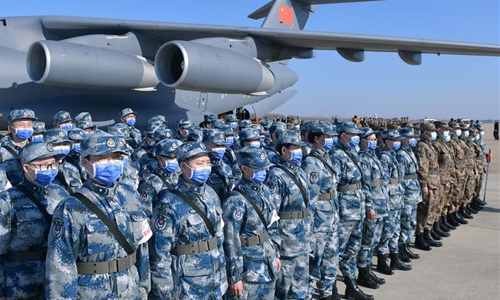
6. 中共陸軍:報告稱,中共陸軍是世界上最大的地面部隊,主要為確保中共政治穩定。中共領導人要求陸軍轉變為一支能夠靈活利用先進技術和能力的網絡化部隊,能更快移動,有更遠更快的打擊能力,包括遠程多管火箭,大砲,坦克,攻擊直升機,特種小組,電子戰和可能的網絡武器。報告隱約提及中共的陸軍裝備數量不足。
中國軍隊的弱點:報告認為,中共試圖進攻台灣,也試圖以武力解決周邊的領土爭端,還試圖對抗美國在東亞的能力,但其執行任務的能力仍然存在問題和不確定性。
Non-War Military Activities (NWMA) Source: U.S. Department of Defense, Annual Report to Congress: Military and Security Developments Involving the People’s Republic of China 2020, August 21, 2020, p. 32. 29 PLA writings divide military operations into two categories: war and non-war. The PLA’s concept of non-war military activities (NWMA) is an expansive and diverse set of military operations ranging from humanitarian assistance and disaster relief (HA/DR) to suppressing domestic unrest to maritime rights protection. PLA writings describe NWMA as serving a variety of political purposes, occurring at varying intensities and durations, and may include the threat of violence or the use of violence from low levels to levels approaching war. According to PLA writings, NWMA are an important “strategic means” for the military to serve the national political interest. Additionally, the PLA views NWMA as an effective way for it to support and safeguard China’s development, as a means to expand the PRC’s global interests, and an opportunity to gain valuable operational experience. NWMA can be conducted internationally or domestically and encompass activities in multiple domains. NWMA can notably include operations in which the PLA uses coercive threats and/or violence below the level of armed conflict against states and other actors to safeguard the PRC’s sovereignty and national interests. NWMA can also blend military and law enforcement activities including for maritime rights protection, border and coastal defense, air and sea control, deterrence operations, suppression of domestic unrest, and other forms of stability maintenance operations. NWMA also includes military diplomacy, HA/DR, counterterrorism, counterpiracy, counterdrug, peacekeeping, and noncombatant evacuation operations. In the past, PRC official writings have described aspects of NWMA as military operations other than wa.

國際戰略專家分析評估中國領導人,習近平的重責大任,就是收復台灣省,完成中國的統一,無論是和平統一或是以武力攻打台灣都由習近平選擇,換句話說選擇權,操作在於中國,而不是台灣,美國只是旁觀者無法干預.


 1樓. red square 1232021/06/25 21:13北約軍事委員會主席斯圖爾特·彼奇認為,中國軍隊現代化速度驚人,呼籲密切關注北京的行為。中國建造船隻速度,中國空軍現代化的速度以及向計算機控制和其他形式信息控制系統投入的資金令人驚訝,尤其是面部識別系統。」


