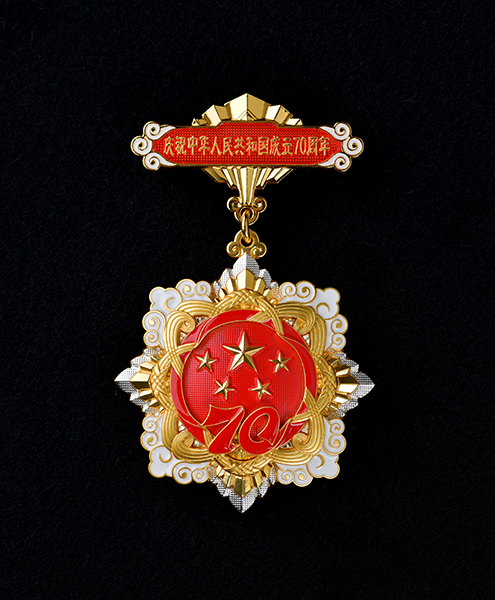
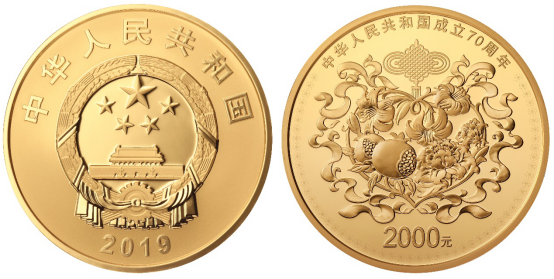
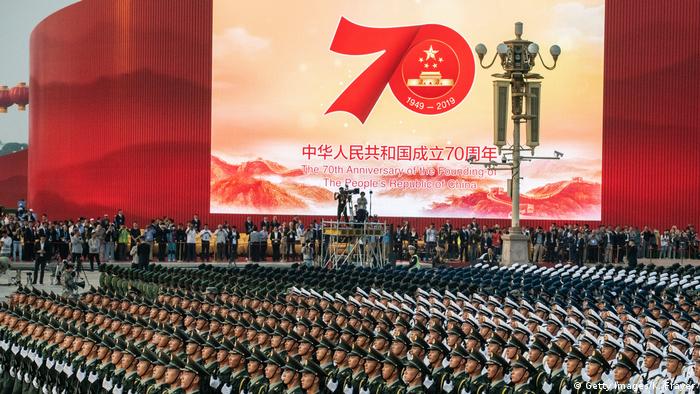
.慶賀中華人民共和國成立70週年
The 70th Anniversary of the Founding of The People’s Republic of China.

國運昌隆,日昇月恒,青山長在,綠水長流,
巍峨國土,大哉中華.五族共和,文化傳承,
富國強軍,人民安樂,繼往開來,揚我國威.
一統江山,開天闢地,創造新制,大哉中國,
紅星照耀,東亞稱雄.四海歸順,萬邦來朝.
 .
.
中華民族偉大復興,優秀的中國共產黨,由馬克斯,列寧,無產階級鬥爭思想及制度,成功的轉向社會主義,小康均富的形態,邁向21世紀,中華民族開大步,走大路,開創新局,引領世界和平,持續改革開放,寰宇歡騰迎中國,中國人民站起來,風雲際會,唯我華夏,海闊天空,引以為傲,龍之傳人,永垂不朽,一國兩制,收復台灣,中國統一.中華民族,歷久彌新,綿延永恆.


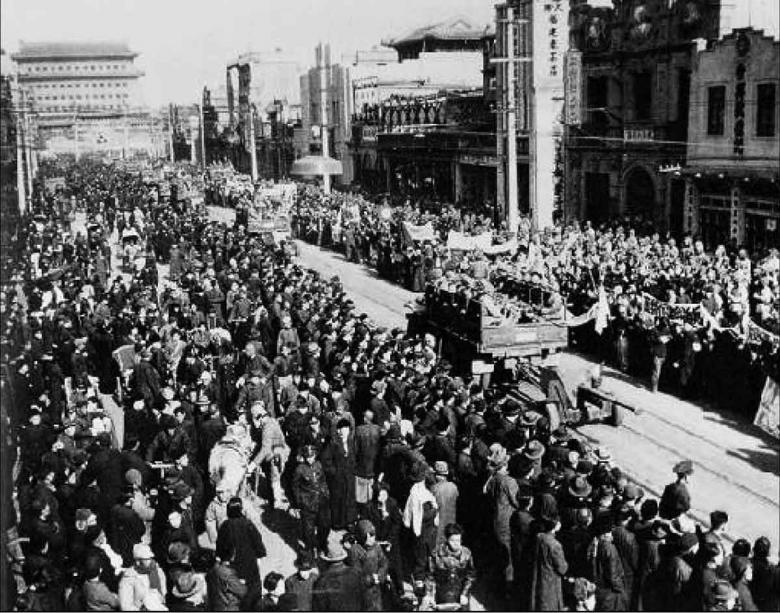


中華人民共和國成立十周年閱兵式The 1959 National Day parade celebrating the tenth anniversary of the PRC’s foundation was the biggest yet. In anticipation for the event, the newly constructed square in front of the Tiananmen, the gate of the former imperial palace of Beijing’s Forbidden City, was enlarged. It would surpass the size of the Red Square in Moscow and become the biggest square in the world, with space for a million people. This was viewed as a tangible way to display the CCP’s “Great Leap Forward” to the world.
China (Chinese: 中国; pinyin: Zhōngguó; literally: Central State), officially the Peoples Republic of China (PRC or PR China), is a country in East Asia and the worlds most populous country, with a population of around 1.404 billion in 2017.] Covering approximately 9,600,000 square kilometers (3,700,000 sq mi), it is the third or fourth largest country by total area.] Governed by the Communist Party of China, the state exercises jurisdiction over 22 provinces, five autonomous regions, four direct-controlled municipalities (Beijing, Tianjin, Shanghai, and Chongqing), and the special administrative regions of Hong Kong and Macau.
China emerged as one of the worlds first civilizations, in the fertile basin of the Yellow River in the North China Plain. For millennia, Chinas political system was based on hereditary monarchies, or dynasties, beginning with the semi-legendary Xia dynasty in 21st century BCE.[20] Since then, China has expanded, fractured, and re-unified numerous times. In the 3rd century BCE, the Qin reunited core China and established the first Chinese empire. The succeeding Han dynasty, which ruled from 206 BCE until 220 CE, saw some of the most advanced technology at that time, including papermaking and the compass,[21] along with agricultural and medical improvements. The invention of gunpowder and movable type in the Tang dynasty (618–907) and Northern Song (960–1127) completed the Four Great Inventions. Tang culture spread widely in Asia, as the new Silk Route brought traders to as far as Mesopotamia and the Horn of Africa.[22] Dynastic rule ended in 1912 with the Xinhai Revolution, when the Republic of China (ROC) replaced the Qing dynasty. China as a whole was ravaged by Japan during World War II. The subsequent Chinese Civil War resulted in a division of territory in 1949, when the Communist Party of China established the Peoples Republic of China, a unitary one-party sovereign state, on mainland China while the Kuomintang-led nationalist government retreated to the island of Taiwan. The political status of Taiwan remains disputed.
Since the introduction of economic reforms in 1978, Chinas economy has been one of the worlds fastest-growing with annual growth rates consistently above 6 percent.] According to the World Bank, Chinas GDP grew from $150 billion in 1978 to $12.24 trillion by 2017.] According to official data, Chinas GDP in 2018 was 90 trillion Yuan ($13.28 trillion)] Since 2010, China has been the worlds second-largest economy by nominal GDP] and since 2014, the largest economy in the world by purchasing power parity (PPP).] China is also the worlds largest exporter and second-largest importer of goods.[28] China is a recognized nuclear weapons state and has the worlds largest standing army and second-largest defense budget.[29][30] The PRC is a permanent member of the United Nations Security Council as it replaced the ROC in 1971, as well as an active global partner of ASEAN Plus mechanism. China is also a leading member of numerous formal and informal multilateral organizations, including the Shanghai Cooperation Organization (SCO), WTO, APEC, BRICS, the BCIM, and the G20. China has been characterized as an emerging superpower, mainly because of its massive population, economy, and military.[
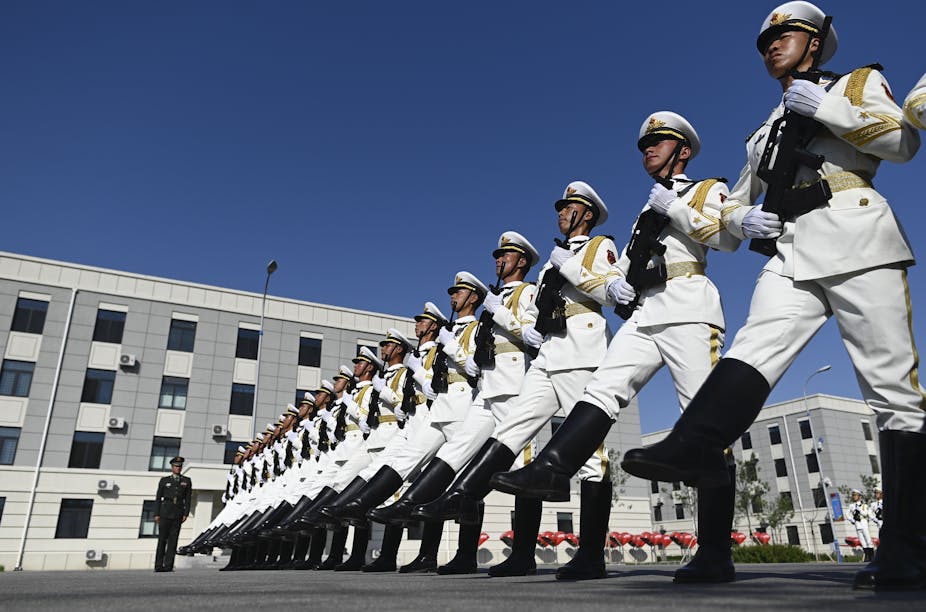
The history of the People’s Republic of China – through 70 years of mass parades.
 .
.
Traditionally in China, 70 is an auspicious number. A person who reaches 70 is considered “rare and precious” (guxi 古稀) and the 70th birthday is worth a big celebration. To mark its own 70th anniversary on October 1, the People’s Republic of China (PRC) will hold a mass parade in Tiananmen Square in Beijing.
For the Chinese Communist Party (CCP), which has ruled such a vast country for 70 years and turned what was once viewed as the “sick man of Asia” into a major world power and the world’s second-biggest economy, this is a rare and precious occasion worth celebrating in a grandiose way.
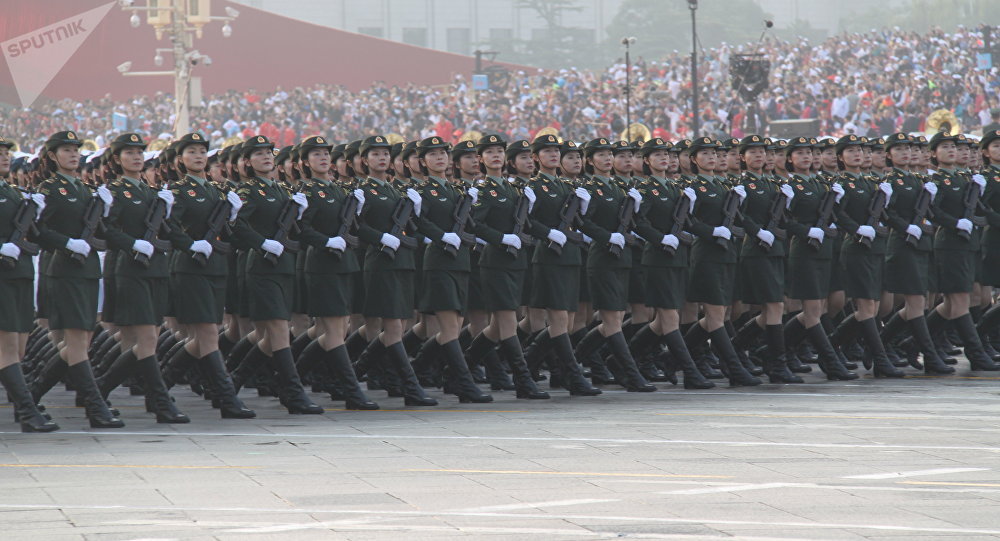
The history of parades to mark China’s National Day can help to track the changing concerns and priorities of the country’s leadership over the past 70 years. Over time, such mega events have helped to validate the political status and legitimacy of the CCP leadership, and connect the distant, autocratic state with ordinary people through spectacle.
After the founding of the PRC in 1949, one of the major tasks of the new People’s Government was national, cultural and educational work, which meant raising the cultural level of the masses. It sent delegations to the USSR to learn how to stage “socialist-style” national events. In the early years of the PRC, the state staged two annual mass parades, one on May Day and the other on the national day on October 1, whose design closely resembled Soviet parades. They were displays of the CCP’s military force, core economic goals and achievements as well as occasions for the masses to show devotion to the party and state.
At 70, Peoples Republic Of China Faces Economic And Political Headwinds.

.Donald Trump’s anniversary wish for China: congratulations on your milestone, but we will beat you in trade war
沒有任何力量能夠撼動中國地位 中國將繼續堅持和平發展道路.奉行互利共贏的開放戰略。
中國人民解放軍和人民武裝警察部隊要永葆人民軍隊性質、宗旨、本色,堅決維護國家主權、安全、發展利益,堅決維護世界和平。
"前進徵程上,我們要堅持和平發展道路,奉行互利共贏的開放戰略,繼續同世界各國人民一道推動共建人類命運共同體"。
中國的昨天已經寫在人類的史冊上,中國的今天正在億萬人民手中創造,中國的明天必將更加美好。 全黨全軍全國各族人民要更加緊密地團結起來,不忘初心,牢記使命,繼續把我們的人民共和國鞏固好、發展好,繼續為實現"兩個一百年"奮鬥目標、實現中華民族偉大復興的中國夢而努力奮鬥。


 4樓. red square 1232019/10/06 10:43
There is no force that can shake the foundation of this great nation,” Chinese President Xi Jinping says Tuesday in a speech commemorating the 70th anniversary of the Chinese Communist Party’s rule.
Xi did not specifically mention any other country by name, and emphasized that China would pursue peaceful development.
In his speech Tuesday, Xi says the central government would “maintain long-term prosperity and stability of Hong Kong and Macao.”
-
3樓. red square 1232019/10/02 14:55

-
2樓. red square 1232019/10/02 14:53

 red square 123 於 2019/10/02 14:54回覆
 -
1樓. red square 1232019/10/02 14:45

中國新一代機動發射型洲際彈道導彈「東風-41」在慶祝中華人民共和國成立70週年閱兵首次亮相。
red square 123 於 2019/10/02 14:45回覆"東風-41"是中國首款具備全球打擊能力並機動部署的洲際導彈,是中國確保其核反擊能力的利器。該導彈是中國研制的一種固體燃料機動型導彈,重55噸,長19米,可攜帶十多枚分導式彈頭,最大射程達1.4萬公里,幾乎可以打擊地球上任何一個目標.
 red square 123 於 2019/10/06 10:46回覆


