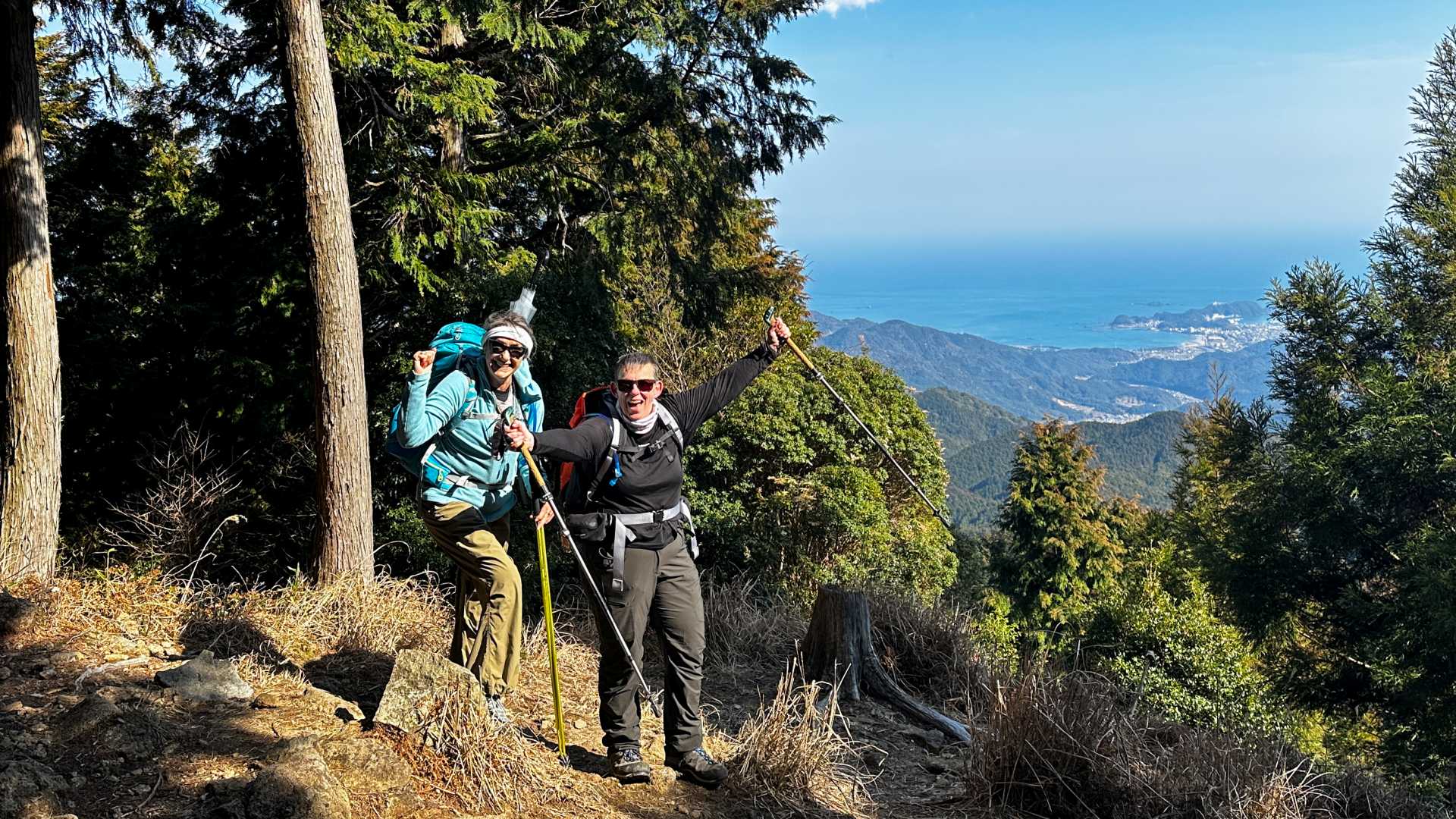
The Kumano Kodo and the Camino de Santiago are the world’s only two UNESCO-listed pilgrimage routes, but they feel completely different. The Camino is a long, social walk across Spain’s open landscapes. The Kumano Kodo is a short, steep trek through Japan’s misty cedar forests. One is communal; the other is quiet and inward.
What Is the Kumano Kodo?
The Kumano Kodo Japan is an ancient network of pilgrimage trails on Japan’s Kii Peninsula, leading to three sacred Shinto-Buddhist shrines. It is shorter but steeper than the Camino, and it is walked in silence through deep forest rather than across open farmland.
What Is the Camino de Santiago?
The Camino is a historic Christian pilgrimage to the cathedral of Santiago de Compostela in northwestern Spain, where tradition says the apostle St. James is buried. It has many routes, but the most famous, the Camino Francés, stretches roughly 780 kilometres from France across northern Spain.
How Do the Kumano Kodo and Camino de Santiago Compare?
The easiest way to see the difference is side by side.
|
Feature |
Kumano Kodo (Nakahechi Route) |
Camino de Santiago (Camino Francés) |
|
Location |
Kii Peninsula, Japan |
Northern Spain (from France) |
|
Full distance |
~68 km (Nakahechi) |
~780 km |
|
Typical duration |
4–7 days |
33–38 days |
|
Terrain |
Steep forest paths, stone steps, roots |
Rolling farmland, paths, some hills |
|
Difficulty feel |
Physically demanding underfoot |
Long but less steep; endurance challenge |
|
Culture |
Shinto-Buddhist shrines, silence, onsen |
Christian churches, cafes, communal albergues |
|
Accommodation style |
Ryokan, minshuku, temple lodgings |
Albergues, casas rurales, hotels |
|
Daily cost (budget) |
Higher (ryokan meals included) |
Lower (€25–€50 per day possible) |
|
Crowds |
Quiet, remote |
Busy, especially in summer |
Sources: Distance and terrain comparison; Camino route length; accommodation styles; daily budget range.
Why Is the Kumano Kodo Physically Harder Than the Camino?
This is the difference that surprises most people.
The Kumano Kodo is shorter, but it is a mountain trek. You will climb and descend steep stone staircases, navigate exposed tree roots, and cross slippery moss-covered rocks. A 14-kilometre day on the Kumano Kodo can easily take seven or eight hours with breaks.
The Camino is long, but the path is generally wide and gentle. You can walk side by side with other pilgrims and cover 20–25 kilometres in a day without the same technical underfoot demands. The Camino tests your endurance; the Kumano Kodo tests your knees, ankles, and focus.
Practical takeaway: Trekking poles are optional on the Camino. On the Kumano Kodo, they are close to essential, especially on descents.
Why Is the Atmosphere So Different?
The Camino is social; the Kumano Kodo is quiet.
On the Camino, you will hear “Buen Camino” dozens of times a day. Cafes appear every few kilometres. Albergues fill with pilgrims from around the world, and communal dinners are part of the rhythm. The trail is busy—over 500,000 people walked the Camino in 2025.
The Kumano Kodo is the opposite. You may walk for hours without seeing another person. The forest is silent except for birds and running water. There are no trail-side cafes. You carry your lunch from your guesthouse and eat it on a mossy stone step beside a small shrine.
Neither atmosphere is “better.” But if you are choosing between them, this is the factor to weigh most honestly. Do you want company, or do you want solitude?
What Is the Dual Pilgrim Program?
If you complete both trails, you can register as a Dual Pilgrim. This is an official recognition created in 2015 to honour walkers who have finished one qualifying route on the Camino and one qualifying route on the Kumano Kodo.
On the Camino, you need to walk at least the final 100 kilometres on foot. On the Kumano Kodo, you have several options—for example, walking from Takijiri-oji to Kumano Hongu Taisha (about 38 km) or from Kumano Nachi Taisha to Kumano Hongu Taisha (about 30 km).
You collect stamps in a Dual Pilgrim Credential, which has one side for each trail. Upon completion, you receive a limited-edition pin badge and can be featured on the official Dual Pilgrim page.
What Are the Common Mistakes People Make on Each Trail?
Kumano Kodo mistakes
- Choosing the wrong route. The Nakahechi is the most beginner-friendly, but “beginner-friendly” here still means steep forest hiking. The Kohechi is much tougher.
- Underestimating the terrain. People see “68 km” and assume it is easy. It is not. The elevation gain and rocky underfoot conditions make daily distances feel longer than they look on paper.
- Not carrying enough water. There are very few refill points on the trail. Carry at least two litres.
- Ignoring Japanese trail etiquette. Keep your voice low, walk single file on narrow sections, and do not play music out loud.
- Expecting dietary flexibility. Guesthouses cannot always cater to specific requests. If you have strict dietary needs, plan ahead.
Camino de Santiago mistakes
- Starting too late in the day in summer. Beds in albergues can fill by early afternoon on busy sections, especially from Sarria onward.
- Packing too much. The Camino is a walk, not a trek, but a heavy pack still wears you down over 30 days.
- Skipping the meseta. The flat, cereal-growing middle section of the Camino Francés is mentally challenging, but many veterans call it the most meditative part of the route.
- Walking in July and August if you dislike crowds. The final 100 kilometres operate at capacity in mid-summer.
How Can Beginners Choose Between Them?
Use this simple decision guide.
Choose the Kumano Kodo if:
- You want a shorter trip (under two weeks).
- You prefer silence, forest, and solitude over socialising.
- You are comfortable with steep, uneven terrain and stone steps.
- You want to stay in traditional Japanese inns and soak in onsen.
- You are drawn to Shinto and Buddhist culture.
Choose the Camino de Santiago if:
- You want a longer, life-changing walk measured in weeks, not days.
- You want to meet people from around the world and share the experience.
- You prefer gentle terrain and reliable infrastructure.
- You want a lower daily budget with albergue accommodation.
- You are drawn to Christian pilgrimage history and Spanish village life.
If you are unsure: Start with a short Camino route (the Portuguese Way from Porto takes 10–12 days) to test whether long-distance pilgrimage suits you. Then plan the Kumano Kodo as a second, more contemplative journey.
What Are the Best Times to Walk Each Trail?
Kumano Kodo: Spring (March–May) and autumn (September–November) offer mild temperatures between 10°C and 20°C. Avoid Golden Week (late April–early May) and Obon (mid-August) if you want fewer people. October and late April are the sweet spots.
Camino de Santiago: May and September are the classic months—mild weather, long daylight hours, and manageable crowds. July and August are the busiest and hottest. Spring (April–June) and autumn (September–October) are ideal for first-timers.
Expert Tips for a Better Experience on Either Trail
- Break in your footwear properly. This sounds obvious, but blisters remain the number-one reason pilgrims abandon a route.
- Learn a few words of the local language. “Buen Camino” and “arigatou gozaimasu” go a long way.
- Book accommodation ahead on the Kumano Kodo. Guesthouses are small and fill up, especially in peak seasons.
- Do not overplan the Camino. The beauty of the Camino is its rhythm. Book the first two nights, then let the trail guide you.
- Respect the sacred nature of both routes. These are not just hiking trails. They are living pilgrimage paths with deep spiritual meaning for many people who walk them.
Frequently Asked Questions
Is the Kumano Kodo harder than the Camino de Santiago?
Yes, in terms of terrain. The Kumano Kodo is steeper and rougher underfoot, with exposed roots and slippery stone steps. The Camino is longer but generally easier to walk day after day.
How long does it take to walk the Kumano Kodo?
The main Nakahechi route can be completed in 4–7 days, depending on your pace and starting point. Most walkers cover 10–15 km per day.
Can you walk the Camino de Santiago in two weeks?
Yes. The Portuguese Way from Porto takes 10–12 days, and the final section of the Camino Francés from Sarria takes 5–7 days. Both qualify for the Compostela certificate.
Do you need a permit for the Kumano Kodo?
No. Almost all Kumano Kodo routes do not require permits. You simply walk and collect stamps at the designated shrines and waypoints.
What is the Dual Pilgrim certificate?
It is an official recognition for people who have walked both the Camino de Santiago and the Kumano Kodo. You register at a designated site after completing qualifying sections of each trail.
Which trail is cheaper?
The Camino is generally cheaper. Budget albergues cost €8–€16 per night, and daily spending of €25–€50 is realistic. Kumano Kodo accommodation is more expensive because it typically includes elaborate meals and traditional inn experiences.
Can I walk the Kumano Kodo without speaking Japanese?
Yes. Trail signage is good, and tourism information centres provide English maps and bus schedules. But learning basic phrases and understanding Japanese etiquette will make the experience much smoother.
Conclusion
The Kumano Kodo and the Camino de Santiago are both ancient, UNESCO-listed pilgrimage routes—but they ask different things of you. The Camino asks for time and endurance. The Kumano Kodo asks for attention and quiet. Choose the Camino for community and a long horizon. Choose the Kumano Kodo for forest silence and steep, sacred ground. And if you are lucky enough to walk both, you will understand why so many pilgrims call the Dual Pilgrimage the journey of a lifetime.
下一則: How to Find the Latest Casino Promo Codes and Offers
- How to Find the Latest Casino Promo Codes and Offers
- Casino Promo Codes Explained: Bonuses, Terms, and Requirements
- Online Casino Promotions: Welcome Bonuses and Rewards
- Best Casino Promo Codes and Bonuses for New Players
- Best Casino Promo Codes and Bonuses for New Players
- Meilleur Code Promo 1xBet 2027 : 1XVIP1X – Bonus 130 €
限會員,要發表迴響,請先登入


