12/10
* Emily Dickenson
- numbers: 前面的是 Emily 自己編號的,後面的是 James 在統整時編號的
- at last, the title is categorized as the first sentence of the poem
- “A Narrow Fellow in the Grass”
- Boy an Barefoot 酒神的象徵 God of fertility
- Whip Lash 聽說出夜很痛如鞭子打
- And was gone: Phallic symbol
- Zero at the Bone 血液會降到零度
* Naturalism
- a literary movement or tendency from the 1880s to 1930s that used detailed realism to
suggest that social conditoins, heredity, and environment had inescapable force in
shaping human character.
- influenced by Charles Darwin's theory of evolution. They often believe that one's heredity
and social environment largely determine one character.
* Realism
- it is a part of the realist art movement beginning with mid nineteenth-century French
Literature, Russian literature and extending to the late nineteenth and early twentith-
century Literary realism.
* Splendor in the grass
- Transcendentalism: the ultimate truth found in the nature
- Wordsworth’s Ode: Though nothing can bring backt he hour of splendor
* Free verse
- Open form of poetry
- Not use consistent meter patter
- But tends to follow the rhythm of natural speech
* Blank verse
– Unrhymed lines but always in iambic pentameter
- Difference between Free verse: iambic pentameter
* Walt Whitman
- There are several sense of structure found in poems even if the poem does not require no
meter, rhyme, or other traditional poetic techniques.
- internal pattern of sound
- choice of exact words
- effect of associations
- ex. O’ Captain, O’ democracy, “When Lilacs Last in the Dooryard Bloom’d”
- “O’ Captain! My Captain!”
- a poem for Lincoln
- “Fallen cold and death”: mourning, elegy
* Elegy
- it is a mournful, melancholic or plaintive poem, especially a funeral song or a lament for
the dead.
- Four weddings and a Funeral: a 1994 British romantic comedy film. The film follow the
adventures of a group of freinds through the eye of Charles, a good-natured but socially
awkward Briton, who is smitten with Carrie, an American whom Charles repeatedly
meets at four weddings and at a funeral.The film follows the fortunes of Charles and his
friends as they wonder if they will ever find true love and marr. Chrles thinks he's found
"Miss Right" in Carrie, an American. This British subtle comedy revolves around Charlie,
his friends and the four weddings and one funeral which they attend. 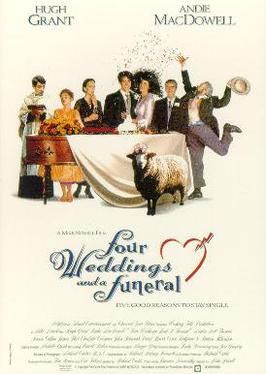
- Mona Lisa: a movie abuot George, after getting out of prison, begins looking for a job,
but his time in prison has reduced his stature in the criminal underworld. THe ony job he
can find is to be a driver for Simone, a beautiful high-priced call girl, with whom he forms
an at first grudging, and the real affection. Only Simone's playing a dangerous game, and
when George agrees to help her, they both end up in a huge amound of trouble with
Mortwell, the local kingpin. 
* Funeral blues, Auden
- “I thought that love would last forever”
- Poked fun at a dead politician, which is maybe not so classy, but something we're all
guilty of now and then. The poem was satrical, which means that i was snarky, mocking,
and overblown.
- this poem has had an even more interting afterlife, where it was featured in the film Four
Weddings and a Funeral.
- "Funeral Blues" means that you dont have to. Auden captures the experience of grief,
memory, devastation, and longing so poingnantly that you dont need your own words to
express how you feel. 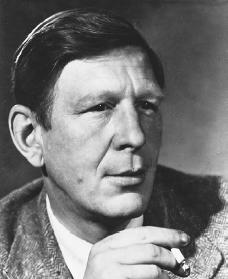
* “The Waste Land”
- “April is the cruelest mouth of the year”
- one of the most important poems of the 20th century.
- It is divided into five sections.


