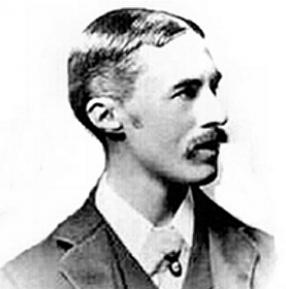
A.E. Houseman When I was one and twenty.(zwei and zwanzig in German)
The heart out of the bosom was never given in vain
‘tis omitted vowel, often seen in songs
Wise Man- Do not go gentle in that good night
Do not go gentle into that good night,
Old age should burn and rave at close of day;
Rage, rage against the dying of the light.
Though wise men at their end know dark is right,
Because their words had forked no lightning they
Do not go gentle into that good night.
Good men, the last wave by, crying how bright
Their frail deeds might have danced in a green bay,
Rage, rage against the dying of the light.
Wild men who caught and sang the sun in flight,
And learn, too late, they grieved it on its way,
Do not go gentle into that good night.
Grave men, near death, who see with blinding sight
Blind eyes could blaze like meteors and be gay,
Rage, rage against the dying of the light.
And you, my father, there on the sad height,
Curse, bless, me now with your fierce tears, I pray.
Do not go gentle into that good night.
Rage, rage against the dying of the light.
Sage Theory-Warren Edward Buffett

Journey of the Magi

Journey of the Magi is a 43-line poem written in 1927 by T. S. Eliot (1888–1965). It is one of five poems that Eliot contributed for a series of 38 pamphlets by several authors collectively titled Ariel poems and released by British publishing house Faber and Gwyer (later, Faber and Faber). Published in August 1927, "Journey of the Magi" was the eighth in the series and was accompanied by illustrations drawn by American-born avant garde artist Edward McKnight Kauffer (1890–1954).The poems, including "Journey of the Magi", were later published in both editions of Eliot's collected poems in 1936 and 1963.
patron/patronage
tragic flow
A tragic flaw is a literary term that refers to a personality trait of a main character that leads to his or her downfall. In other words, a character with a tragic flaw is in need of some kind of attitude adjustment. The term usually comes up when you're studying a tragedy — that is, a piece of literature in which the main character ends up dead or otherwise defeated. In this kind of story, the main character is sometimes also called the tragic hero.
solar deity
solar deity
A solar deity (also sun god or sun goddess) is a sky deity who represents the Sun, or an aspect of it, usually by its perceived power and strength. Solar deities and sun worship can be found throughout most of recorded history in various forms. The Sun is sometimes referred to by its Latin name Sol or by its Greek name Helios.
deus ex machina
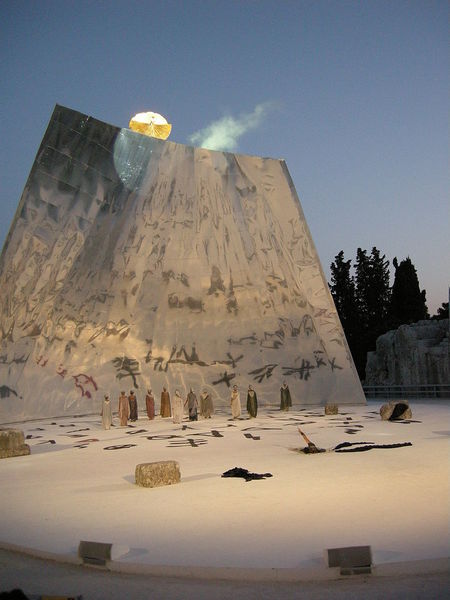
Deus ex machina is a Latin calque from Greek, meaning "god from the machine".The term has evolved to mean a plot device whereby a seemingly unsolvable problem is suddenly and abruptly resolved by the inspired and unexpected intervention of some new event, character, ability or object. Depending on how it is done, it can be intended to allow a story to continue when the writer has "painted himself into a corner" and sees no other way out, to surprise the audience, to bring the tale to a happy ending, or as a comedic device.
ecstasy:extremely happy/agonic 悲
Samson and Delilah
Delilah
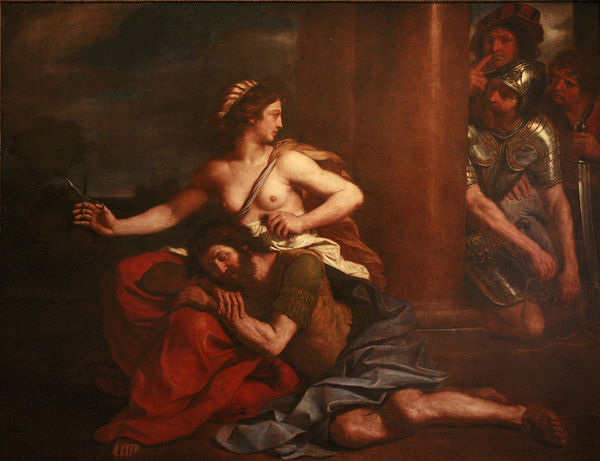
Delilah is a woman in the Book of Judges, where she is the "woman in the valley of Sorek" whom Samson loved, and who was his downfall. Her figure, one of several dangerous temptresses in the Hebrew Bible, has become emblematic: "Samson loved Delilah, she betrayed him, and, what is worse, she did it for money," Madlyn Kahr begins her study of the Delilah motif in European painting.
Samson
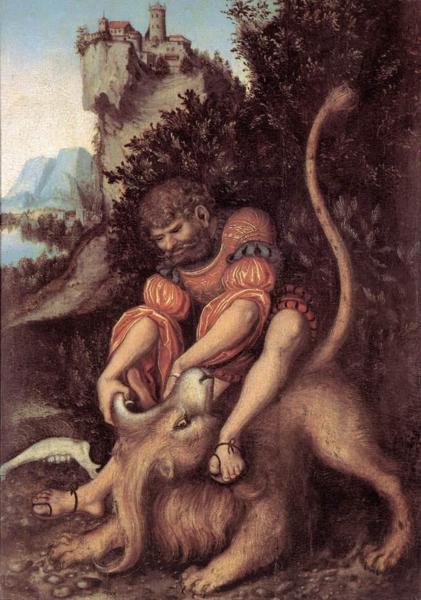
Samson was the last of the judges of the ancient Israelites mentioned in the Book of Judges in the Hebrew Bible (chapters 13 to 16) and one of the last of the leaders who "judged" Israel before the institution of the monarchy.
Lilah-girls who have magic power
Samson Agonistes
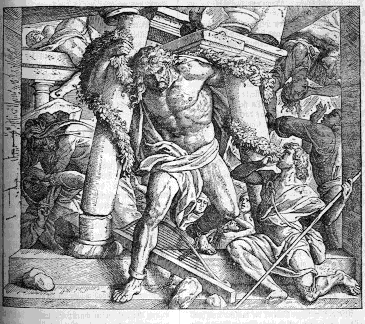
Samson Agonistes (Greek for "Samson the agonist") is a tragic closet drama by John Milton. It appeared with the publication of Milton's Paradise Regain'd in 1671, as the title page of that volume states: "Paradise Regained / A Poem / In IV Books / To Which Is Added / Samson Agonistes". It is generally thought that Samson Agonistes was begun around the same time as Paradise.
Closet drama
A closet drama is a play that is not intended to be performed onstage, but read by a solitary reader or, sometimes, out loud in a small group. The dichotomy between private closet drama (designed for reading) and public stage drama (designed for performance in a commercial theater setting) dates from the late eighteenth century.The practice of circulating plays in written form (printed or handwritten) for literary audiences predates this period, however.
John Milton

John Milton was an English poet, polemicist, man of letters, and civil servant for the Commonwealth of England under Oliver Cromwell. He wrote at a time of religious flux and political upheaval, and is best known for his epic poem Paradise Lost (1667), written in blank verse.
1.desist (v.) mid-15c., from Middle French désister (mid-14c.), from Latin desistere "to stand aside, leave off, cease," from de- "off" (see de-) + sistere "stop, come to a stand" (see assist). Related: Desisted; desisting.
2. doleful (adj.) late 13c., with -ful, from Middle English dole "grief" (early 13c.), from Old French doel (Modern French deuil), from Late Latin dolus "grief," from Latin dolere "suffer, grieve," which is of uncertain origin. De Vaan reports that it can be derived from a PIE root *delh- "to chop" "under the assumption that 'pain' was expressed by the feeling of 'being torn apart'. A causative *dolh-eie- 'to make somebody (feel) split' could have become 'to cause pain'. The experiencer must originally have been expressed in the dative." Related: Dolefully.
3. elusive (adj.) 1719, from Latin elus-, past participle stem of eludere "elude, frustrate" (see elude) + -ive. Related: Elusiveness.
4. engross (v.) c. 1400, "to buy up the whole stock of" (in Anglo-French from c. 1300), from Old French en gros "in bulk, in a large quantity, at wholesale," as opposed to en detail. See gross.
Figurative sense of "absorb the whole attention" is first attested 1709. A parallel engross, meaning "to write (something) in large letters," is from Anglo-French engrosser, from Old French en gros "in large (letters)." Related: Engrossed; engrossing.
5. frustrate (v.) mid-15c., from Latin frustratus, past participle of frustrari "to deceive, disappoint, make vain," from frustra (adv.) "in vain, in error," related to fraus "injury, harm" (see fraud). Related: Frustrated; frustrating.
6. histrionics (n.) "theatrics, pretense," 1820, from histrionic; also see -ics.
7. imminent (adj.) 1520s, from Middle French imminent (14c.) and directly from Latin imminentem (nominative imminens) "overhanging; impending," present participle of imminere "to overhang, lean towards," hence "be near to," also "threaten, menace, impend, be at hand, be about to happen," from assimilated form of in- "into, in, on, upon" (see in- (2)) + -minere "jut out," which is related to mons "hill" (see mount (n.1)). Related: Imminently.
8. inclement (adj.) 1660s, from French inclément (16c.) and directly from Latin inclementem (nominative inclemens) "harsh, unmerciful," from in- "not, opposite of, without" (see in- (1)) + clementem "mild, placid." "Limitation to weather is curious" [Weekley].
9. inert (adj.) 1640s, "without inherent force, having no power to act or respond," from French inerte (16c.) or directly from Latin inertem (nominative iners) "unskilled, incompetent; inactive, helpless, weak, sluggish; worthless," used of stagnant fluids, uncultivated pastures, expressionless eyes. It is a compound of in- "without, not, opposite of" (see in- (1)) + ars (genitive artis) "skill" (see art (n.)). In chemistry, "having no active properties, neutral" (1800), specifically from 1885 of certain chemically inactive, colorless, odorless gases. Of persons or creatures, "indisposed or unable to move or act," from 1774.
10. interject (v.) 1570s, back-formation from interjection or else from Latin interiectus, past participle of intericere "to throw between, insert, interject." Related: Interjected; interjecting.
11. mastiff (n.) large, powerful breed of dog, early 14c., from Old French mastin "great cur, mastiff" (Modern French mâtin) or Provençal mastis, both from Vulgar Latin *mansuetinus "domesticated, tame," from Latin mansuetus "tame, gentle" (see mansuetude). Probably originally meaning a dog that stays in the house, thus a guard-dog or watchdog. Form in English perhaps influenced by Old French mestif "mongrel."
12. obsess (v.)
c. 1500, "to besiege," from Latin obsessus, past participle of obsidere "watch closely; besiege, occupy; stay, remain, abide" literally "sit opposite to," from ob "against" (see ob-) + sedere "sit" (see sedentary). Of evil spirits, "to haunt," from 1530s. Psychological sense is 20c. Related: Obsessed; obsessing.
13. pertinent (adj.) late 14c., from Anglo-French purtinaunt (late 13c.), Old French partenant (mid-13c.) and directly from Latin pertinentem (nominative pertinens) "pertaining," present participle of pertinere "to relate, concern" (see pertain). Related: Pertinently.
14. peruse (v.) late 15c., "use up, wear out, go through," from Middle English per- "completely" (see per) + use (v.). Meaning "read carefully" is first recorded 1530s, but this could be a separate formation. Meaning "read casually" is from 19c. Related: Perused; perusing.
15. premonition (n.) mid-15c., from Anglo-French premunition, Middle French premonicion, from Late Latin praemonitionem (nominative praemonitio) "a forewarning," noun of action from past participle stem of Latin praemonere "forewarn," from prae "before" (see pre-) + monere "to warn" (see monitor (n.)).
16. recoil (n.) c. 1300, "retreat," from Old French recul "recoil, backward movement, retreat," from reculer (see recoil (v.)). Meaning "back-kick of a firearm" is from 1570s.
recoil (v.) early 13c. (transitive) "force back, drive back," from Old French reculer "to go back, give way, recede, retreat" (12c.), from Vulgar Latin *reculare, from Latin re- "back" (see re-) + culus "backside, bottom, fundament." Meaning "shrink back, retreat" is first recorded c. 1300; and that of "spring back" (as a gun) in 1520s. Related: Recoiled; recoiling.
17. salient (n.)
1828, from salient (adj.).
salient (adj.) Look up salient at Dictionary.com
1560s, "leaping," a heraldic term, from Latin salientem (nominative saliens), present participle of salire "to leap," from PIE root *sel- (4) "to jump" (source also of Greek hallesthai "to leap," Middle Irish saltraim "I trample," and probably Sanskrit ucchalati "rises quickly").
It was used in Middle English as an adjective meaning "leaping, skipping." The meaning "pointing outward" (preserved in military usage) is from 1680s; that of "prominent, striking" first recorded 1840, from salient point (1670s), which refers to the heart of an embryo, which seems to leap, and translates Latin punctum saliens, going back to Aristotle's writings. Hence, the "starting point" of anything.
18. squeamish (adj.) late 14c., variant (with -ish) of squoymous "disdainful, fastidious" (early 14c.), from Anglo-French escoymous, which is of unknown origin. Related: Squeamishly; squeamishness.
He was somdel squaymous
Of fartyng, and of speche daungerous
[Chaucer, "Miller's Tale," c. 1386]
19. symptomatic (adj.) 1690s, from French symptomatique or directly from Late Latin symptomaticus, from symptomat-, stem of symptoma (see symptom). General sense of "indicative (of)" is from 1751. Related: Symptomatical (1580s).
20. wan (adj.) Old English wann "dark, dusky, lacking luster," later "leaden, pale, gray," of uncertain origin, and ot found in other Germanic languages. The connecting notion is colorlessness. Perhaps related to wane. Related: Wanly; wanness.
限會員,要發表迴響,請先登入


