Opponent
*pro- : in favor of
ex. proponent/proposal/propaganda/paraphrase
*omni- : all
*-ent : person
ex. omnipotent/omniscient/omnipresent
incompetent/inpotent
Aeolus
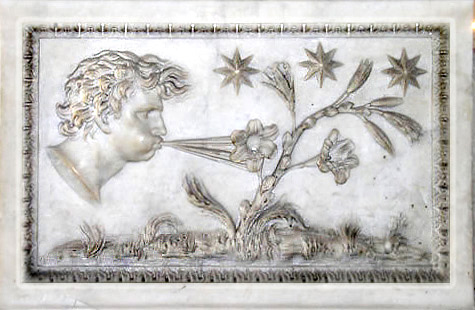
Aeolus, a name shared by three mythical characters, was the ruler of the winds in Greek mythology. These three personages are often difficult to tell apart, and even the ancient mythographers appear to have been perplexed about which Aeolus was which. Diodorus Siculus made an attempt to define each of these three (although it is clear that he also became muddled), and his opinion is followed here. Briefly, the first Aeolus was a son of Hellen and eponymous founder of the Aeolian race; the second was a son of Poseidon, who led a colony to islands in the Tyrrhenian Sea; and the third Aeolus was a son of Hippotes who is mentioned in Odyssey and the Aeneid as the Keeper of the Winds. All three men named Aeolus appear to be connected genealogically, although the precise relationship, especially regarding the second and third Aeolus, is often ambiguous.
*se- : apart from
ex. segregate/congregate
separate
*-voc/-vok : to call
invoke
Pygmalion effect
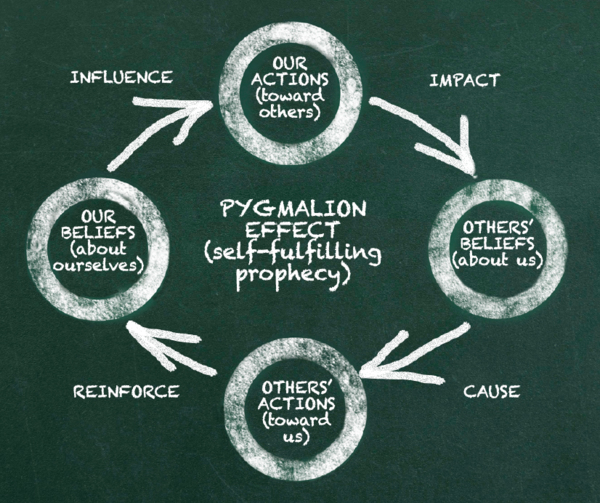
The Pygmalion effect, or Rosenthal effect, is the phenomenon whereby higher expectations lead to an increase in performance.[1] The effect is named after the Greek myth of Pygmalion, a sculptor who fell in love with a statue he had carved, or alternately, after the Rosenthal–Jacobson study.
Bicentennial Man

Bicentennial Man is a 1999 American science fiction comedy-drama film starring Robin Williams, Sam Neill, Embeth Davidtz (in a dual role), Wendy Crewson, and Oliver Platt. Based on the novel The Positronic Man, co-written by Isaac Asimov and Robert Silverberg, which is itself based on Asimov's original novella titled The Bicentennial Man, the plot explores issues of humanity, slavery, prejudice, maturity, intellectual freedom, conformity, sex, love, and mortality. The film, a co-production between Touchstone Pictures and Columbia Pictures, was directed by Chris Columbus. The title comes from the main character existing to the age of two hundred years, and Asimov's novella was published in the year that the U.S. had its bicentennial.
Galatea
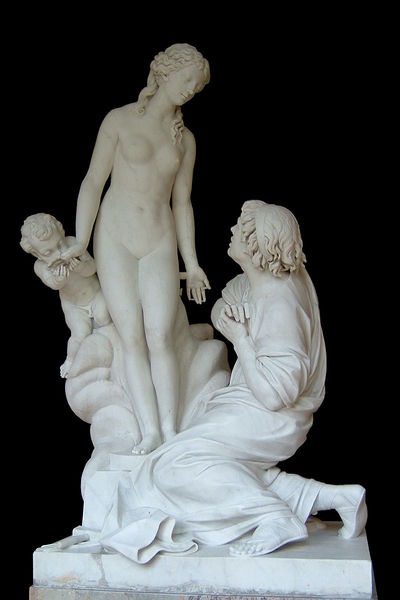
Galatea is a name popularly applied to the statue carved of ivory by Pygmalion of Cyprus, which then came to life, in Greek mythology; in modern English the name usually alludes to that story. Galatea is also the name of Polyphemus's object of desire in Theocritus's Idylls VI and XI and is linked with Polyphemus again in the myth of Acis and Galatea in Ovid's Metamorphoses.
Tiresias
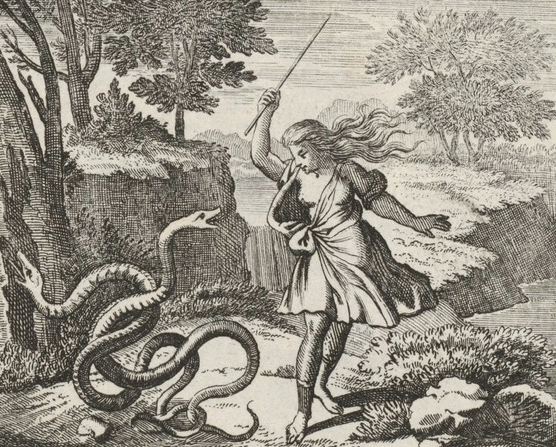
In Greek mythology, Tiresias was a blind prophet of Apollo in Thebes, famous for clairvoyance and for being transformed into a woman for seven years. He was the son of the shepherd Everes and the nymph Chariclo.Tiresias participated fully in seven generations at Thebes, beginning as advisor to Cadmus himself.
限會員,要發表迴響,請先登入


