In-class Note:
-eel/-or
Text book Note:
Kinds of character:
1. heroes and villains v. s. protagonists and antagonists (p. 181)
Heroes and heroines are usually larger than life, stronger or better than most human beings, sometimes also godlike.
In most modern fiction, however, the leading characters much more ordinary, not so clearly or simply a “good guy”. For that reason, it is usually more appropriate to use the older and more neutral terms protagonist and antagonist for the leading characters and his or her opponent.
2. major v. s. minor characters (p. 182)
Major characters are those we see more of overtime and make readers think of them more complex. On contrast, minor characters precipitate the major characters undergo.
3. flat v. s. round and static versus dynamic characters (p. 182-183)
Flat characters are those who impressed readers less; in contrast, round characters act from varies, from conflicting motives, impulses and desires, and who seem to have psychological complexity. A character that changes is called dynamic characters; one that doesn’t is static. But the two qualities are distinct, and one doesn’t required another.
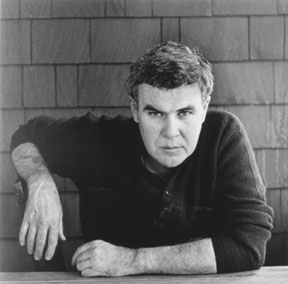
Raymond Carver
Raymond Clevie Carver (1958–1988) was an American short-story writer and poet. Carver contributed to the revitalization of the American short story in literature during the 1980s. Carver's first published story, "The Furious Seasons", appeared in 1961. More florid than his later work, the story strongly bore the influence of William Faulkner.
It is a common misconception that Carver was influenced by Ernest Hemingway, as both writers exhibit a similar economical and plain prose style. In his essay "On Influence", however, Carver states clearly that while an admirer of Hemingway's fiction he never saw him as an influence, citing instead the poetic and painterly work of Lawrence Durrell. The essay itself is a fine meditation on the mysteries and vagaries of artistic influence. (Wikipedia)
Raymond Carver was born in the logging town of Clatskanie, Oregon in 1938. Published his first book, which was his first book of poem, Near Klamath, in 1961 and graduated from Humbult Stage College in 1963. For a while Carver attended a creative writing class at Chico State College taught by John Gardner. Carver suffered an early death, at age 50 in 1988. He was describe by the New York Time as “surely the most influential writer of American short stories in the second half of the twentieth century”; credited by others with “reviving what was one thought of as a dying literary form”, and he was compared to Ernest Hemingway, Stephen Crane, and Anton Chekhov. His major short story collections include Will you please be quiet please? (1976), What We Talk About When We Talk About Love (1983), and the posthumously published Call If You Need Me (2001). (Textbook)
限會員,要發表迴響,請先登入


